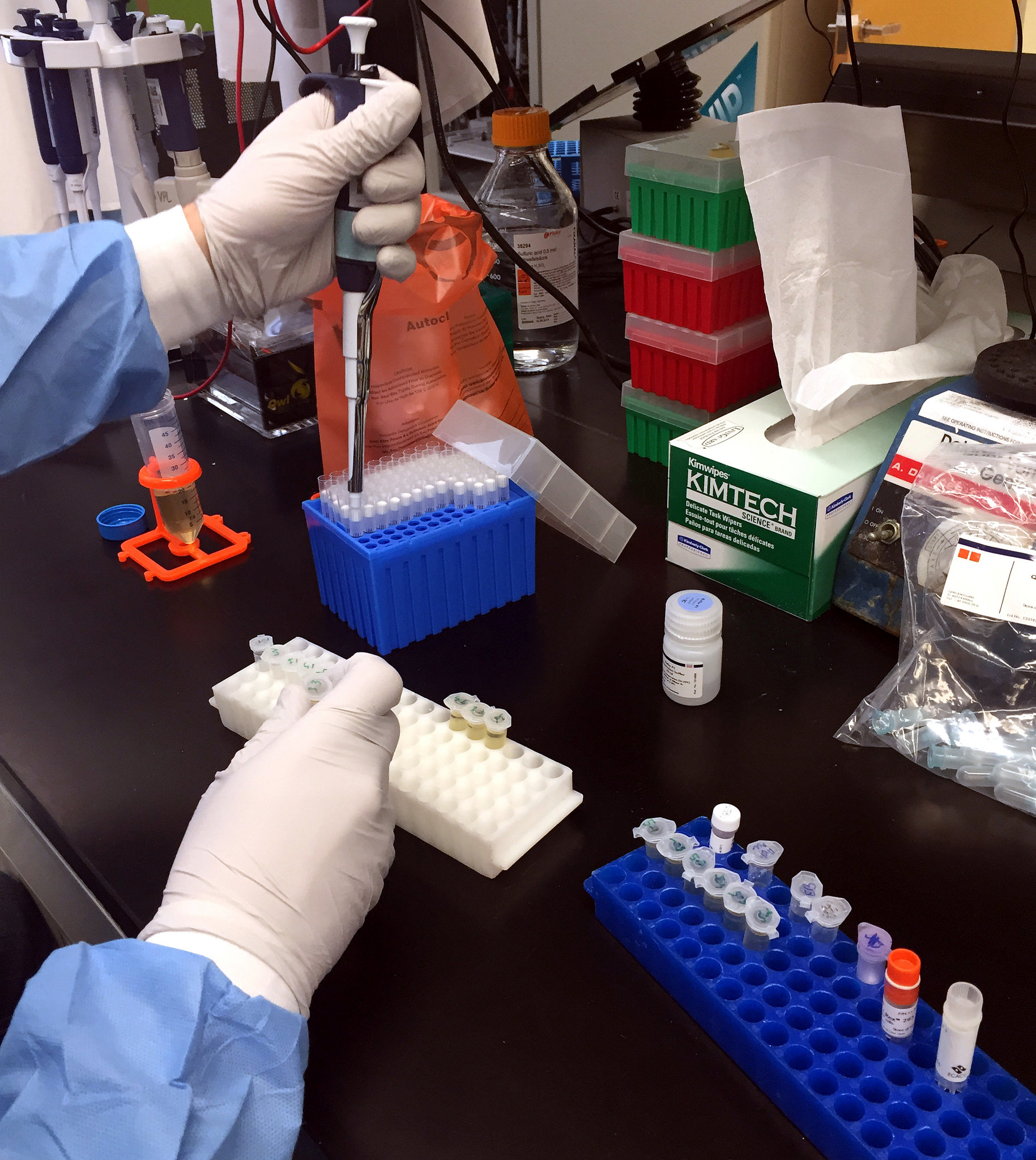
In true 2020 form, a mysterious new disease has surfaced in India. Per the Associated Press, “At least one person has died and 200 others have been hospitalized due to an unidentified illness in the southern Indian state of Andhra Pradesh, reports said Monday. The illness was detected Saturday evening in Eluru, an ancient city famous for its hand-woven products. Since then, patients have experienced symptoms ranging from nausea and anxiety to loss of consciousness, doctors said.” Public health officials have already conducted tests on drinking water as well as for common diseases like COVID-19 and chikungunya. https://bit.ly/2Injhf0
Amidst all the COVID-19 vaccine news, there’s been serious progress being made in the quest for a universal flu vaccine. Per Science, “The trial was only a phase I study to establish safety and measure immune responses, which means it didn’t test the ability of the vaccines to protect people from influenza. Still, when the researchers transferred human antibodies triggered by the experimental vaccines into mice and then “challenged” the rodents with the influenza virus, the mice lost far less weight than untreated mice who also were infected, suggesting that the antibodies protected them.” It’s hard to understate how immense an effective universal flu vaccine would be. https://bit.ly/3mSGyEx
The BBC has done a really interesting article about a really bad source of carbon-based fuels. Peat bog, aka turf. While it’s pretty much limited to Ireland, it’s important to end its use. However, relegating it to the past will take some effort. Per the BBC, “Turf has been a very significant part of the economy of this region for over 70 years. It has provided much-needed employment to one of the poorest areas of Ireland, through electricity power plants and the state-owned company responsible for peat extraction – Bord na Móna. However commercial turf-cutting now has to stop, and fast, if the country is to comply with its international obligations on carbon emissions and habitats.” Ireland emits 13 tons of greenhouse gases per person each year, making it the third-highest in the European Union. https://bbc.in/3a2TVib
Japan’s Hayabusa spacecraft has returned from its mission to the asteroid, Ryugu. Per MIT Technology Review, “It’s only the second time in history that samples from an asteroid have arrived on Earth—the first was the original Hayabusa mission, but that managed to bring back only a few micrograms of asteroid dust. The hope is that the samples will help researchers understand the formation of the solar system, including habitable worlds like Earth.” The content of asteroids are thought to contain elements similar to what planets had early in their existences because they’ve been largely untouched. https://www.technologyreview.com/2020/12/07/1013316/japan-hayabusa-2-ryugu-asteroid-space/




Leave a Reply