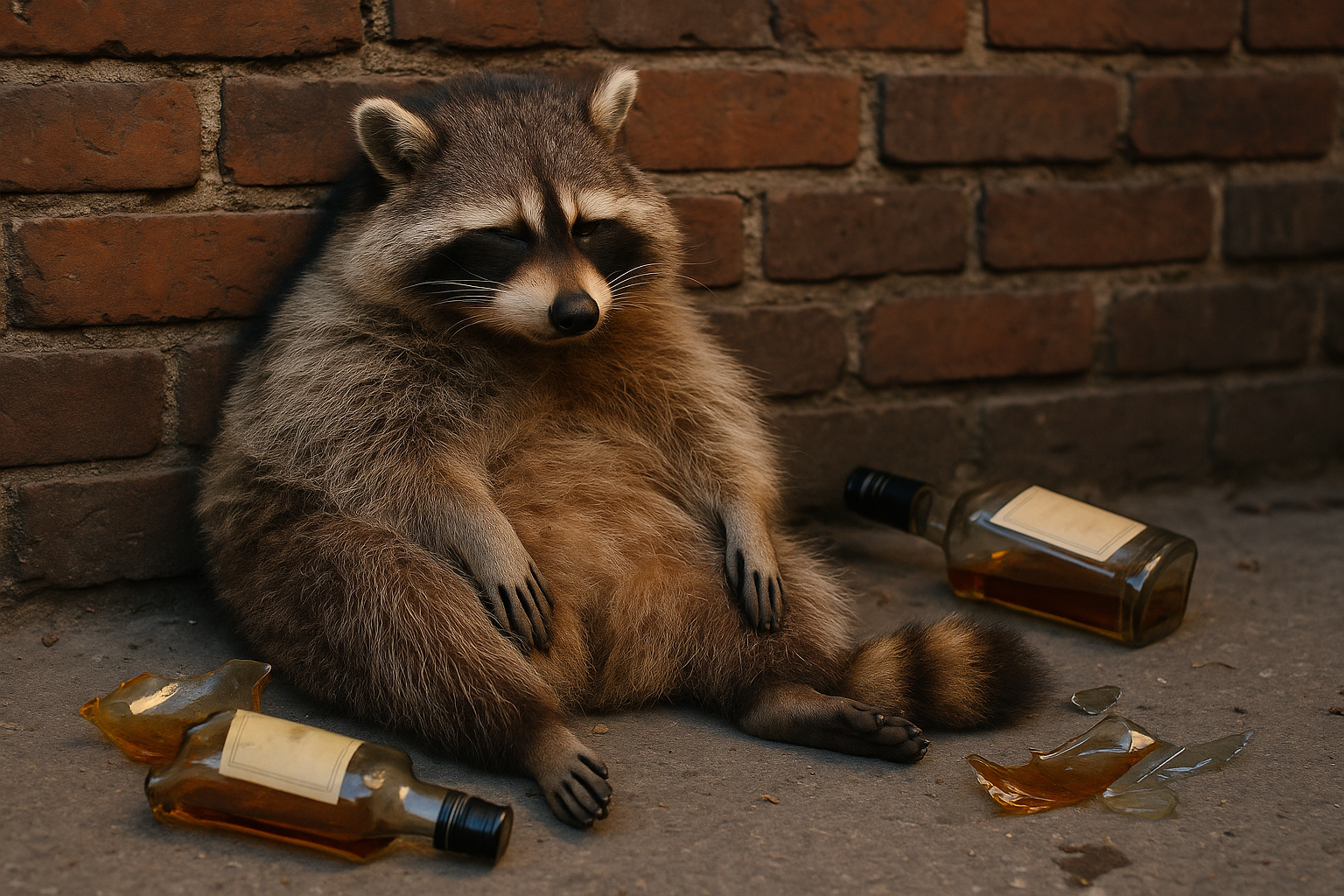
When staff opened a state-run liquor store in Ashland, Virginia, they expected a quiet morning—until they found broken whisky bottles, a collapsed ceiling tile, and a raccoon passed out on the bathroom floor. The “masked bandit” had apparently fallen through the ceiling, sampled the good stuff on the bottom shelf, and then face-planted in the loo before being hauled off by animal control to sleep it off and later released.
As ridiculous as it sounds, the hammered raccoon is part of a much bigger story. Across the animal kingdom, plenty of species encounter alcohol—usually from fermenting fruit or nectar—and some actively seek it out. Here are six of the most intriguing “party animals.”

1. Raccoons: Urban Booze Bandits
The Virginia liquor-store incident wasn’t a one-off. Raccoons are adaptable omnivores that thrive in human environments, happily raiding garbage, compost, and anything that smells edible—including alcoholic leftovers. In other cases, people have reported raccoons staggering around after gorging on fermented fruit or trash laced with alcohol, sometimes so out of it that animal control has to intervene.
They’re not connoisseurs—this is pure opportunism. But the combination of curiosity, dexterous paws, and a human-made buffet means raccoons may be among the likeliest wild mammals to accidentally get sloshed.

2. Vervet Monkeys: Caribbean Barflies
On the island of St. Kitts, vervet monkeys have developed a notorious taste for human cocktails. They raid hotel bars and beaches, swipe unattended drinks, and sometimes end up visibly drunk—staggering, fighting, or passing out, much like badly behaved tourists.
In classic experiments, researchers offered wild-caught vervets sugary drinks with or without alcohol. Some monkeys consistently chose the alcoholic option and even increased their intake over time, while others were moderate drinkers or abstainers—patterns eerily similar to human populations. These monkeys don’t just tolerate alcohol; many will actively seek it, making them one of the best nonhuman models for studying drinking behavior and addiction.

3. Pen-Tailed Treeshrews: Nightly “Beer” Drinkers
If any animal deserves the title of dedicated drinker, it’s the pen-tailed treeshrew of Southeast Asia. These tiny mammals visit the flowers of the bertam palm every night to lap up naturally fermented nectar with an alcohol content comparable to beer.
By body weight, they consume the equivalent of double-digit glasses of wine a night, yet they show no obvious signs of drunkenness. Biochemical studies suggest they’ve evolved an unusually efficient way to metabolize alcohol, likely because this boozy nectar has been a reliable food source for millions of years. They may not feel drunk, but they are living proof that sustained alcohol consumption isn’t a uniquely human quirk.

4. Chimpanzees: The “Drunken Monkey” Hypothesis in Action
A growing body of research suggests that wild chimpanzees ingest more alcohol than anyone expected—without ever touching human drinks. Naturally fermenting fruits can contain measurable levels of ethanol, and chimps that feast on them may effectively take in the equivalent of a modest daily “drink.”
This supports the “drunken monkey” hypothesis, which argues that our primate ancestors evolved a taste for ethanol because the smell of fermentation helped them find energy-rich, ripe fruit. Chimps don’t usually appear obviously drunk in the wild, but they are regularly micro-dosed by their own diet, hinting that alcohol has been part of primate evolution for a very long time.

5. Elephants (and Friends): The Marula Myth and Fruity Realities
Stories of African elephants getting smashed on fermented marula fruit are a staple of wildlife documentaries and bar-room trivia. Modern analyses suggest that a typical elephant would need to eat implausibly huge quantities of overripe fruit to reach true intoxication, and some famous “drunk elephant” footage appears to have been staged or embellished.
That said, marula fruits do ferment, and other animals that gorge on them—like warthogs, baboons, or giraffes—have been reported showing wobbly, intoxicated behavior in the wild. So while the legendary tipsy elephant is probably more myth than reality, marula orchards may still host an occasional cross-species happy hour.

Lisa Hupp/USFWS6. Waxwings and Other Drunk Birds
Fruit-eating birds, especially waxwings, may be the purest examples of accidental inebriates. In cold climates, berries can ferment on the branch after frosts; birds that scarf down dozens or hundreds of these sugary snacks can quickly end up impaired.
Cedar and Bohemian waxwings have evolved relatively large livers to help process alcohol from fruit, but they’re not invincible. Ornithologists and wildlife officers have documented flocks of dazed birds flying erratically, crashing into windows, or even dropping from branches after berry binges. For them, fermentation is a seasonal occupational hazard baked into their berry-based lifestyle.
Of course, “liking to get intoxicated” is a human way of describing behaviors that often start with simple foraging or curiosity. But whether it’s a Virginia raccoon on a whisky rampage or a treeshrew quietly sipping palm “beer” all night, alcohol clearly isn’t just our vice—it’s part of a much older ecological story.


Leave a Reply