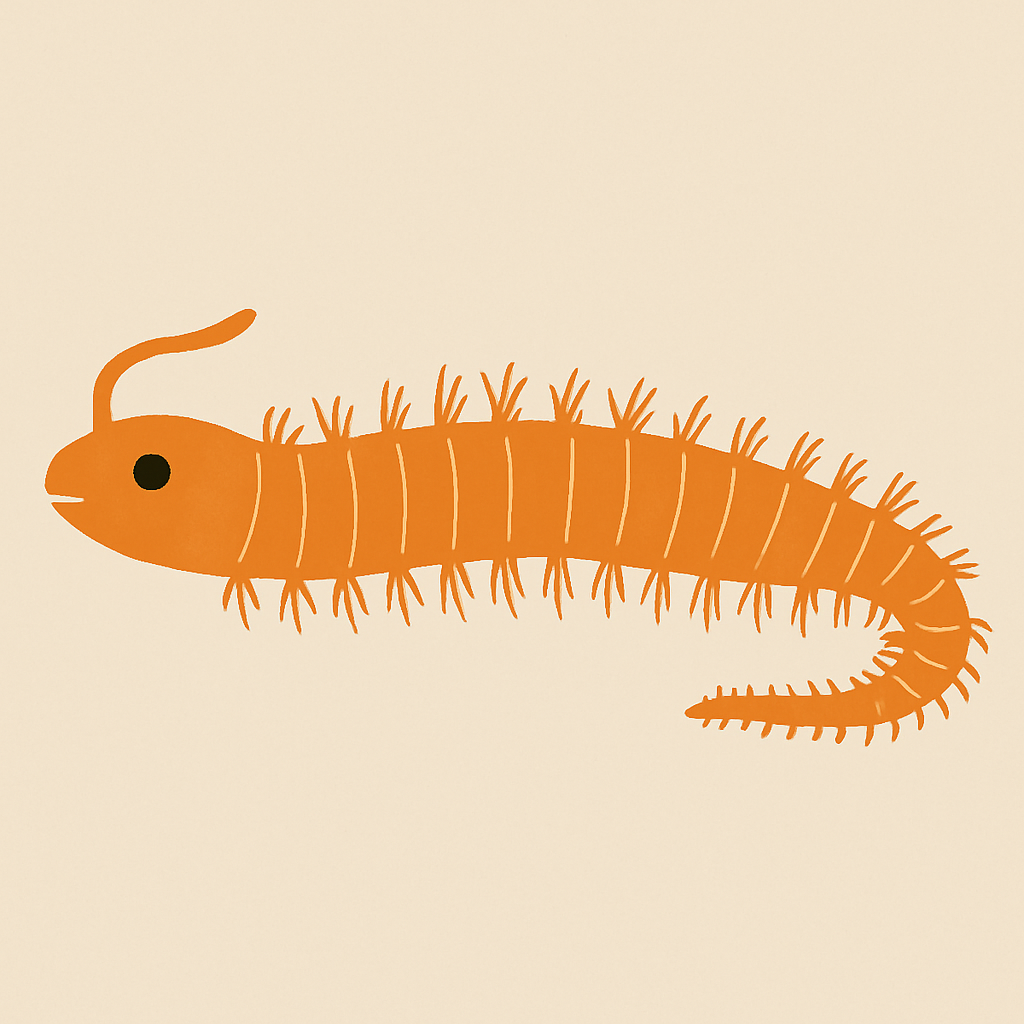
A humble sea creature is reshaping our understanding of how complex eyes develop and evolve. New research on marine bristleworms has uncovered a growth mechanism strikingly similar to that found in vertebrates—a discovery that illuminates universal principles underlying the evolution of sophisticated visual systems.
The study, published in Nature Communications and led by researchers at the University of Vienna and the Alfred Wegener Institute in Bremerhaven, Germany, reveals that the camera-type eyes of the bristleworm Platynereis dumerilii grow throughout the animal’s lifetime via a ring of neural stem cells positioned at the edge of the retina. This arrangement mirrors the ciliary marginal zone found in fish and amphibians—a specialized region that continuously generates new retinal cells as these vertebrates grow.
“It was remarkable to find dividing cells at the edge of the worm’s retina—the same place where some groups of vertebrates maintain their retinal stem cells for life-long eye growth,” said Nadja Milivojev, first author of the study and researcher at the University of Vienna’s Department of Neurosciences and Developmental Biology.

The findings challenge long-held assumptions about which animals possess sophisticated visual systems. When people imagine creatures with complex eyes, they typically think of mammals, birds, or cephalopods like octopuses and squid. Yet bristleworms—segmented marine invertebrates that look nothing like these familiar animals—possess camera-type eyes capable of surprisingly high-resolution vision.
Camera-type eyes, which feature a lens that focuses light onto a retina, have long served as textbook examples of convergent evolution—the phenomenon where unrelated species independently develop similar structures to solve the same biological problem. For nearly 140 years, the comparison between cephalopod and vertebrate eyes has dominated discussions of this evolutionary principle. The new research expands this conversation by demonstrating that annelid worms deserve a place in that discussion.

Using single-cell RNA sequencing, the research team mapped the molecular signatures and locations of stem cells within the worm’s eye. They identified a distinct zone densely packed with neural stem cells that actively divide during adult eye growth—producing new photoreceptor cells and support cells that integrate into the existing retinal structure.
“In vertebrate examples of life-long growth, like fishes and amphibians—such stem cells supply the eye with fresh retinal neurons while the animal develops,” explained senior author Florian Raible of the University of Vienna. “Remarkably, Nadja’s work showed that bristleworm eyes can also add new photoreceptor cells and expand their size—a trait that has not been well studied outside the vertebrate lineage.”

Perhaps the most surprising finding involves how environmental light regulates this growth process. The researchers discovered that proper stem cell proliferation in the worm’s eye depends on ambient light conditions—and that this effect is mediated by a c-opsin, a light-sensitive molecule also found in vertebrate rod and cone cells.
This discovery was unexpected because scientists previously believed worm eyes relied exclusively on a different family of light-sensitive proteins called r-opsins. Finding a vertebrate-type c-opsin in these early photoreceptor precursor cells suggests it functions as a molecular switch connecting environmental light to stem cell activity.
The ciliary marginal zone represents a conserved feature across many vertebrate species, though its activity varies considerably. In fish and amphibians, this stem cell niche remains highly active throughout life, continuously generating new retinal neurons. Birds possess a ciliary marginal zone but with more limited activity, while mammals appear to lack this regenerative capacity entirely—their retinas develop during embryonic and early postnatal stages and do not add new neurons afterward.

The presence of an analogous stem cell zone in bristleworm eyes, regulated by similar molecular mechanisms, suggests these growth strategies may represent fundamental principles of eye development that emerged early in animal evolution. Rather than vertebrates inventing this mechanism independently, the shared features may point toward ancient cellular strategies that predated the divergence of these lineages more than 500 million years ago.
“The discovery that Platynereis eyes rely on a ring of neural stem cells brings biologists closer to understanding universal principles behind sensory organ evolution,” the researchers noted.
The study also raises provocative questions about environmental influences on neural development. If stem cells in visual systems respond to natural light conditions, how might artificial illumination—increasingly pervasive in modern environments—affect these regulatory systems in various species?
“Clearly, basic research to uncover the unexpected is essential to understand the biological complexity of life and the possible consequences of anthropogenic impacts,” said senior author Kristin Tessmar-Raible of the University of Vienna and Alfred Wegener Institute.
The research closes a long-standing gap in understanding how invertebrate and vertebrate eyes grow and maintain themselves. By demonstrating that distant evolutionary lineages employ similar cellular mechanisms for retinal development and regeneration, the findings suggest that despite hundreds of millions of years of separate evolution, common solutions to the challenges of building and maintaining functional eyes have emerged repeatedly across the animal kingdom.
For evolutionary biologists, this represents more than an academic curiosity. Understanding these shared mechanisms could eventually inform medical research into human eye diseases and potential regenerative therapies—offering hope that insights from creatures as seemingly distant as marine worms might one day illuminate paths toward restoring human vision.
Sources:
- Milivojev, N., et al. “Light-modulated stem cells in the camera-type eye of an annelid model for adult brain plasticity.” Nature Communications (2025). https://doi.org/10.1038/s41467-025-65631-0
- EurekAlert press release: “New insight into the functional principles of eye evolution.” University of Vienna, December 1, 2025. https://www.eurekalert.org/news-releases/1107686
- Miles, A. & Tropepe, V. “Retinal Stem Cell ‘Retirement Plans’: Growth, Regulation and Species Adaptations in the Retinal Ciliary Marginal Zone.” International Journal of Molecular Sciences 22 (2021).
- Yoshida, M.A. & Ogura, A. “Genetic mechanisms involved in the evolution of the cephalopod camera eye revealed by transcriptomic and developmental studies.” BMC Evolutionary Biology 11 (2011).


Leave a Reply