
Jane Goodall Redefined Humanity’s Place Among Animals
Jane Goodall, who passed away Wednesday, transformed science and public understanding of animals through her groundbreaking chimpanzee research. Beginning in 1960 at Gombe Stream, she revealed tool use, complex communication, and distinct personalities among chimpanzees, discoveries that challenged long-held beliefs about human uniqueness. Though criticized for naming apes and attributing them with individuality, her empathetic approach inspired generations of scientists and shifted paradigms in animal behavior and cognition. Goodall’s meticulous records later enabled virologists to trace the origins of HIV from chimpanzee SIV. Beyond science, she became a global voice for conservation, founding the Jane Goodall Institute and Roots & Shoots to support wildlife protection and youth activism. Her blend of rigorous observation, empathy, and advocacy left an enduring legacy bridging science and humanity. (New York Times)
41 Percent of HHS Workforce to Be Furloughed in Shutdown
During a federal government shutdown, nearly 41 percent of the Department of Health and Human Services (HHS) employees—about 32,460 staff—would be furloughed. Critical public-health functions tied to emergencies, recalls, and outbreaks will continue under “excepted” status, including FDA actions concerning imminent threats. However, many operations would halt: the FDA would pause new drug applications and research, NIH would stop admitting non-urgent patients, CDC would suspend data analysis and guidance work, and CMS oversight would be severely curtailed. The article warns of long-term damage to research, surveillance, and public confidence if the shutdown persists. (CIDRAP)
Million-Year-Old Skull Suggests Earlier Human Evolution in Asia
A digital reconstruction of a 1-million-year-old skull from Yunxian, China, has challenged traditional views on human evolution. The Yunxian 2 cranium, discovered in 1997, shows features resembling later species like Homo longi and Homo sapiens, suggesting Homo sapiens may have diverged from ancestors 400,000 years earlier than previously thought—potentially in Asia rather than Africa. Using advanced CT scanning, structure light imaging, and virtual reconstruction, researchers modeled the complete skull, revealing phylogenetic links to Denisovans. This finding implies a more complex, multi-regional origin for modern humans, prompting reevaluation of migration patterns and genetic diversity. The study, published in Science, highlights how preservation biases have skewed fossil records, urging broader Asian paleoanthropological digs. Implications extend to understanding human adaptability and interbreeding with archaic species, reshaping timelines for technological and cultural development. (phys.org)
Ancient Copper Smelters Unwittingly Paved Way for Iron Age
Archaeologists at a 3,000-year-old copper smelting site in the Caucasus Mountains have uncovered evidence that early metalworkers accidentally pioneered iron production. By using iron oxide to refine copper, smelters created conditions for iron extraction, bridging the Bronze Age to Iron Age transition. Cranfield University researchers analyzed slag and ore samples, finding iron prills—small metal beads—formed unintentionally around 1000 BCE, predating known ironworking by centuries. This “serendipitous innovation” likely spread via trade routes, revolutionizing tools, weapons, and agriculture. Published in the Journal of Archaeological Science, the study challenges narratives of deliberate invention, emphasizing experimentation’s role in technological leaps. It underscores how resource scarcity drove metallurgy advances, with parallels to modern accidental discoveries like penicillin. Future excavations could reveal similar “eureka” moments in other regions, enriching our understanding of ancient ingenuity and societal shifts. (phys.org)
Quantum Entanglement Persists 600 Times Longer in Dark States
Researchers at UNIST have achieved a breakthrough in quantum technology by creating collective quantum entanglement in “dark states,” which last 600 times longer than conventional states. Dark states, immune to environmental noise, were previously theoretical; the team used cavity-mediated emission to generate steady-state subradiance in quantum dots. Published in Nature Communications, the experiment demonstrated entanglement lifetimes extending seconds, far surpassing milliseconds in bright states. This stability enables robust quantum memories, high-precision sensors, and efficient energy harvesting. Led by Professor Je-Hyung Kim and collaborators from KRISS, the work opens doors to scalable quantum networks and computing, potentially accelerating fault-tolerant systems. Implications include revolutionizing secure communications and medical imaging, with prototypes for quantum repeaters on the horizon. The finding bridges theory and practice, promising to make quantum tech viable beyond labs. (phys.org)
Mangos Aid Blood Sugar Control in Diabetes Risk Groups
Daily mango consumption improves blood sugar management and reduces body fat in at-risk individuals, according to a George Mason University study. Participants eating 200g of mangos daily showed better glycemic control than those on low-sugar snacks, despite the fruit’s natural sugars. Published September 25, 2025, the research credits mangos’ polyphenols and fiber for enhancing insulin sensitivity. This counters myths of fruit avoidance in diabetes prevention, suggesting mangos as a tasty dietary tool. Implications include updated nutrition guidelines, potentially lowering obesity rates. The study, involving 60 adults over 12 weeks, used continuous glucose monitors for precise data. It highlights whole foods’ superiority over processed alternatives, encouraging fruit-inclusive diets for metabolic health. (Science Daily)
Uranus Emits More Heat Than Received from Sun, Models Show
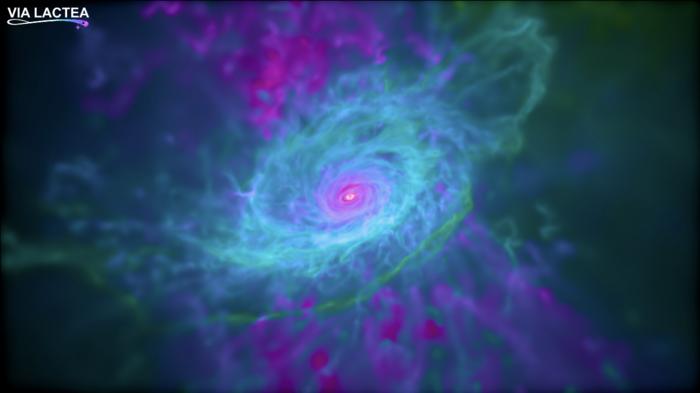
Advanced computer modeling reveals Uranus radiates more internal energy than it absorbs from the Sun, resolving decades of mystery about the planet’s “cold” reputation. Published October 1, 2025, the study in ScienceDaily explains subtle atmospheric dynamics previously undetectable by Voyager 2. This heat, from residual formation energy and possible core convection, drives winds and weather patterns. Implications enhance exoplanet comparisons, aiding habitability assessments. The model integrates Hubble and ground telescope data, predicting seasonal changes. This breakthrough could refine gas giant formation theories, with NASA’s Uranus Orbiter probe in planning stages. It underscores modeling’s power in unlocking distant worlds’ secrets. (Science Daily)
Cambridge Gel Targets Arthritis Pain Without Side Effects
Cambridge scientists developed a smart gel that detects arthritis flare-ups via pH changes and releases anti-inflammatory drugs precisely, avoiding broad suppression of healing inflammation. Reported September 25, 2025, the material uses chemical sensors to respond to acidity spikes in joints. Tested in mice, it reduced swelling without ibuprofen’s gastrointestinal risks. ScienceDaily notes potential for personalized treatments, extending to other inflammatory diseases like IBD. The gel’s biocompatibility and on-demand release minimize dosage, improving patient compliance. This innovation bridges materials science and medicine, promising pain-free mobility for millions. Clinical trials are slated for 2026. (Science Daily)
Innovative Wetsuits Reduce Shark Bite Injuries
Shark experts tested four novel wetsuit materials, finding they slash bite severity by up to 60% through texture and color mimicking non-prey. Published September 25, 2025, the study in ScienceDaily used force gauges on captive sharks, prioritizing safety without repellents. Materials include patterned neoprene deterring strikes. Implications for divers and surfers include lower trauma, preserving marine ecosystems. This low-tech solution complements education, with prototypes in development. The research, from international teams, emphasizes evidence-based prevention amid rising ocean recreation. (Science Daily)
Ant-Mimicking Plant Tricks Flies for Pollination
Vincetoxicum nakaianum, a rare Japanese vine, lures flies by emitting odors of ant-spider battles, exploiting their scavenging instincts. Discovered September 25, 2025, via chemical analysis, this deception ensures pollination without nectar rewards. ScienceDaily reports the flower’s volatile compounds mimic alarm pheromones, drawing flies that transfer pollen incidentally. This rare strategy highlights co-evolution’s creativity, with conservation implications for the endangered species. The finding enriches botany, revealing chemical mimicry’s role in biodiversity. Future studies may uncover similar tactics in other flora, aiding ecosystem restoration. (Science Daily)
IMAGE CREDIT: Nikeush


Leave a Reply