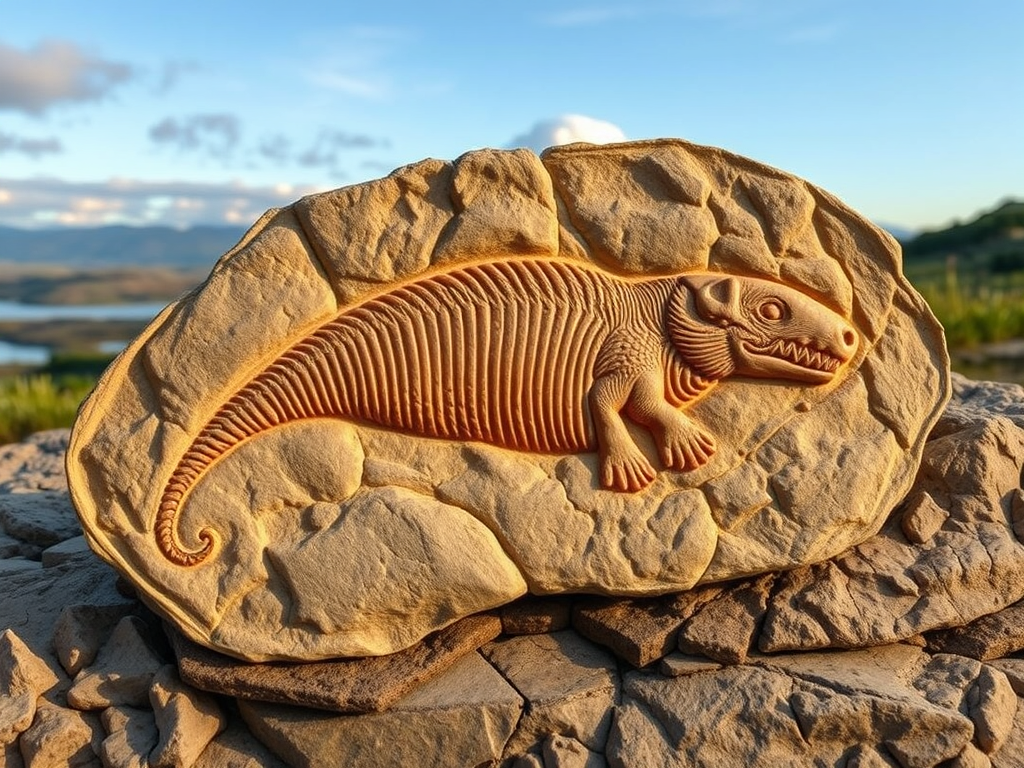
Japan confirms first fossil of rare marine mammal, reshaping Miocene map
Researchers in Hokkaido have identified Japan’s first fossil of Neoparadoxia, an extinct marine mammal previously known only from sites along the U.S. West Coast. The 15-million-year-old remains, unearthed in Akan (Kushiro) between 1996 and 2000, expand the animal’s known range across the North Pacific and offer new clues to Miocene ocean currents and climate. Scientists say the find helps clarify how marine mammals dispersed during a warmer epoch (23–10 million years ago) and may refine timelines for when sirenian-like desmostylians adapted to coastal habitats in the western Pacific. The discovery also underscores Hokkaido’s value as a window into ancient marine ecosystems as more long-stored collections are reexamined with modern techniques. (朝日新聞)
Engineered bacteria home to tumors and shrink them in mouse tests
A Japanese team demonstrated that administering two types of bacteria directly into mice can target tumors and reduce their size, leveraging microbes’ ability to localize in low-oxygen cancer tissue. The approach—still at an early, preclinical stage—aims to convert bacteria into precision drug couriers or living therapies that activate immune responses within the tumor microenvironment. While promising, safety, dosing, and control of bacterial spread will be critical hurdles before human trials. Researchers say the strategy could complement immunotherapy or chemotherapy by turning the tumor’s hostile niche into an advantage for treatment delivery. The work adds to a growing body of research exploring programmable microbes as cancer therapeutics. (朝日新聞)
Tiny 6G chip tops 100 Gbps in lab, hinting at post-5G leap
Scientists from China and the U.S. report a miniature 6G transceiver hitting more than 100 Gbps—roughly 10× 5G’s theoretical peak—in controlled tests, suggesting ultra-high-bandwidth applications like real-time holography, untethered AR/VR, and fiber-class wireless backhaul could be feasible. The team says the chip integrates key millimeter/sub-terahertz components to reduce size and power, but cautions that standards, spectrum policy, and robust field performance remain open challenges. Even if commercial 6G arrives late this decade, such lab milestones help define the architecture and materials stack future networks will need to balance speed, range, and energy efficiency. For now, it’s a proof-of-concept—impressive, but not yet a carrier-ready product. (www.ndtv.com)
Astronomers directly image infant planet WISPIT 2b carving rings in its birth disk
Using ESO’s Very Large Telescope, researchers captured rare direct images of a still-forming giant planet, WISPIT 2b, embedded within the multi-ringed protoplanetary disk around its young star about 430 light-years away. Estimated up to five times Jupiter’s mass and only ~5 million years old, the planet appears to be clearing gaps and channeling material, providing concrete evidence of how nascent worlds sculpt their “nurseries.” Follow-up visible-light observations suggest WISPIT 2b is still accreting. The system offers a benchmark for testing models of planet formation and disk dynamics, with results published across two papers in The Astrophysical Journal Letters. (The Times of India)
Just 1 minute of vigorous bursts a day tied to lower death risk, study suggests
Short, sharp bursts of vigorous activity—totaling as little as one minute per day—were linked to reduced risks of all-cause and cancer mortality in a large observational analysis of wrist-worn activity data. The smartphone/accelerometer-based study suggests “exercise snacks” embedded in daily life (e.g., fast stair climbs, quick sprints to catch a bus) may confer measurable benefits, especially for people who don’t meet formal workout guidelines. Researchers caution that the evidence is observational, meaning causation isn’t proven and confounders remain. Still, the findings reinforce public-health advice that any movement helps—and that intensity spikes, even brief ones, might matter disproportionately. (Indian Express)
China’s plants face a “hidden extinction crisis,” new nationwide study warns
An analysis of habitat change over four decades finds that extinction risks for China’s native flora have risen sharply, with conservation measures failing to keep pace with land-use pressures. The national-scale assessment, published in One Earth, argues that many species currently deemed safe are in steeper decline than recognized and calls for urgent updates to threatened-species lists and protected-area planning. Researchers say improving monitoring, curbing habitat fragmentation, and prioritizing hotspots could prevent irreversible losses. The study highlights how rapid development, climate change, and invasive species interact to erode biodiversity—even in megadiverse countries with expanding conservation programs. (EurekAlert!)
Singapore-led team debuts fast tool to map tRNA modifications at scale
Scientists at SMART (MIT’s Singapore research enterprise) and collaborators unveiled an automated method to profile tRNA modifications—the chemical tweaks that fine-tune protein synthesis and stress responses—enabling faster, more comprehensive readouts than current protocols. By improving speed and coverage, the platform could help chart regulatory networks that underpin disease, reveal new enzyme targets, and streamline drug discovery pipelines. The team says the approach addresses a key bottleneck in epitranscriptomics: capturing the diversity and dynamics of tRNA marks across cell states. While further validation is needed, the tool positions labs to explore how RNA “grammar” changes in infection, cancer, and aging. (EurekAlert!)
Room-temperature glow: eco-friendly liquid achieves efficient phosphorescence
A University of Osaka team reports an organic molecular liquid that emits efficient room-temperature phosphorescence—glow that persists after excitation—without heavy metals. By engineering intermolecular interactions in a solvent-free liquid state, the researchers achieved bright, stable emission that could simplify flexible displays, anti-counterfeiting inks, or low-energy lighting. Traditional phosphorescent systems rely on rare or toxic elements; an all-organic route could cut costs and improve sustainability. Next steps include tuning colors, lifetimes, and processing for devices. The study highlights how molecular design can unlock solid-like photophysics in flowable materials. (EurekAlert!)
China builds rare-disease genomics network spanning 42,703 families, sets diagnosis framework
A landmark national effort across 32 provincial regions analyzed rare-disease cases in 42,703 families to establish a standardized pathway for diagnosis in China. The framework integrates sequencing, variant interpretation, and clinical workflows to cut diagnostic odysseys and improve care planning for millions living with rare conditions. Researchers say centralized data sharing and coordinated clinics accelerated answers for patients while uncovering population-specific variants that global databases miss. Scaling the model could strengthen newborn screening and targeted therapies across Asia. (EurekAlert!)



Leave a Reply