
High MDR Bacteria Rates Found in Ukrainian War-Injured Patients Treated in Finland
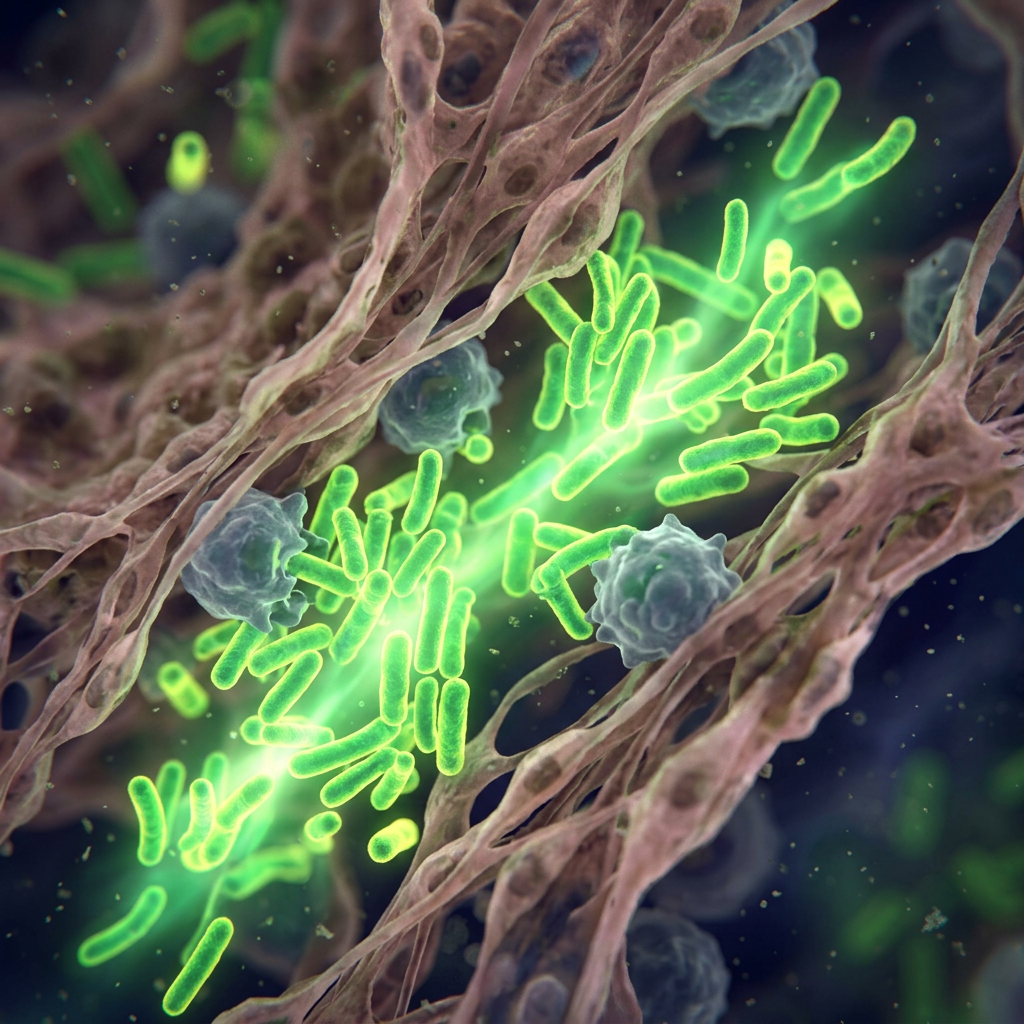
A Finnish study published in Clinical Microbiology and Infection found high rates of multidrug-resistant (MDR) bacteria among Ukrainian patients treated in Finland between February 2022 and May 2024. Of 166 patients screened, 17.6% of those with no prior hospitalization carried MDR bacteria. This rate increased to 46% among those previously hospitalized without war injuries and soared to 78.6% in patients hospitalized with war-related injuries. Notably, carriage rates for carbapenemase-producing Enterobacterales, multidrug-resistant Acinetobacter baumannii, and Pseudomonas aeruginosa were highest in the war-injured group. Over 20% of MDR carriers developed clinical infections, most commonly wound-related. The findings underscore the need for targeted screening and robust infection control for patients with prior hospitalization in war-affected regions to prevent the spread of antimicrobial resistance in healthcare settings. (CIDRAP)
NASA Launches TRACERS Mission to Study Solar-Earth Magnetic Interactions
NASA’s TRACERS (Tandem Reconnection and Cusp Electrodynamics Reconnaissance Satellites) mission launched today, July 22, 2025, from Vandenberg Space Force Base. The dual-satellite mission will study magnetic reconnection where the Sun’s magnetic field interacts with Earth’s magnetosphere, particularly in the polar cusp regions. Each satellite carries five instruments to collect data from over 3,000 cusp crossings during its one-year primary mission, providing multidimensional views of these explosive energy transfer events. Led by the University of Iowa with Southwest Research Institute managing operations, TRACERS will help scientists understand space weather phenomena that can disrupt satellite operations, communications, and power grids on Earth. This mission represents the first long-term space exploration of magnetic reconnection at Earth’s cusp using two satellites simultaneously, offering unprecedented insights into how solar wind conditions impact our planet’s protective magnetic field. (phys.org)
Record-Breaking Black Hole Merger Creates 225-Solar-Mass Monster
The LIGO-Virgo-KAGRA Collaboration detected the most massive black hole merger ever observed through gravitational waves, creating a final black hole approximately 225 times the mass of our Sun. The event, designated GW231123, was detected on November 23, 2023, involving black holes of roughly 100 and 140 solar masses—both rapidly spinning near the theoretical limit allowed by Einstein’s general relativity. This discovery challenges current astrophysical models, as black holes this massive are considered “forbidden” by standard stellar evolution theories. The merger likely resulted from earlier hierarchical mergers rather than direct stellar collapse. This detection pushes LIGO’s instrumentation and data-analysis capabilities to their limits, requiring sophisticated models to account for the complex dynamics of highly spinning black holes. The finding was presented at the International Conference on General Relativity and Gravitation in Glasgow, representing a significant milestone in gravitational-wave astronomy. (Science Daily)
Third Interstellar Visitor 3I/ATLAS Discovered Racing Through Solar System
NASA’s ATLAS telescope in Chile discovered 3I/ATLAS on July 1, 2025, the third confirmed interstellar object ever observed entering our solar system after ‘Oumuamua (2017) and 2I/Borisov (2019). The comet originated from the direction of Sagittarius constellation and is currently about 420 million miles from the Sun, displaying signs of cometary activity including a developing coma. Estimated at 12 miles in diameter, 3I/ATLAS is significantly larger than previous interstellar visitors, making it an excellent observation target. The object poses no threat to Earth, maintaining a minimum distance of 150 million miles. It will reach closest approach to the Sun on October 30 at 130 million miles—just inside Mars’ orbit. Scientists believe this ancient comet could be over 7 billion years old, predating our 4.5-billion-year-old solar system, and originated from the Milky Way’s thick disk region. The discovery offers unprecedented opportunities to study materials from another star system. (NASA)
Memory Technology Breakthrough Uses Nickel-Tungsten Alloy
Researchers at the University of Minnesota Twin Cities achieved a breakthrough in memory technology using a nickel-tungsten alloy called Ni₄W. This material demonstrates powerful magnetic properties that could revolutionize data storage and computing applications. The alloy shows exceptional stability and performance characteristics that surpass conventional magnetic materials used in current memory devices. The research represents a significant advancement in the quest for faster, more efficient, and more durable memory technologies. This discovery could lead to the development of next-generation computer memory systems with enhanced speed, capacity, and reliability. The unique magnetic properties of the nickel-tungsten compound make it particularly suitable for advanced applications in quantum computing and high-performance data storage systems. The breakthrough addresses growing demands for more sophisticated memory solutions in an increasingly digital world, potentially transforming how electronic devices store and process information across multiple industries and applications. (Science Daily)
Mysterious Outer Solar System Object Challenges Planet Nine Theories
Astronomers using the Subaru Telescope discovered 2023 KQ14, a rare “sednoid” object beyond Pluto that could reshape understanding of the early Solar System. This tiny celestial body follows an unusual orbit that challenges existing theories about Planet Nine’s influence on distant objects. Named after its discovery year, the object represents a significant finding in the ongoing search for explanations of the outer solar system’s architecture. Sednoids are extremely rare objects with highly elliptical orbits that take them far from the Sun, making them valuable indicators of gravitational influences in the outer reaches of our solar system. The discovery provides new data points for testing theories about how massive objects beyond Neptune might be affecting the orbits of distant bodies. This finding contributes to the ongoing debate about whether an undiscovered ninth planet exists and how it might be shaping the dynamics of objects in the far outer solar system, potentially rewriting textbooks about our cosmic neighborhood’s structure. (Science Daily)
Scientists Detect Magnetic Signals in Non-Magnetic Metals Using Light
Scientists cracked a century-old physics mystery by detecting magnetic signals in non-magnetic metals using only light and a revamped laser technique. Previously undetectable, these faint magnetic “whispers” are now measurable, revealing fundamental properties of materials that were thought to be completely non-magnetic. This breakthrough discovery opens new avenues for understanding quantum materials and could lead to revolutionary advances in electronics and quantum computing. The technique uses sophisticated laser methods to detect incredibly subtle magnetic responses that were previously masked by stronger effects. This achievement represents a significant advancement in materials science, providing new tools for probing the magnetic properties of materials at the quantum level. The ability to detect these previously invisible magnetic signals could transform our understanding of electronic materials and lead to the development of new technologies that exploit these subtle magnetic effects. The discovery has implications for developing more sensitive sensors, quantum devices, and advanced electronic materials. (Science Daily)
AI-Powered Laboratory Discovers New Materials 10 Times Faster
Scientists created a revolutionary AI-powered laboratory that runs itself and discovers new materials 10 times faster than traditional methods. By switching from slow, conventional approaches to real-time, dynamic chemical experiments, researchers developed a self-driving lab that dramatically accelerates scientific progress. This breakthrough system not only saves time and resources but also paves the way for faster breakthroughs in clean energy, medicine, and advanced manufacturing. The autonomous laboratory uses artificial intelligence to design experiments, analyze results, and make decisions about next steps without human intervention. This represents a fundamental shift in how scientific research is conducted, potentially transforming the pace of discovery across multiple fields. The system can collect vastly more data than human researchers working alone, identifying patterns and opportunities that might otherwise be missed. This automation of the scientific process could accelerate the development of new materials for solar cells, batteries, drug delivery systems, and other critical technologies needed to address global challenges. (Science Daily)



Leave a Reply