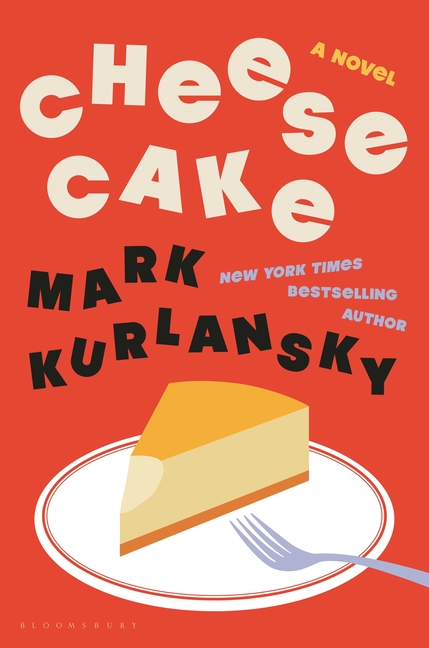
In Cheesecake: A Global History, Mark Kurlansky—gastronomic chronicler, raconteur, and sly anthropologist—offers a slim but sinuous volume that reads like a pastry fork sliding through a dense New York slice. Don’t be fooled by the dainty title. What he’s baked here is no lightweight recipe book with stock-photo glazes. This is cheesecake as palimpsest, as parable, as civilizational through-line: from the whipped curdled altars of ancient Greece to the industrial ovens of Queens, from Sicilian ricotta-clouds to Japanese jiggly enigmas.
With his usual sleight of hand—light in tone, heavy in research—Kurlansky turns a dessert into a diaspora. Cheesecake, he tells us, is not just a guilty pleasure, it’s a mirror held up to history. We get ancient ceremonial offerings, medieval kitchen alchemy, Enlightenment-era gendered cookery, and capitalist branding wars, all filtered through the lens of a dessert that never quite stops being itself while never staying the same.
And what a romp it is. Kurlansky, never one to resist a well-larded anecdote, ladles the pages with unexpected delights: vintage advertisements promising cheesecake as a pathway to glamour, Eastern European tales of smuggling cream cheese across borders, New Yorkers arguing over graham cracker crusts as if democracy depended on it. He balances scholarly insight with the chatty bonhomie of a man who’s spent equal time in libraries and bakeries.
Visually, the book dazzles. Illustrations and archival imagery function like candied garnishes—period postcards, ad clippings, and oddball recipes lend the book a scrapbook intimacy. It’s part museum exhibit, part kitchen confessional. One could imagine it lying on the coffee table of a food historian—or tucked beneath the elbow of someone mid-whisk.
But Kurlansky’s true sleight is thematic. He threads the needle between cheesecake as mere foodstuff and cheesecake as cultural cipher. This is a dessert, after all, that’s been politicized, fetishized, and ritualized. It has been sacred and profane. And, most critically, it has migrated—adapting, absorbing, asserting—like so many diasporic cuisines. Its mutability becomes metaphor. Its survival, emblematic.
Cheesecake, in Kurlansky’s hands, becomes the culinary equivalent of the great novel—compact, layered, surprising. The book may be brief, but it’s rich. Not exhaustive, no. But then neither is a single slice, which still leaves you full. His prose is airy without collapsing, his structure holds firm, and his affection for the subject is infectious without ever cloying. In short, it’s a damn fine piece of cultural writing.
So, is this book for you? If you’ve ever paused mid-bite to wonder where the recipe came from—or if you’ve never paused at all—then yes. Read it. It’s a minor marvel. A sweet, savory, globetrotting history written with the charm of a dinner guest who shows up with dessert and a story.
WORDS: brice.




Leave a Reply