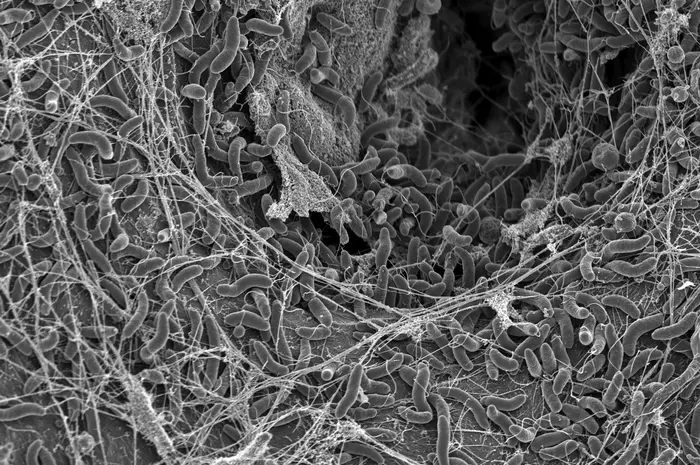
When we think of cholera, most of us picture contaminated water and tragic outbreaks in vulnerable regions. But behind the scenes, cholera bacteria are locked in a fierce, microscopic war—one that could shape the course of pandemics.
Cholera bacteria aren’t just battling antibiotics and public health measures—they are also constantly under attack from bacteriophages (phages), viruses that infect and kill bacteria. These viruses don’t just influence individual infections; they can make or break entire epidemics. In fact, certain bacteriophages are thought to limit the size and duration of cholera outbreaks by killing off Vibrio cholerae, the bacterium behind the disease.
Since the 1960s, the ongoing 7th cholera pandemic has been driven by what are known as “seventh pandemic El Tor” (7PET) strains of V. cholerae, which have spread globally in successive waves. In this evolutionary arms race, bacteria have adapted to fight back, developing defense mechanisms against these phages. For example, many bacterial strains carry mobile genetic elements that arm them with anti-viral tools. So why are certain cholera strains so successful at evading phage attacks? Could this either enable or enhance the pathogen’s devastating effect on human populations?
One event stands out. In the early 1990s, a cholera epidemic swept through Peru and much of Latin America, infecting over 1 million people and causing thousands of deaths. The strains responsible belonged to the West African South American (WASA) lineage of V. cholerae. Why these WASA strains caused such a large outbreak in Latin America is still not fully understood.
New research by the group of Melanie Blokesch at EPFL’s Global Health Institute has now uncovered one secret behind these strains. The study, published in Nature Microbiology, shows that the WASA lineage acquired multiple distinct bacterial immune systems that have protected it from diverse types of phages. And this defense may have contributed to the massive scale of the Latin American epidemic.
The researchers looked at Peruvian cholera strains from the 1990s, testing their resistance against key phages, especially ICP1—a dominant virus that has been extensively studied in the cholera endemic area of Bangladesh where it is thought to contribute to restricting cholera outbreaks. Surprisingly, the Peruvian strains were immune to ICP1, while other strains representative of the 7th pandemic weren’t.
Sign up for the Daily Dose Newsletter and get every morning’s best science news from around the web delivered straight to your inbox? It’s easy like Sunday morning.
By deleting specific sections of the cholera strain’s DNA and inserting these genes into other bacterial strains to test their function, the team identified two major defense regions on the WASA strain’s genome, namely within the so-called WASA-1 prophage and the genomic island known as Vibrio seventh pandemic island II (VSP-II). These genomic regions encode specialized anti-phage systems that work together to create a bacterial immune system capable of defending against phage infections.
One such system, WonAB, triggers an “abortive infection” response that kills infected cells before phages can reproduce, sacrificing a few bacteria to save the larger population. This strategy is different to classical bacterial immune systems such as restriction-modification systems that degrade the phage DNA as it enters the cells. “Instead, it stops the phage from replicating but only after it has already hijacked the cholera bacterium’s cellular machinery, effectively locking the infected bacteria in a standoff—but at least the phage doesn’t spread,” says David Adams, the study’s lead author.
Two further systems, GrwAB and VcSduA, contribute distinct protective functions: GrwAB targets phages with chemically modified DNA—a strategy employed by phages to camouflage their genomes and evade other bacterial immune systems. VcSduA on the other hand acts against different families of viruses including another common “vibriophage”, offering layered protection that broadens the bacterial population’s resistance spectrum.
Essentially, the WASA lineage of cholera bacteria harbors an expanded arsenal of anti-phage defense systems, which allows it to counteract a broad range of bacteriophages in addition to protection from its major predatory phage ICP1.
Understanding how epidemic bacteria resist phage predation is crucial, especially as interest in phage therapy—the use of viruses to treat bacterial infections— has re-emerged as an alternative to antibiotic treatment. If bacteria like V. cholerae can acquire increased transmission potential by obtaining viral defenses, this can reshape how we approach cholera control, monitoring, and treatment. It also underscores the importance of considering phage-bacteria dynamics when studying and managing infectious disease outbreaks.
IMAGE CREDIT: Graham Knott & Melanie Blokesch (EPFL).




Leave a Reply