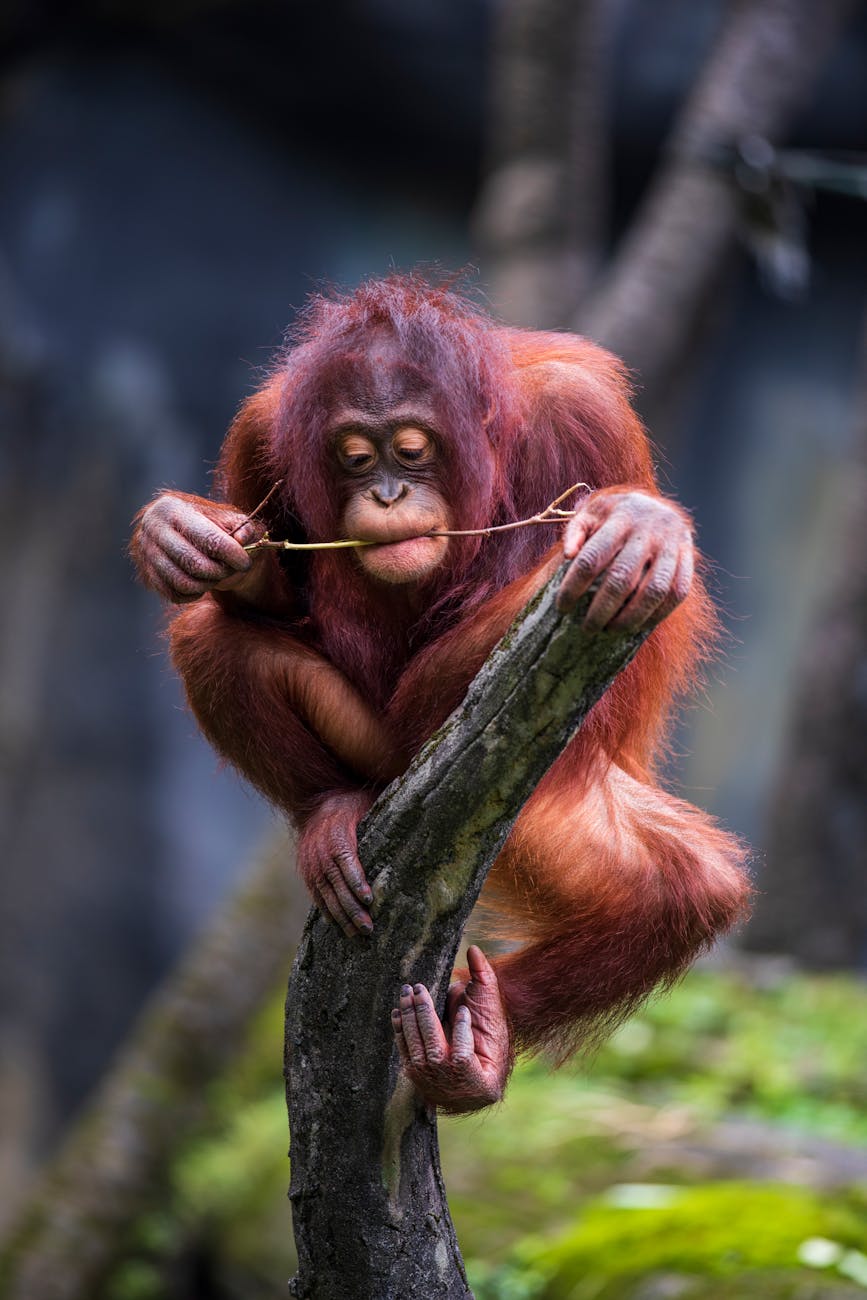
A new study comparing wild and zoo-housed Sumatran orangutans reveals that life in a zoo significantly alters how orangutans interact with their environment. Researchers analyzed over 12,000 instances of daily exploratory object manipulation (EOM)—the active manipulation and visual inspection of objects associated with learning and problem-solving—across 51 orangutans aged 0.5 to 76 years. The findings show that orangutans living in zoos engage in more frequent, more diverse, and more complex exploration than their wild counterparts.
“Our study shows that orangutans in zoos not only explore more, but they also explore differently,” said Isabelle Laumer, first author of the study. “What’s especially fascinating is that even when exploring the same kinds of objects, zoo-housed orangutans showed a richer repertoire of actions and were more likely to use tools or manipulate multiple objects at the same time.”
The study compared exploratory object manipulation (EOM) behaviors in wild and zoo-housed orangutans across a wide age range. Data were collected at the Suaq Balimbing research site in Indonesia from 33 wild individuals aged between six months and 76 years and at four zoos in Germany and Switzerland from 24 individuals aged between seven months and 49 years. In total, ~12,000 EOM events were analyzed.
The study showed that zoo-housed orangutans explore the objects in their surroundings more frequently than wild orangutans whilst there was no difference in exploration duration when individuals did explore. Wild orangutans primarily explored naturally occurring objects like plants, bark, and sticks, while zoo-housed orangutans engaged with a wider variety of enrichment items such as plastic toys, puzzles, and stackable objects designed to encourage manipulation and cognitive engagement. Importantly, the age at which orangutans first engaged in specific types of exploration was consistent across both settings, suggesting an innate developmental sequence. However, zoo orangutans continued to explore into adulthood, while wild individuals’ EOM declined sharply around weaning age at about 8 years of age — likely due to the demands of survival in the wild, where foraging and constant vigilance leave little time for exploration.
Sign up for the Daily Dose Newsletter and get every morning’s best science news from around the web delivered straight to your inbox? It’s easy like Sunday morning.
In human infants, object exploration enables learning about physical properties such as texture and weight while stimulating cognitive and motor development—a pattern observed in many non-human animals as well. The heightened exploration may enhance cognitive flexibility and problem-solving skills in zoo-housed orangutans, as they interact with varied enrichment items and have more time and energy to devote to learning through exploration.
“These findings underscore how profoundly the environment influences animal behavior and cognitive development,” said Caroline Schuppli, senior author of the study. “And it also offers unique opportunities—by comparing wild and zoo-housed animals, we can better understand the full extent of a species’ cognitive potential.”
IMAGE CREDIT: NASA.



Leave a Reply