Lockdowns. Social distancing. Shuttered schools and businesses. The COVID-19 pandemic and its sweeping disruptions set off a stampede of “what it’s doing to us” research, focused largely on schoolchildren. How were students’ academics affected? Their mental health? Their social development?
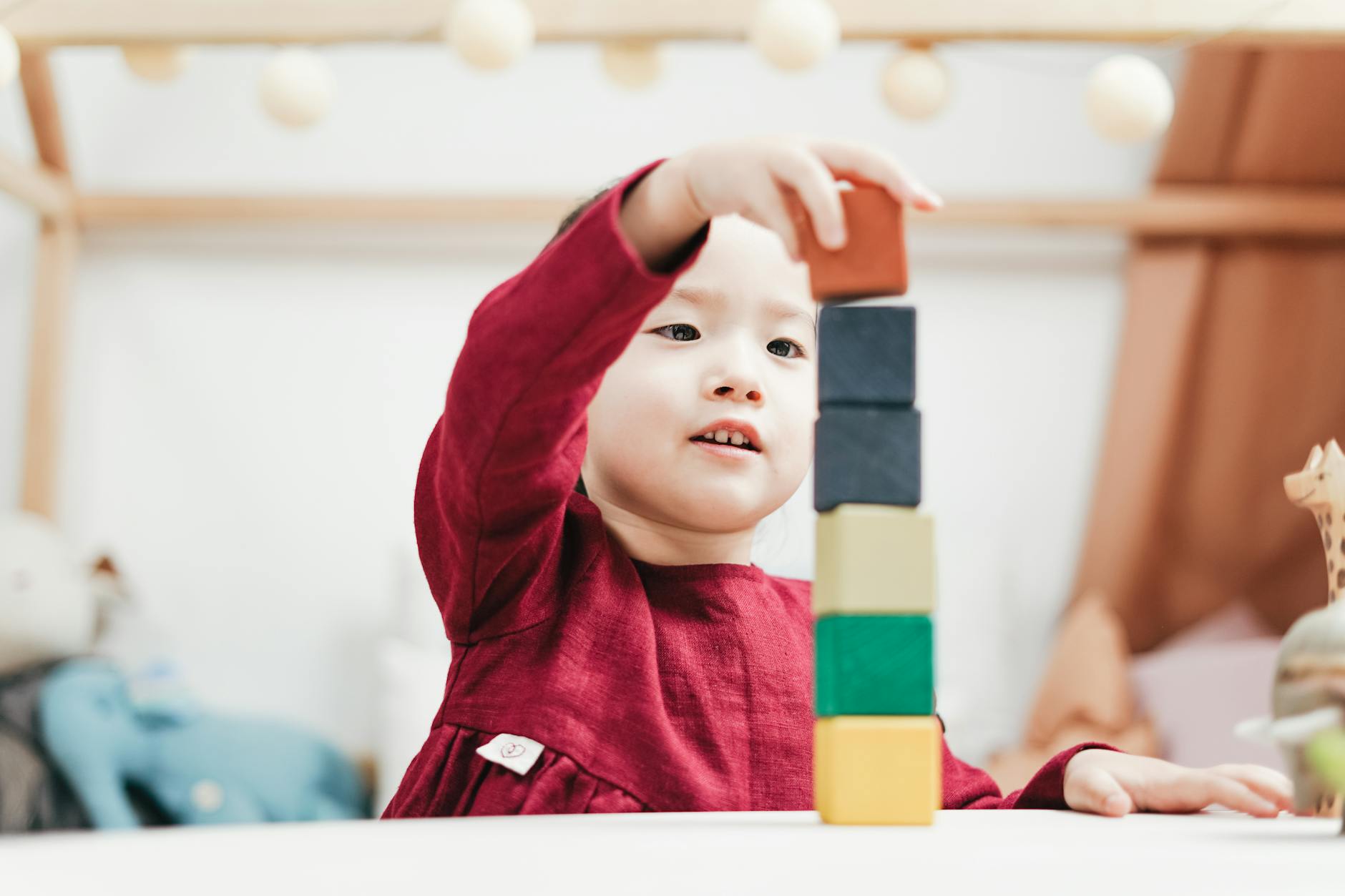
Left unexamined was whether the pandemic impacted the social cognition of preschool children — kids younger than 6 — whose social norms were upended by day care closures and families sheltered at home.
That changed when a UC Merced research team, looking at data it had started to gather before the pandemic, discovered children ages 3½ to 5½ tested before and after COVID lockdowns revealed a significant gap in a key cognitive skill, particularly for children from homes with low financial resources and adults with less education.
“It was remarkable to see the drop in kids’ performance,” said developmental psychology Professor Rose Scott , the lead author of the study published in Scientific Reports . “On one of the tasks in my lab, children tested before the pandemic could pass at 2 and a half years old. Right after the lockdowns, we were seeing 5-year-olds not passing it.”
The UC Merced team — including graduate students Gabriel Nguyentran and James Sullivan, who co-authored the study — tested the children for a social cognition skill called false-belief understanding — the ability to recognize other people can be wrong As a crucial step in distinguishing the mind from reality, false-belief understanding can play a vital role in developing social cooperation, communication and learning.
There were 94 children in the first group tested. Each was given three false-belief tasks. In one task, the child watched as a puppet named Piggy put a toy in one of two containers and leave the stage. A second puppet appeared and moved the toy to the other container. Piggy returned. The child was asked where Piggy would look for the toy. If the child’s false-belief skills were in place, they would say Piggy would choose the first container, though the child knew the toy wasn’t there.
Sign up for the Daily Dose Newsletter and get every morning’s best science news from around the web delivered straight to your inbox? It’s easy like Sunday morning.
Current research agrees false-belief abilities undergo important developments in a child’s first five years, Scott said. A toddler who falls behind in cognition skills may grow into a student who struggles to get along with peers or who finds academic tasks more difficult, Scott said.
“You think about what a child needs to do to interact with others in a classroom. They want to have friends, but have to take other perspectives into consideration to have effective social interactions,” she said. “Like, ‘I know you want to play this now, but I really want to play this.’ It’s being able to hold those two viewpoints in mind and still interact.”
For example, in the task Scott cited earlier, 80% of all 5-year-olds in the pre-lockdown group passed. In the post-lockdown group, the success rate fell to 63%. For 5-year-olds from lower socioeconomic homes, only 51% passed — essentially a coin-flip guess, Scott said.
The children’s language skills were assessed and their family’s socioeconomic status was measured by the total household income over the past year and the highest degree obtained by either parent. Testing for the first group ran from August 2019 to March 2020, when the pandemic took hold. A second, statistically similar group was tested starting in September 2021.
Children in the post-pandemic group and from lower socioeconomic backgrounds showed a significant drop in cognitive ability compared to the pre-pandemic group. Children from homes at a higher socioeconomic level; however, showed little cognitive effect from the lockdowns.
Why was the difference more pronounced for children of lower socioeconomic levels? The study’s data doesn’t give a definitive answer, but Scott said in addition to shutting down formal day care and informal playdates, the lockdown may have put lower-income parents under great financial or mental strain, leading to less communication with their kids. And that could lead to children spending more passive time on electronic devices, an activity linked to low false-belief understanding, she said.
Follow-up tests in 2023 of some of the post-pandemic group members produced a sobering coda to the study’s published findings. The low scores in false-belief understanding were still there, persisting like a wave, Scott said.
In March, Scott presented the study’s groundbreaking findings at a conference in Pasadena. Ears perked up. The attention has only accelerated since the paper was published in November.
“Every time I talk about this, other people in my field say, ‘Oh, my gosh, this is it. This is what we’re seeing in our data,’” Scott said. In December, a colleague at another university emailed her to say the UC Merced study explained so much about what they were seeing in children’s post-pandemic social cognition.
“So I think there may be more data about this out there,” Scott said. “It’s just that people haven’t had the mindset of looking at kids before school age.”



Leave a Reply