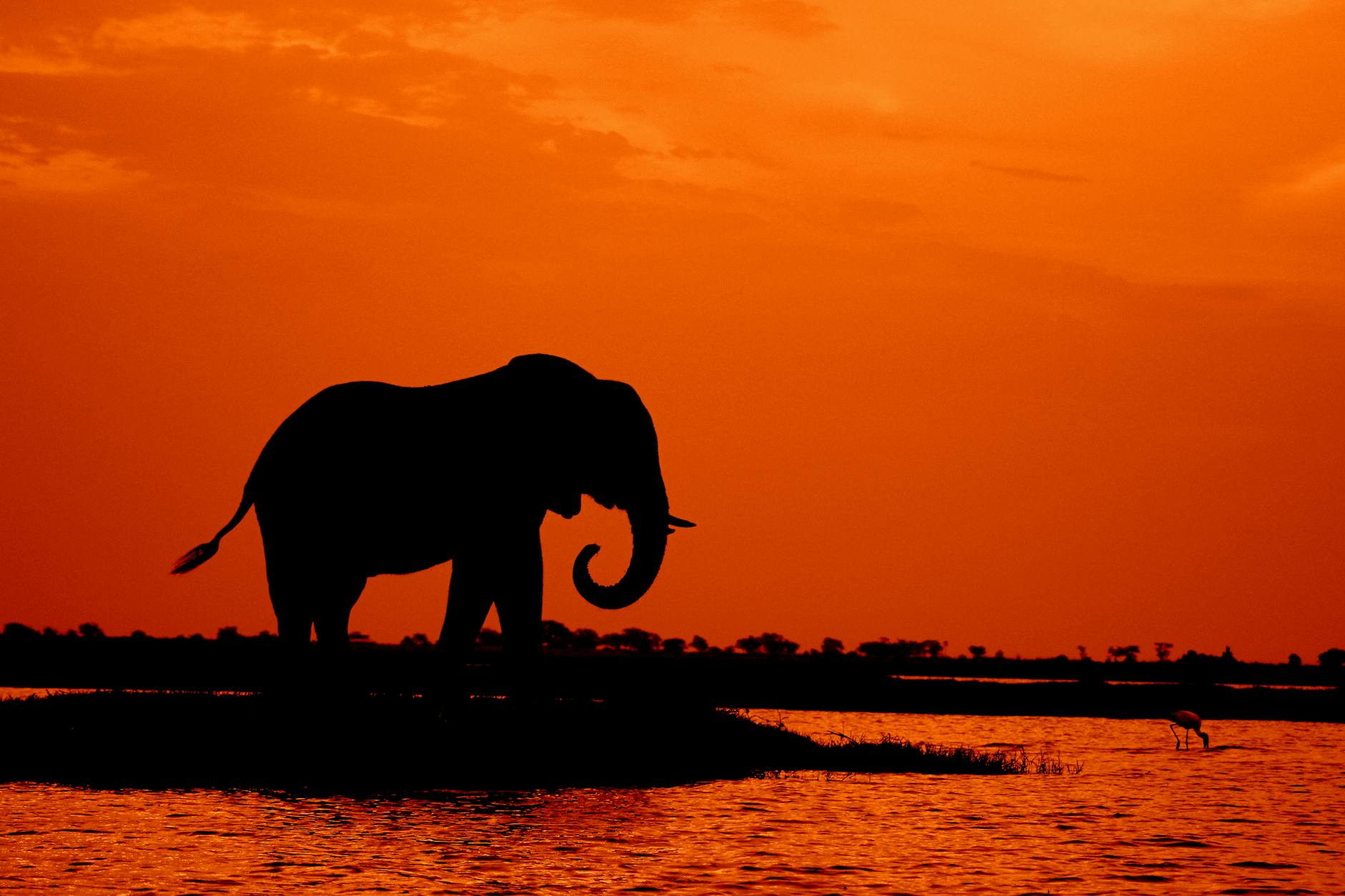
A new study led by King’s College London has provided further evidence that the deaths of 350 African elephants in Botswana during 2020 were the result of drinking from water holes where toxic algae populations had exploded due to climate change.
The lead author of the report says their analysis shows animals were very likely poisoned by watering holes where toxic blooms of blue-green algae, or cyanobacteria, had developed after a very wet year followed a very dry one.
Davide Lomeo, a PhD student in the Department of Geography at King’s College London and co-supervised by Plymouth Marine Laboratory (PML) and the Natural History Museum, said: “Botswana is home to a third of all African elephants, and this unprecedented die-off within their largest remaining population underlines the escalating concerns surrounding the impact of drought and climate change on the Okavango Delta, one of the most important ecosystems in the world.”
Elephant carcasses were first spotted in the north-eastern sector of the country’s Okavango Delta between May and June 2020, but poaching was soon ruled out as the cause.
The event sparked global concern, with a total of 350 elephants now known to have died.
Toxins produced by the algae growing in watering holes was one suspected cause, though evidence has remained inconclusive, in part because it occurred during the COVID-19 pandemic when movements were restricted, and this prevented the collection of samples at the time.
The deaths of 25 elephants in neighbouring Zimbabwe from septicaemia in the same year cast some doubt on algal toxins being the reason for the Botswana deaths.
Sign up for the Daily Dose Newsletter and get every morning’s best science news from around the web delivered straight to your inbox? It’s easy like Sunday morning.
However, writing in the journal Science of The Total Environment, the team say their analysis all but confirms toxic algae as the cause.
Combining satellite data and spatial analysis, the team examined the relationship between about 3000 waterholes and the locations of deceased elephants.
Their analysis revealed waterholes near the carcasses showed elevated algal levels and repeated bloom events in 2020 compared to previous years – particularly during the period associated with the mass mortality event
The team also showed that decayed elephant carcasses were more spread out across the landscape than fresh carcasses, indicating that the die-off in 2020 was different from typical elephant mortality patterns.
“We identified 20 waterholes near fresh carcasses that experienced increased algal bloom events in 2020 compared to the previous three years combined. These waterholes also exhibited the highest average algal biomass of the period 2015 – 2023,” said Davide.
After drinking, elephants were estimated to have walked an average of 16.5 km from the toxic waterholes and died within about 88 hours of exposure.
These findings suggest a heightened risk and likelihood of the presence algal toxins in these waterholes, he added.
The team thinks that the shift from a very dry 2019 – the driest year in decades in the region – to an extremely wet 2020, may have led to a resuspension of significant amounts of sediments and nutrients from the ground, promoting the unprecedented algal growth.
Davide said: “Southern Africa is projected to become drier and hotter under climate changes, and as a result waterholes across this region will likely be drier for more months of the year. Our findings point to the potential negative effects on water quantity and quality, and the catastrophic repercussions on animals, this could have.
“This work, conducted in collaboration with the local authorities, underscores the severe ecological consequences of toxic algal proliferation, emphasising the critical need for comprehensive water quality surveillance across all waterbodies, including the smallest ones. The research demonstrates the effectiveness of satellite-based detection in identifying diverse sources of contamination, reinforcing the importance of expanding Earth observation applications to enable swift intervention when similar environmental threats emerge.”


Leave a Reply