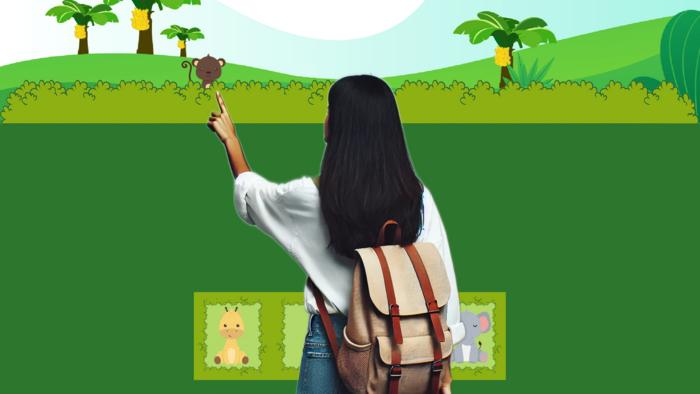
People with stronger autistic trails showed distinct exploration patterns and higher levels of persistence in a computer game, ultimately resulting in better performance than people with lower scores of autistic traits, according to a new study published this week in PLOS Computational Biology by Francesco Poli of Radboud Universiteit, the Netherlands, and colleagues.
Scientists know that individuals display curiosity and explore their environments to learn. How a person selects what they want to explore plays a pivotal role in how they learn and research has shown that exploration levels are highly variable across individuals.
In the new study, researchers tested 77 university students in a curiosity-driven exploration task in which participants had to learn the hiding patterns of multiple characters to predict where they would be. Levels of autistic traits were separately gauged using both self-reported and parent-reported social behavioral questionnaires.
People with lower scores of general autistic traits were less persistent and sought learning opportunities by engaging with characters more in the early stages of exploration. People with higher scores of autistic traits were more persistent and explored for longer times, even when learning was not easy. On this task, this meant that they performed better.
Sign up for the Daily Dose Newsletter and get every morning’s best science news from around the web delivered straight to your inbox? It’s easy like Sunday morning.
“This research underscores the importance of recognizing that individuals, especially those with autistic traits, may possess unique strategies for exploration and learning. This realization can guide educators and policy-makers in crafting more tailored learning environments,” the authors say.
Poli adds: “People explore their environment in different ways. When they are free to explore as they want, individuals with higher autistic traits in our study showed a strong motivation to learn, persisted longer, and often performed better.”
IMAGE CREDIT: Francesco Poli & Maran Koolen.



Leave a Reply