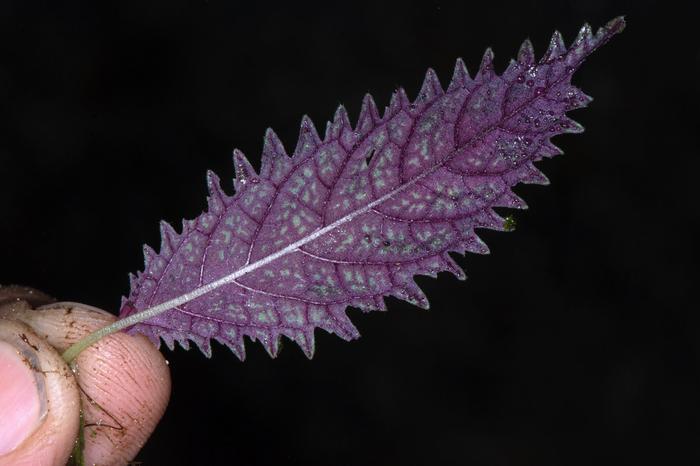
A new 2-inch-high plant species has been discovered on the western Andean slopes of Ecuador in an area where scientists once believed a rich diversity of native plants and animals had been totally destroyed.
The tiny plant, with iridescent foliage and white ephemeral flowers, was found in a farmer’s backyard during ongoing collaborative research expeditions in western Ecuador, led by teams of Ecuadorian and international researchers.
The expeditions resulted in the rediscovery of small forest fragments in a legendary hotspot known as Centinela that lies near a major urban area. Selby Gardens research botanist, John L. Clark is the lead author of the article describing the new species in the peer-reviewed, open-access journal PhytoKeys.
The forest fragments are less than 20 miles from Santo Domingo, a major city with a population of more than 300,000 people. Each forest fragment of Centinela is an isolated island of biodiversity surrounded by large swaths of agricultural landscape largely devoid of intact forest.
A seminal publication titled “Biological extinction in western Ecuador” brought attention to the rapid loss of rainforest in western Ecuador. It was authored by the late botanists Alwyn Gentry and Calaway Dodson, whose research inspired names such as Gasteranthus extinctus in recognition of the loss of more than 70-97% of rainforests from the western Ecuadorian lowlands due to agriculture. The late biologist E. O. Wilson named the phenomenon of species instantly going extinct when their habitat is destroyed as a “Centinelan extinction.”

The recent discovery of this and other new plant species surviving, along with several other critically endangered species in Centinela, represent a miraculous discovery that has shattered the preconception that the multitudes of life in the region had vanished entirely. The name Amalophyllon miraculum reflects the ‘miracle’ of its discovery in the unexpected fragments of protected forests.
“The heroic efforts of local landowners who maintained small patches of forests – usually surrounding waterfalls – were instrumental in conserving these remnant forest fragments,” Clark says.
Ongoing conservation initiatives by foundations and academic institutions such as the Ecuadorian conservation NGO Fundación de Conservación Jocotoco and the Jardín Botánico Padre Julio Marrero (JBJM) of the Pontificia Universidad Católica del Ecuador are also crucial to protecting the areas.
IMAGE CREDIT: J. L. Clark
Sign up for the Daily Dose Newsletter and get the morning’s best science news from around the web delivered straight to your inbox? It’s easy like Sunday morning.




Leave a Reply