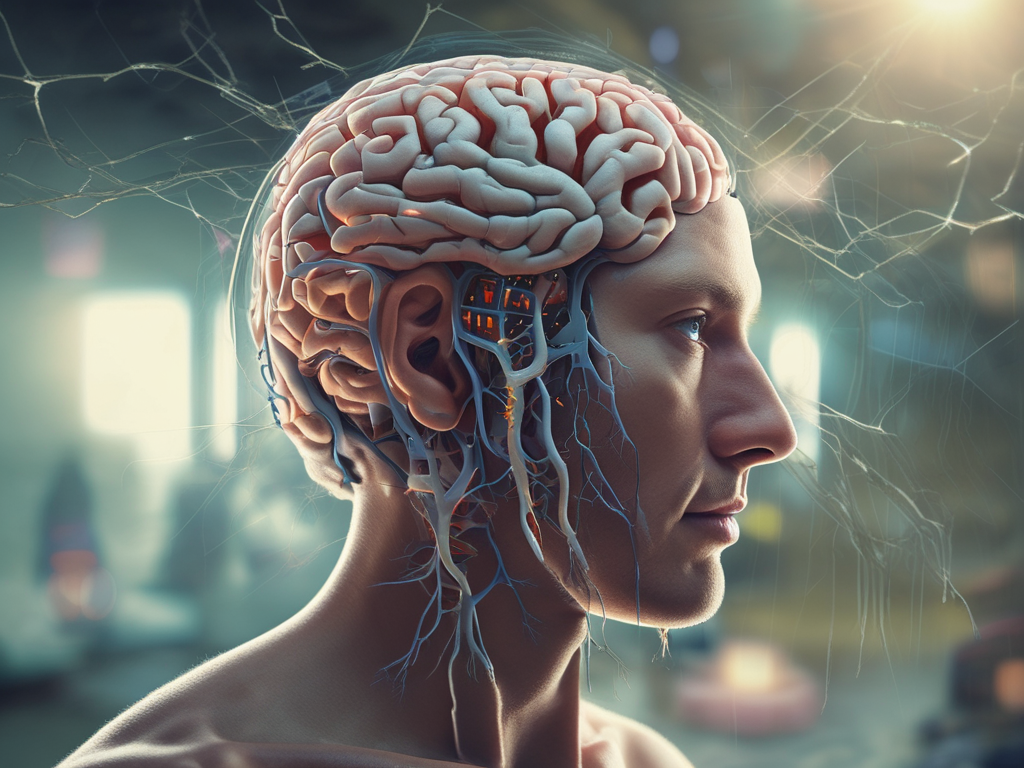
Why can some people easily stop eating when they are full and others can’t, which can lead to obesity?
A Northwestern Medicine study has found one reason may be a newly discovered structural connection between two regions in the brain that appears to be involved in regulating feeding behavior. These regions involve the sense of smell and behavior motivation.
The weaker the connection between these two brain regions, the higher a person’s Body Mass Index (BMI), the Northwestern scientists report.

The investigators discovered this connection between the olfactory tubercle, an olfactory cortical region, which is part of the brain’s reward system, and a midbrain region called the periaqueductal gray (PAG), involved in motivated behavior in response to negative feelings like pain and threat and potentially in suppression of eating.
The study will be published May 16 in the Journal of Neuroscience.
Previous research at Northwestern by co-author Thorsten Kahnt, now at the National Institutes of Health, has shown the smell of food is appetizing when you’re hungry. But the smell is less appealing when you eat that food until you are full.
Sign up for the Daily Dose Newsletter and get every morning’s best science news from around the web delivered straight to your inbox? It’s easy like Sunday morning.
Odors play an important role in guiding motivated behaviors such as food intake, and— in turn — olfactory perception is modulated by how hungry we are.
Scientists have not fully understood the neural underpinnings of how the sense of smell contributes to how much we eat.
“The desire to eat is related to how appealing the smell of food is — food smells better when you are hungry than when you are full,” said corresponding author Guangyu Zhou, research assistant professor of neurology at Northwestern University Feinberg School of Medicine. “But if the brain circuits that help guide this behavior are disrupted, these signals may get confused, leading to food being rewarding even when you are full. If this happens, a person’s BMI could increase. And that is what we found. When the structural connection between these two brain regions is weaker, a person’s BMI is higher, on average.”
Though this study does not directly show it, the study authors hypothesize that healthy brain networks connecting reward areas with behavior areas could regulate eating behavior by sending messages telling the individual that eating doesn’t feel good anymore when they’re full. In fact, it feels bad to overeat. It’s like a switch in the brain that turns off the desire to eat.
But people with weak or disrupted circuits connecting these areas may not get these stop signals, and may keep eating even when they aren’t hungry, the scientists said.
“Understanding how these basic processes work in the brain is an important prerequisite to future work that can lead to treatments for overeating,” said senior author Christina Zelano, associate professor of neurology at Feinberg.
How the study worked
This study used MRI brain data — neurological imaging — from the Human Connectome Project, a large multi-center NIH project designed to build a network map of the human brain.
Northwestern’s Zhou found correlations to BMI in the circuit between the olfactory tubercle and the midbrain region, the periaqueductal gray. For the first time in humans, Zhou also mapped the strength of the circuit across the olfactory tubercle, then replicated these findings in a smaller MRI brain dataset that scientists collected in their lab at Northwestern.
“Future studies will be needed to uncover the exact mechanisms in the brain that regulate eating behavior,” Zelano said.
If you enjoy the content we create and would like to support us, please consider becoming a patron on Patreon! By joining our community, you’ll gain access to exclusive perks such as early access to our latest content, behind-the-scenes updates, and the ability to submit questions and suggest topics for us to cover. Your support will enable us to continue creating high-quality content and reach a wider audience.
Join us on Patreon today and let’s work together to create more amazing content! https://www.patreon.com/ScientificInquirer



Leave a Reply