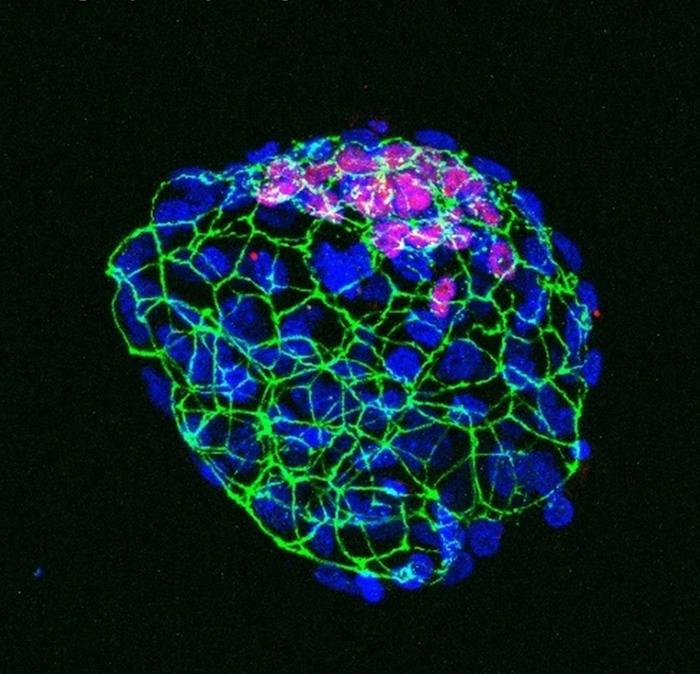
It’s challenging to sustain a pregnancy when food is short, or conditions are otherwise tough. That’s why many mammalian embryos can postpone their growth to get through periods of environmental stress and then re-enter development when conditions improve. This stalling of development is known as embryonic diapause, and understanding the mechanisms behind it might help improve infertility treatments, such as embryo freezing. Now, researchers at the Center for Excellence in Brain Science and Intelligence Technology, the Chinese Academy of Sciences in Shanghai, China, have discovered how nutrient depletion is sensed by embryos growing in hungry mouse mums to induce diapause. They publish their study in the journal Development on 11 April 2024.
Lack of food is a known trigger of embryonic diapause, but it has not been clear how nutrient depletion in the mother’s diet is sensed by the embryo. “Seasonal starvation is one of the universal environmental stresses in nature,” explained Professor Qiang Sun, who led the study. “However, the regulatory process of diapause in early-stage embryos is not fully understood. So, we decided to examine whether nutrient deprivation induces embryonic diapause.”

By comparing hungry and well-fed pregnant mice, the team discovered that embryos in the hungry mice did not implant into the uterus and their growth paused at an early timepoint, when the embryo comprises a hollow ball of cells called the blastocyst. These embryos remained viable and could start developing again when transplanted into a well-fed mother.
To work out which nutrients were important to induce diapause, the researchers grew early-stage mouse embryos in dishes that contained different nutrients. They found that embryos grown in dishes lacking protein or carbohydrates paused their development, whereas the embryos exposed to normal nutrient levels did not stall and kept on developing. The scientists then went on to reveal that nutrient sensors in the embryo can detect drops in protein or carbohydrate levels, which triggers the entry into diapause.
Sign up for the Daily Dose Newsletter and get every morning’s best science news from around the web delivered straight to your inbox? It’s easy like Sunday morning.
The finding that embryos grown without protein or carbohydrates can pause their development means that they can survive longer in the lab. In the future, this finding might lead to improvements in fertility treatments, which currently include approaches such as embryo freezing. “We think our study can inspire the development of new methods for human embryo preservation,” said Professor Sun. “Embryo cryopreservation is a widely used approach, but there is still no consensus on when cryopreserved embryos can be thawed and transferred into the uterus. Many clinical studies have shown that traditional frozen embryo transfer can increase the risk of problems during pregnancy. Therefore, it is necessary to develop alternative methods to preserve embryos.”
Studies focusing on diapause may even have long-term implications for cancer treatments. “Dormant cancer cells which persist after chemotherapy resemble the diapaused embryos,” said Professor Sun. “Consequently, we hypothesize that delving into the mechanism of diapause may have positive implications for cancer treatment and decreasing the chances of relapse.”
IMAGE CREDIT: Jiajia Ye
If you enjoy the content we create and would like to support us, please consider becoming a patron on Patreon! By joining our community, you’ll gain access to exclusive perks such as early access to our latest content, behind-the-scenes updates, and the ability to submit questions and suggest topics for us to cover. Your support will enable us to continue creating high-quality content and reach a wider audience.
Join us on Patreon today and let’s work together to create more amazing content! https://www.patreon.com/ScientificInquirer




Leave a Reply