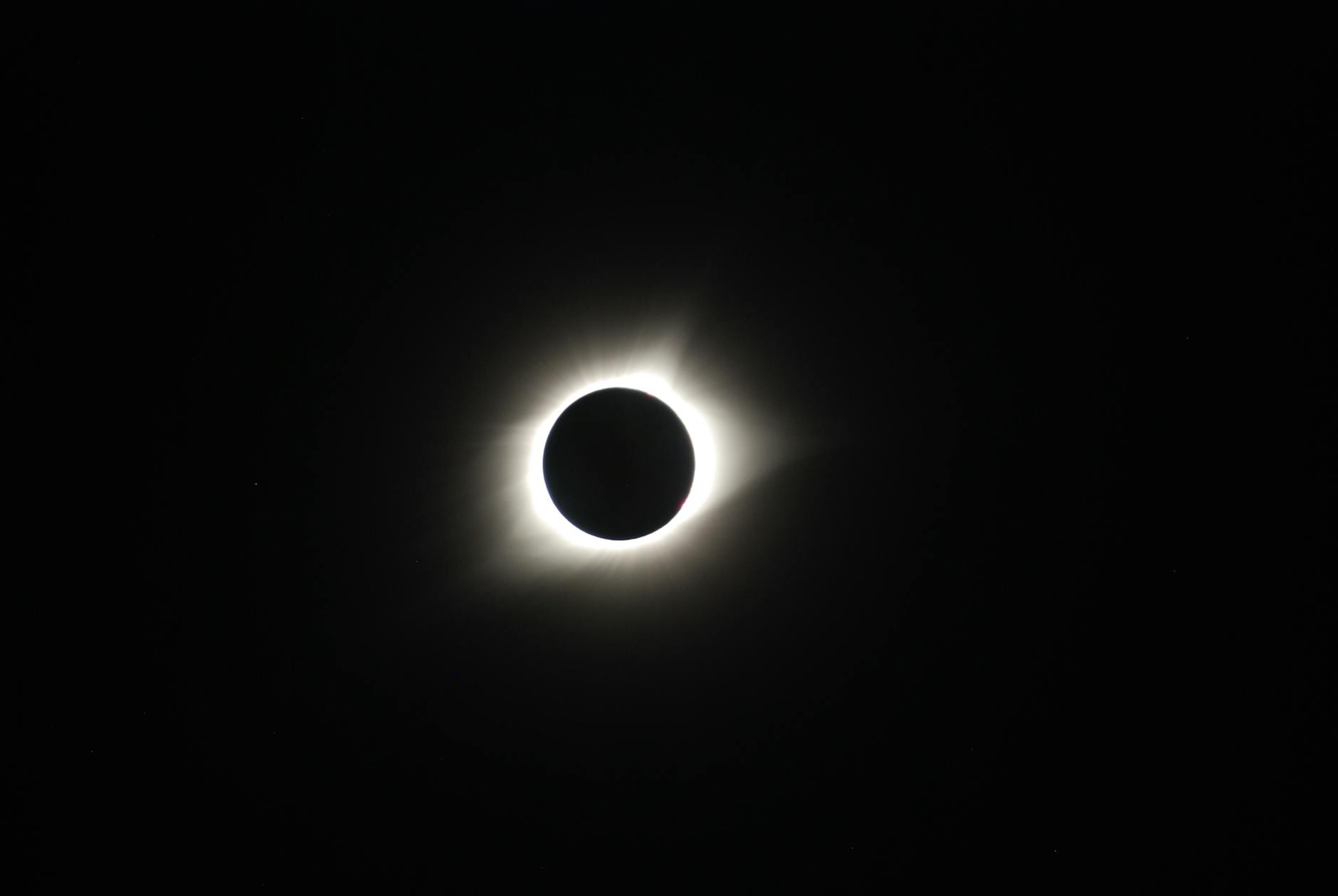
TOTAL SOLAR ECLIPSE TO DAZZLE NORTH AMERICA MONDAY.
On Monday, a total solar eclipse will captivate millions across North America, from Mexico’s beaches to the rugged coastlines of Newfoundland, Canada. This celestial event will dim the daylight, offering a spectacular display of cosmic significance and evoking strong emotional responses from spectators. The eclipse’s path will begin in North America near Mazatlán, Mexico, at 12:51 p.m. Eastern Time, moving across the United States through Texas, the Midwest, New York, and New England, before concluding in Newfoundland around 3:45 p.m. Cities along the route will experience varying degrees of darkness, with some places witnessing totality for up to four and a half minutes. Despite the potential for cloud coverage and storms, especially in Texas, there remains optimism for clear viewing in regions like New England. Approximately 32 million Americans reside along the eclipse’s path, with many more expected to travel, likely causing significant traffic. Viewers are reminded to use eclipse glasses for safety and to prepare for the next North American total solar eclipse in 2044. (New York Times)
ECLIPSE CHASER’S JOURNEY INSPIRES MILLIONS GLOBALLY.
Kate Russo’s encounter with a total solar eclipse 25 years ago in France transformed her from a curious onlooker to a dedicated eclipse chaser, marking the beginning of her journey to witness 14 such celestial events around the world. This phenomenon has attracted a global community of enthusiasts, including more than a million people converging in North America for an eclipse. For many like Russo, the experience transcends mere astronomical interest, evoking deep emotional responses and existential reflections. The momentary immersion in darkness, the dramatic drop in temperature, and the visual spectacle of the corona instill a sense of awe and connectedness, prompting a quest for repetition. Esteemed chasers share a common narrative: the addiction to the unique beauty and emotional impact of eclipses. From seasoned experts embarking on specialized tours to novices advised to eschew cameras for direct experience, the eclipse community thrives on shared anticipation and the profound personal transformations these events inspire. (BBC)
If you’re enjoying the Daily Dose, sign up for the Daily Dose Newsletter and get the morning’s best science news from around the web delivered straight to your inbox? It’s easy like Sunday morning.
YOUNG SINGAPOREANS FACE MYOPIA SURGE AMID DIGITAL SHIFT.
In Singapore, Asher Gan’s struggle with myopia from a young age reflects a growing trend among children, exacerbated by increased screen time and reduced outdoor activities. Diagnosed after experiencing difficulty seeing the whiteboard at school, Asher’s condition is shared by 80% of Singaporeans under 18, with up to 20% facing high myopia. The shift towards digital device use in education and the behavioral changes brought on by the COVID-19 pandemic have contributed significantly to this rise. Specialists at the Singapore National Eye Centre (SNEC) note a concerning trend of myopia developing earlier in children, leading to potential severe complications in adulthood. However, advancements in controlling myopia, such as specialized glasses, contact lenses, and eye drops, offer hope. Techniques like artificial intelligence are also being utilized to predict and prevent myopia in children. Asher, now required to wear glasses, symbolizes the broader challenge of balancing technological integration in learning with children’s health and well-being. (Channel News Asia)
BRAZILIAN JUDGE INVESTIGATES MUSK FOR JUSTICE OBSTRUCTION CLAIMS.
Elon Musk is under investigation by a Brazilian judge for allegedly obstructing justice by refusing to comply with a court order to remove certain X (formerly Twitter) accounts accused of disseminating disinformation. Supreme Court Justice Alexandre de Moraes has initiated a probe into Musk’s actions, which could include charges of obstruction, criminal organization, and incitement. This follows Musk’s public defiance and criticism of de Moraes, including a statement on X where Musk claimed the judge had betrayed Brazil’s constitution and should either resign or be impeached. De Moraes has ordered X to adhere to judicial orders under penalty of fines. Musk argues that principles outweigh profit, even if it means losing revenue and possibly shutting down operations in Brazil. This incident highlights tensions between social media platforms and legal authorities over content regulation and the balance between free speech and disinformation control. (Al-Jazeera)

PHYSICIST FACES DISMISSAL OVER SUPERCONDUCTIVITY SCANDAL.
Ranga Dias, a physicist implicated in a scandal over claims of room-temperature superconductivity, faces accusations of data fabrication, falsification, and plagiarism as per an investigation by the University of Rochester, revealed through court documents. The 10-month inquiry, prompted by the National Science Foundation (NSF), scrutinized 16 allegations, concluding Dias likely committed scientific misconduct in each case. The university seeks his dismissal before his tenure-track contract ends. The controversy stems from two retracted Nature papers, among others, where Dias allegedly distorted data to support his superconductivity claims. This deceit extended to misleading co-authors, journal editors, and the scientific community. Despite preliminary inquiries that initially dismissed the need for a full investigation, persistent concerns led the NSF to mandate a comprehensive probe. The investigation detailed extensive misconduct, including manipulated data to fabricate evidence of superconductivity. Dias denies wrongdoing, but the report and ensuing fallout underscore significant breaches of scientific integrity, calling into question his future in research. (Nature)
SOUTH AUSTRALIAN MUSEUM’S RESTRUCTURE PLAN SPARKS GLOBAL BACKLASH.
The South Australian Museum (SAM) in Adelaide has proposed restructuring its research and curatorial staff to address financial challenges and modernize for the 21st century. This plan, led by SAM’s CEO David Gaimster, aims to transition researchers towards developing public exhibitions without reducing research investment, intending better public outcomes. However, this move has sparked global criticism among scientists, who argue it diminishes the museum’s scientific integrity. Critics, including former SAM director Tim Flannery, fear the museum will shift from a significant scientific institution to more of an entertainment venue. The restructuring involves reducing scientific and curatorial positions, closing a laboratory, and impacting the museum’s capacity for DNA studies and its commitment to Indigenous repatriation efforts. These changes have raised concerns over the loss of taxonomic expertise and the potential impact on biodiversity conservation in South Australia. Despite opposition and calls for increased government funding, there is no indication of SAM reconsidering its plan. (Science)
Thanks for reading. Let’s be careful out there.
WORDS: The Biology Guy.
IMAGE CREDIT: Elizabeth Olson.



Leave a Reply