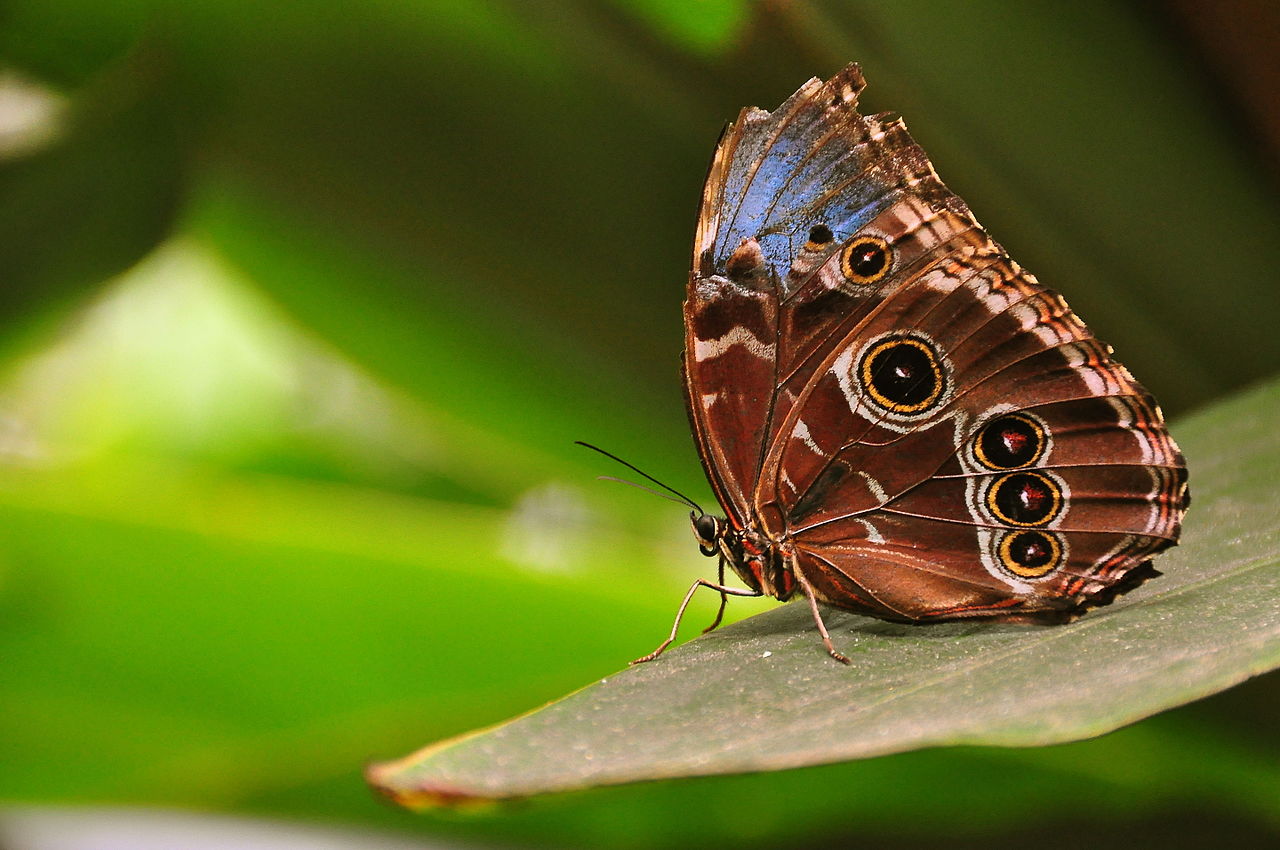

The Morpho peleides butterfly, renowned for its iridescent blue topside, exhibits a starkly contrasting brown underside, a marvel of evolutionary adaptation designed for survival. This dichotomy in coloration serves multiple purposes, from camouflage and predator deterrence to thermal regulation and intra-species communication, showcasing the complexity of natural selection.
At the heart of the butterfly’s vivid blue topside is structural coloration, a phenomenon not reliant on pigments but on the microscopic structure of the wing scales. These scales, layered with cuticle, manipulate light by reflecting and refracting it to amplify the blue spectrum. This structural coloration is a form of optical illusion, creating a dazzling effect visible to the human eye and potential predators from a distance.
In contrast, the brown underside of the wings is pigmented, incorporating eyespots and lines that mimic the appearance of leaves and shadows in the butterfly’s natural habitat. This coloration strategy is essential for camouflage, allowing the butterfly to blend seamlessly into its surroundings when at rest with its wings closed. The brown color, a result of pigments in the wing scales, reflects only brown spectrum wavelengths, enabling the butterfly to evade predators by hiding in plain sight.
The dual coloration strategy of Morpho peleides serves both defensive and offensive purposes. The sudden flash of blue during flight can startle predators, providing the butterfly a crucial moment to escape. Upon landing, the butterfly can once again become virtually invisible against the backdrop of nature, thanks to its brown underside. Additionally, this coloration may assist in thermal regulation, as the darker underside absorbs more light and heat, essential for the butterfly’s activity in cooler environments.
The underside patterns may facilitate communication within the species, particularly in courtship and territorial behaviors. This intricate balance between predation risk and environmental adaptation highlights the evolutionary ingenuity behind the Morpho peleides butterfly’s coloration, a testament to the wonders of natural selection.
(IMAGE CREDIT: Armando Maynez)




Leave a Reply