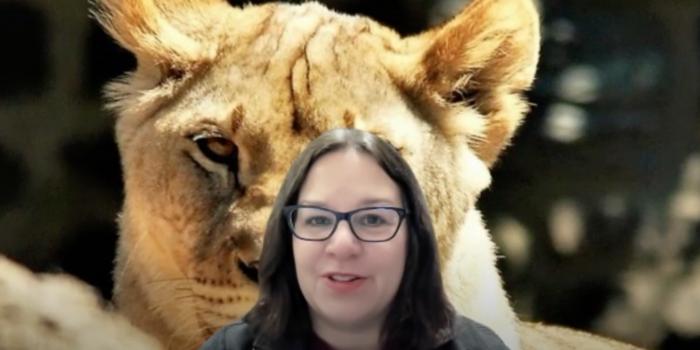
In a recent PeerJ Life & Environment study, Professor Jennifer Vonk from Oakland University presents compelling evidence that exotic cats possess the remarkable ability to discriminate between familiar and unfamiliar human voices.
The article – “Catcalls: Exotic Cats Discriminate the Voices of Familiar Caregivers” – delves into the often-overlooked realm of voice recognition among Felidae species. While much attention has been paid to domestication and early experiences in understanding animals’ ability to differentiate between familiar and unfamiliar humans, few studies have explored this phenomenon in the feline family.

Using carefully designed experiments, Professor Vonk’s graduate student, Taylor Crews, and her team investigated whether non-domesticated Felidae species could recognise familiar human voices. The results had some key takeaways.
The researchers found consistent evidence of voice recognition across pilot and main studies involving 25 cats from various species, including lions, tigers, and cheetahs. Cats responded more quickly, intensely, and for longer durations to familiar voices compared to unfamiliar ones, regardless of the use of their names or rearing history.
Sign up for the Daily Dose Newsletter and get every morning’s best science news from around the web delivered straight to your inbox? It’s easy like Sunday morning.
The findings suggest that close human contact, rather than domestication, is associated with the ability of cats to discriminate between human voices. It also challenges the notion that less social species lack socio-cognitive abilities comparable to more gregarious species. Professor Vonk explains “Non-group-living animals can exhibit social cognitive abilities such as heterospecific vocal recognition so we should not neglect the study of social cognition in less highly social species.”
The implications of this study are profound, particularly considering the widespread housing of cats of all species in human care. Understanding their capacity to differentiate familiar from unfamiliar human voices could have significant implications for their welfare and interactions with caregivers.
This study adds to the growing body of work challenging stereotypes about cats as aloof creatures. It underscores the importance of recognizing the cognitive abilities of all species, even those traditionally considered less social.
IMAGE CREDIT: PeerJ
If you enjoy the content we create and would like to support us, please consider becoming a patron on Patreon! By joining our community, you’ll gain access to exclusive perks such as early access to our latest content, behind-the-scenes updates, and the ability to submit questions and suggest topics for us to cover. Your support will enable us to continue creating high-quality content and reach a wider audience.
Join us on Patreon today and let’s work together to create more amazing content! https://www.patreon.com/ScientificInquirer


Leave a Reply