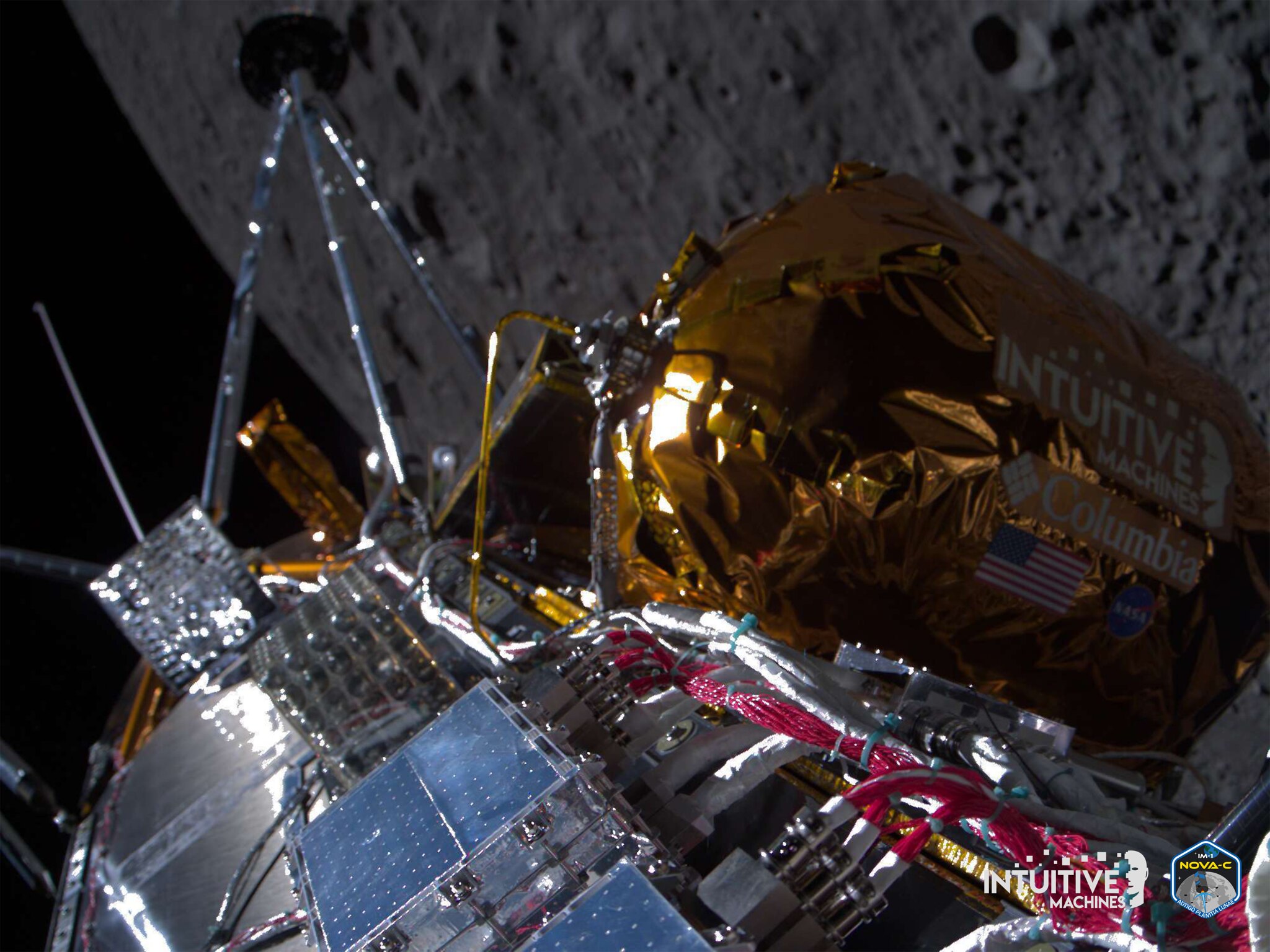
PRIVATE SPACECRAFT ODYSSEUS MAKES HISTORIC MOON LANDING.
On February 22, the first private spacecraft to successfully land on the Moon, named Odysseus and built by Intuitive Machines in Houston, Texas, marked a significant milestone. This event also represented the first US lunar landing since the Apollo missions in 1972. Despite a technical hiccup with its laser rangefinders, a software update allowed Odysseus to use a secondary laser from NASA, ultimately achieving a successful landing and sending a signal back to Earth. This achievement underscores the resurgence of US and commercial interest in lunar exploration, bolstered by NASA’s support and reliance on private companies to transport equipment and scientific instruments to the Moon. Odysseus’s mission, part of NASA’s Commercial Lunar Payload Services program, aims to gather data for up to seven days on the lunar surface, contributing valuable insights for future missions, including manned ones to the Moon’s south pole. The spacecraft utilized methane-based rocket fuel, showcasing advancements in space travel technology. (Nature)
DEEP-SEA ROBOT DISCOVERS 100 NEW SPECIES OFF CHILE.
A team of researchers, utilizing a deep-sea robot equipped with a camera, discovered over 100 never-before-seen species off the coast of Chile, capturing the vibrant life at depths up to 4500 meters. This exploration, conducted by the Schmidt Ocean Institute, revealed a colorful array of life on underwater mountains, or seamounts, including unique sponges, crustaceans, and ghostly creatures in the depths of the Nazca and Salas y Gómez ridges. These ridges span over 3000 kilometers and include regions within the Juan Fernández and Nazca-Desventuradas marine parks, contributing to the biodiversity found there. The expedition also led to the mapping of four previously unknown seamounts, with the tallest being named Solito, reaching 3530 meters high. The collected specimens and footage will aid in the identification of new species and enhance understanding of the area’s evolutionary history, showcasing the importance of protected marine parks in preserving underwater biodiversity. (Science)
If you’re enjoying the Daily Dose, sign up for the Daily Dose Newsletter and get the morning’s best science news from around the web delivered straight to your inbox? It’s easy like Sunday morning.
UKRAINE’S WAR ZONE: SOLDIERS’ BRAVE BATTLE WITH BRAIN INJURIES.
In Ukraine’s ongoing conflict, soldiers face numerous front-line dangers, resulting in a significant number of combat-related brain injuries. Mechnikov Hospital in Dnipro, one of the world’s busiest combat trauma centers, has admitted over 26,000 casualties since 2022, with the majority suffering from blast-related concussions or severe brain injuries. The hospital’s neurosurgery team, led by Andrii Sirko, has performed over 1,300 brain surgeries, facing the emotional challenge of treating patients who are often young, mirroring the age of their own children. Soldiers undergo complex surgeries and lengthy rehabilitation, dealing with the physical and cognitive aftermath of their injuries. Mykhaylo Bielov’s story illustrates the harsh realities and long recovery journey, including multiple surgeries and ongoing rehabilitation. Despite the physical possibility of recovery, the emotional and psychological scars remain, affecting not just the soldiers but their families as well, highlighting the war’s profound personal toll beyond the battlefield. (New York Times)
BATTLING LASSA FEVER IN AFRICA.
In Nigeria and Sierra Leone, Lassa fever, a deadly hemorrhagic disease transmitted primarily by rodents, continues to challenge public health systems and devastate communities. Muhammed Luqman Dagana’s harrowing experience with Lassa fever in Nigeria underscores the disease’s severity and the difficulties in diagnosing it. Initially misdiagnosed with typhoid and malaria, Dagana’s condition deteriorated until he was correctly diagnosed with Lassa fever, by which time he was suffering from acute renal failure. Despite a recovery that required extensive hospitalization and dialysis, his ordeal highlights the disease’s potential for severe outcomes, including death in 15% to 20% of severe cases. Lassa fever, largely overlooked despite killing more people annually than Ebola, is endemic in parts of West Africa, affecting the rural poor the most. Efforts to combat the disease have been hampered by limited awareness, inadequate diagnostics, and the challenge of delivering care to remote areas. However, recent outbreaks have raised the disease’s profile, prompting increased international and local efforts to understand its spread, develop effective treatments, and potentially create vaccines. The disease’s persistence and spread underscore the need for continued vigilance and innovation in addressing neglected tropical diseases. (Science)

JAMES WEBB TELESCOPE DISCOVERS NEUTRON STAR IN SUPERNOVA.
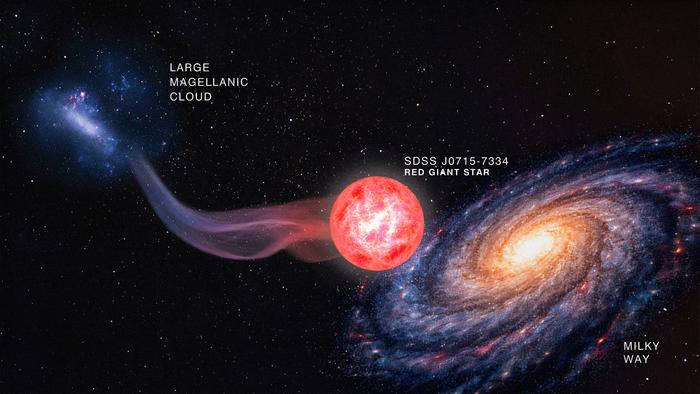
Using the James Webb Space Telescope (JWST), astronomers discovered a neutron star within Supernova 1987A, a stellar remnant from a star that exploded around 170,000 light-years away in the Large Magellanic Cloud. This discovery ends a nearly decade-long search for the aftermath of the supernova first observed in 1987, which was the brightest seen from Earth in 400 years. Supernovae like 1987A play a crucial role in the cosmos by dispersing elements necessary for the formation of stars, planets, and potentially life. The neutron star’s detection was challenging due to a dense dust cloud obscuring it, but JWST’s infrared capabilities allowed researchers to observe emissions from ionized argon and sulfur, indicating the presence of a neutron star. The findings also raise questions about the neutron star’s nature, whether it’s a pulsar with a surrounding nebula or a “naked” neutron star, with further JWST observations expected to provide answers. (space.com)
TYLER PERRY HALTS STUDIO EXPANSION OVER AI CONCERNS.
Tyler Perry has halted an $800 million expansion of his Atlanta studio complex following the release of OpenAI’s video generator, Sora, expressing concerns about the impact of artificial intelligence (AI) on jobs in the film industry. Perry had planned to add 12 sound stages to his studio but suspended the project indefinitely after witnessing demonstrations of Sora’s capabilities, which he found “shocking.” Sora, launched on February 15 with limited access, impressed with its ability to generate realistic footage from text prompts. Perry believes that advancements in AI, demonstrated by Sora, will lead to job losses across various sectors of the film industry, affecting actors, editors, sound specialists, transportation crews, and even construction workers. He emphasized the need for collective action within the industry to address the challenges posed by AI and protect jobs, advocating for a unified approach involving all stakeholders. (The Guardian)
Thanks for reading. Let’s be careful out there.
WORDS: The Biology Guy.
IMAGE CREDIT: Intuitive Machines.

Leave a Reply