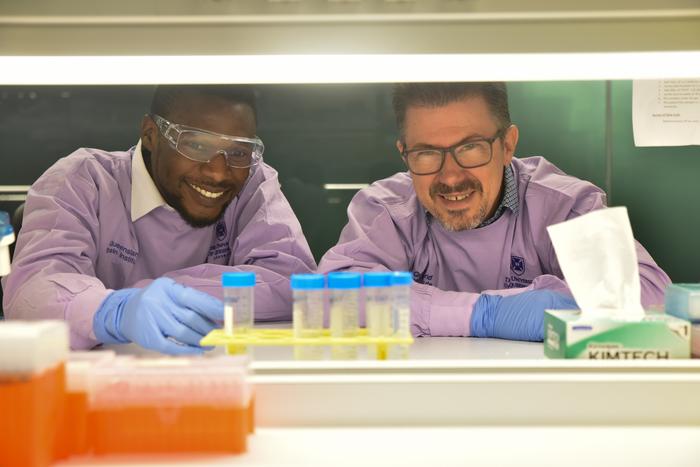
Researchers at the University of Queensland have revealed the crucial role of saturated fatty acids in the brain’s consolidation of memories.
Dr Isaac Akefe from UQ’s Queensland Brain Institute has uncovered the molecular mechanism and identified the genes underlying the memory creation process, opening the door to a potential treatment for neurodegenerative disorders.

“We’ve shown previously that levels of saturated fatty acids increase in the brain during neuronal communication, but we didn’t know what was causing these changes,” Dr Akefe said.
“Now for the first time, we’ve identified alterations in the brain’s fatty acid landscape when the neurons encode a memory.
Sign up for the Daily Dose Newsletter and get every morning’s best science news from around the web delivered straight to your inbox? It’s easy like Sunday morning.
“An enzyme called Phospholipase A1 (PLA1) interacts with another protein at the synapse called STXBP1 to form saturated fatty acids.”
The brain is the body’s fattiest organ, with fatty compounds called lipids making up 60% of its weight. Fatty acids are the building blocks of a class of lipids called phospholipids.
The work done in Professor Frederic Meunier’s laboratory has shown that STXBP1 controls the targeting of the PLA1 enzyme, coordinating the release of fatty acids and directing communication at the synapses in the brain.
“Human mutations in the PLA1 and the STXBP1 genes reduce free fatty acid levels and promote neurological disorders,” Professor Meunier said.
“To determine the importance of free fatty acids in memory formation, we used mouse models where the PLA1 gene is removed.
“We tracked the onset and progression of neurological and cognitive decline throughout their lives.
“We saw that even before their memories became impaired, their saturated free fatty acid levels were significantly lower than control mice.
“This indicates that this PLA1 enzyme, and the fatty acids it releases, play a key role in memory acquisition.”
The research has important implications for understanding of how memories are formed.
“Our findings indicate that manipulating this memory acquisition pathway has exciting potential as a treatment for neurodegenerative diseases, such as Alzheimer’s,” Professor Meunier said.
The research team acknowledges the contributions of PhD candidates Saber Abd Elkader from the Australian Institute for Bioengineering and Nanotechnology, and Benjamin Matthews from the Queensland Brain Institute.
This is a collaborative study with the University of New South Wales, University of Strasbourg, University of Bordeaux, The Scripp Research Institute and the Baylor College of Medicine.
IMAGE CREDIT: Queensland Brain Institute
If you enjoy the content we create and would like to support us, please consider becoming a patron on Patreon! By joining our community, you’ll gain access to exclusive perks such as early access to our latest content, behind-the-scenes updates, and the ability to submit questions and suggest topics for us to cover. Your support will enable us to continue creating high-quality content and reach a wider audience.
Join us on Patreon today and let’s work together to create more amazing content! https://www.patreon.com/ScientificInquirer




Leave a Reply