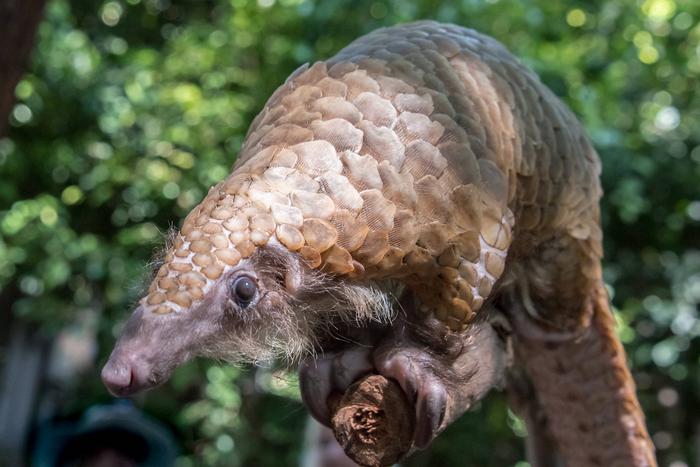
Genomic analyses reveal illegal pangolin trafficking routes from origins in Africa to markets in Asia, researchers report. The approach offers new opportunities to monitor pangolin poaching in near real-time, allowing for targeted and more effective anti-trafficking measures.
The illegal wildlife trade is a significant driver of global biodiversity loss. Of all the species poached and traded, the white-bellied pangolin (Phataginus tricuspis) is the world’s most trafficked mammal and is at risk of extinction.
Pangolins are in high demand in Asia because their scales are believed, without scientific support, to have medicinal properties in traditional medicines, particularly in China.

As populations of Asian pangolin species have declined, smugglers have begun importing African pangolins to help meet demand. It’s estimated that more than a million pangolins have been trafficked in the last decade. Identifying the origin of poached pangolins and the networks through which they’re traded could help reduce illegal trade and protect the species from further exploitation.
However, determining the precise origin of animals involved in the global wildlife trade is challenging, particularly in species with extensive geographic ranges that can span continents, like the pangolin. Here, Jen Tinsman and colleagues present a genomic-based origin-to-destination approach for understanding where pangolins are harvested, amassed, shipped, and consumed.
By analyzing 111 samples collected from wild pangolins across their range, Tinsman et al. mapped geographically and genetically distinct populations of white-bellied pangolins in Africa and created a framework for tracing confiscated pangolin scales to their precise geographic origins. Using this spatially and genomic explicit map, the authors were able to trace 643 illegal pangolin scales seized in Asia from 32 illegal shipments arriving from at least 7 different smuggling routes between 2012 and 2018 to their geographic origins.
According to the findings, poaching activities have shifted from West to Central Africa with Cameroon’s southern border recently emerging as a hotspot of intense poaching. Although many confiscated scales originated from southern Cameroon, the vast majority arrived in Asia via shipments from Nigeria, indicating that the country serves as an important hub for smuggling pangolin scales.
IMAGE CREDIT: (ENTER NAMES)
Sign up for the Daily Dose Newsletter and get the morning’s best science news from around the web delivered straight to your inbox? It’s easy like Sunday morning.



Leave a Reply