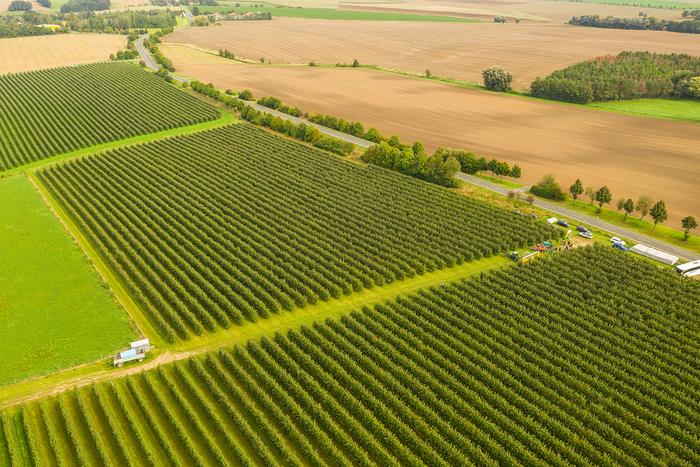
The ‘Nature Restoration Law’ (NRL) requires member states of the EU to implement restoration measures on at least 20 per cent of land and marine areas by 2030, and in all ecosystems in need of restoration by 2050. This includes specific targets to rewet peatlands and to increase pollinator populations. The NRL has already overcome various hurdles: most recently, it was approved by the EU Parliament’s Environment Committee, after delegations of the Parliament and the Council negotiated the final text.
But will the regulation really achieve its aims? The authors, including scientists leading large European projects on nature restoration and biodiversity, analysed experiences with other European environmental directives and policies, and evaluated the prospects of the NRL to be successful.
“The NRL avoids several pitfalls that often obstruct the implementation of European policies and regulations, showing that the Commission learned from past experiences” says Prof. Dr Daniel Hering from the University of Duisburg-Essen, first author of the study. “The regulation sets ambitious targets and timelines, and implementation steps are clearly laid out. It also saves time as it does not need to be transposed into national law.” At the same time, national implementation will be crucial for the NRL’s success. “While targets are precisely defined and binding, the steps to achieve them need to be decided by individual European countries and most of them are voluntary” says Prof. Dr Josef Settele from Helmholtz Centre for Environmental Research (UFZ), one of the study’s authors.

Key to the implementation will be the cooperation of nature restoration with land users, in particular with agriculture. “Intensive agriculture is still a key driver for biodiversity loss in Europe”, says senior author Dr Guy Pe’er. “But targets for agriculture and nature restoration could be coordinated, with opportunities for both”. Agriculture directly benefits from healthy soils and pollinator populations and from increased water storage capacity in the landscape that are all targets of the NRL.
The authors conclude that funds provided by the EU’s Common Agricultural Policy need to be used for achieving the NRL’s aims: a statement to be intensively debated in science and application.
Overall, the authors provide a positive outlook for the NRL, but warn that ambitious national implementation and cooperation with economic sectors, such as agriculture, will eventually determine the success of nature restoration in Europe.
IMAGE CREDIT: André Künzelmann/UFZ.
Sign up for the Daily Dose Newsletter and get the morning’s best science news from around the web delivered straight to your inbox? It’s easy like Sunday morning.


Leave a Reply