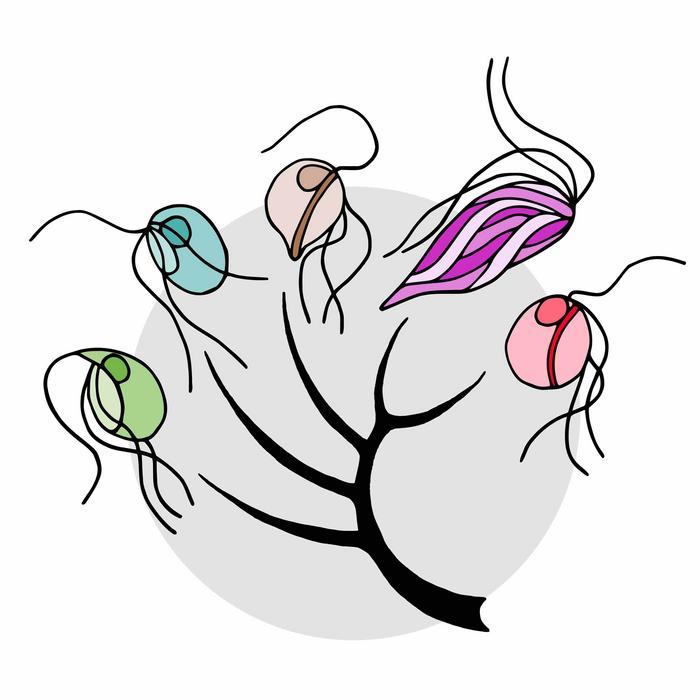
Almost all eukaryotic organisms, from plants and animals to fungi, can’t survive without mitochondria – the “powerhouses of the cell,” which generate chemical energy using oxygen. However, a new study by Lukáš Novák and Vladimír Hampl of Charles University, published in the journal PLOS Genetics, finds that multiple members of the oxymonads, a group of single-celled protists that live inside the guts of termites and other animals, have evolved to live quite happily without them.
Many groups of protists have evolved simplified mitochondria, but for a long time, scientists thought it was impossible for a species to completely lose them. The first eukaryotic organism discovered to live without mitochondria was an oxymonad isolated from the intestines of a chinchilla.

In the new study, the research team looked to see if similar organisms had also shed them. They compared genomic data from the original oxymonad to multiple related species to see if they could decipher how the organisms evolved to live without this supposedly vital part of the cell.
The researchers showed that multiple oxymonads have gotten rid of their mitochondria – possibly the entire lineage. This event likely would have occurred at least 100 million years ago, before the ancestor of the oxymonads diversified into multiple species. The findings also demonstrate that it’s possible for eukaryotic organisms to thrive without mitochondria, and to evolve into the wide range of shapes and specialized structures seen in oxymonads living today.
IMAGE CREDIT: Lukas Novak.
Sign up for the Daily Dose Newsletter and get the morning’s best science news from around the web delivered straight to your inbox? It’s easy like Sunday morning.



Leave a Reply