Children displayed a resilient capacity to continue playing during peak COVID-19, a study has found, even though their options to do so became more limited while under stay-at-home orders.
The research, by academics at the University of Cambridge, interviewed children themselves about their playing habits during the pandemic. Without disputing the consensus that COVID-19 impeded children’s healthy development, it does suggest that they were able to adapt their play habits to their changed circumstances.
Children largely expressed positivity, confidence and optimism about playing, even when they could not see friends or play outside as normal. Play itself, the study says, was therefore “not on lockdown”.
If you enjoy the content we create and would like to support us, please consider becoming a patron on Patreon! By joining our community, you’ll gain access to exclusive perks such as early access to our latest content, behind-the-scenes updates, and the ability to submit questions and suggest topics for us to cover. Your support will enable us to continue creating high-quality content and reach a wider audience.
Join us on Patreon today and let’s work together to create more amazing content! https://www.patreon.com/ScientificInquirer
The authors suggest that this more nuanced understanding of what children experienced only emerged after speaking to children themselves. Their study calls for greater inclusion of their perspectives when preparing for future pandemics or other unexpected crises that affect childhood and restrict children’s movements.
Dr Kelsey Graber, who led the Cambridge study, said: “While the pandemic certainly adversely affected children, play didn’t just stop. In fact, in many cases play remained one of the most persistent feature of their lives during so much change. It was one way that children could still be children amid all this adversity.”
The study looked at 15 British children, aged three to 10, during the pandemic, exploring their perspectives on what it was like to play during lockdown. The findings are reported in the journal, Children and Society.
Graber ran playful, Zoom-based interviews with the participants, incorporating activities like show-and-tells with toys and games, drawing, writing and storytelling. The researchers analysed both the children’s verbal responses and important nonverbal cues such as laughter, gestures, nonsense words and silences. The real names of the children have been changed in the report and this article.
About two-thirds of parents reported an increase in children’s play during lockdown. Furthermore, although children were aware of their altered circumstances, lockdown rarely seemed to figure in their thoughts about play.
Some did express frustration about not being able to go to playgrounds or see friends. “No-one knows if Hallowe’en is closed,” one four-year-old told Graber. Occasional signs of pandemic-related lethargy also surfaced. Ellery, aged 10, referred to her dwindling interest in creative writing, explaining: “So many things have been happening and I’m not really in the mood for it every time”.
These sentiments were, however, less common than expected. When asked about how they were staying safe while playing, for instance, children did not reference COVID-19 regulations. Instead, they tended to offer more general safety advice about not running indoors or avoiding broken glass in the park. “Overall, the children focused on what was possible and what they were achieving through their play – not what was missing,” Graber said.
Play persisted as a feature of their lives during the pandemic. Charlie, aged eight, emphasised “finding ways to have fun”, while Liam, nine, welcomed the break from his normal cycle of school and homework for “time to actually play”. Participants described new games they had created or imaginary adventures in elaborate detail. One seven-year-old provided a meticulous account of his action figures’ characters and their adventures together.
Graber also noted multiple instances of spontaneous play during the interviews, which supports existing research that points to play being a persistent and ubiquitous feature of childhood, even in adverse conditions. “You can’t just not play… because it is play,” Liam explained. Similarly, when asked about what she did while stuck at home, five-year-old Ginny replied simply, “Well… I… sort of played a lot”.
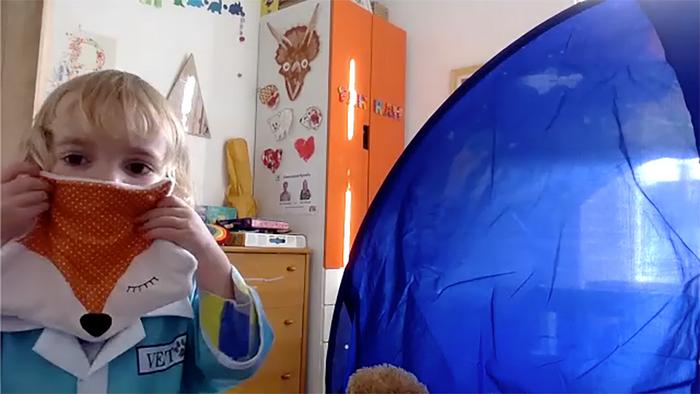
Play was also central to children’s communication and comprehension of their experiences during the pandemic, the study found. For example, Olivia, aged three, decided to play vet with stuffed animals during her interview and showed how she was “keeping germs away” from them by imitating the use of a face mask. This was a poignant example of a very young child showing, through play, that she had grasped something different about the wider circumstances she was caught up in, and of what it meant to stay safe and healthy.
Other children acknowledged mental health benefits. The authors suggest that play gave them comfort, confidence and a sense of control. “Play makes my mind grow because I get more creative,” Harry, nine, explained. “I like to play because it helps my imagination,” Ian, seven, told Graber.
The study recommends that future crisis planning should go beyond the simple recognition of children’s place in society, as enshrined in frameworks such as the UN Convention on the Rights of the Child, and actively listen to and integrate children’s perspectives and experiences.
“Children’s perspectives do not need to supersede adult judgements made for their benefit in moments of crisis, but when it comes to something so elemental to childhood as play, their input is essential,” Graber said. “We also need a more balanced public narrative about their experiences during the pandemic, especially as we continue to support their ongoing recovery and plan for the future.”
IMAGE CREDIT: Kelsey Graber / Faculty of Education, University of Cambridge




Leave a Reply