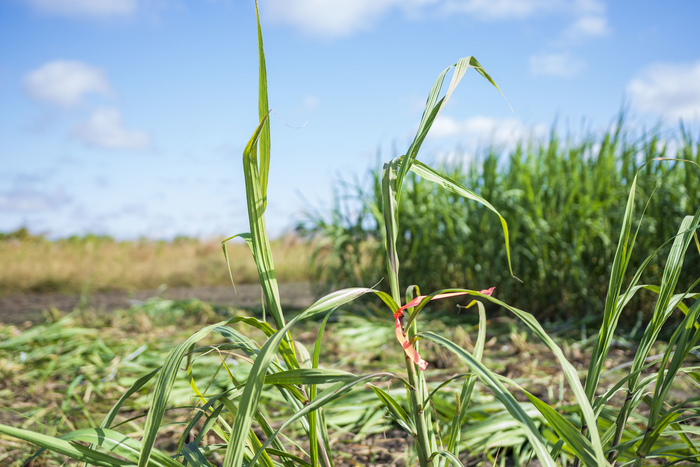
In a groundbreaking new collaboration, scientists at the Center for Advanced Bioenergy and Bioproducts Innovation (CABBI) have identified the types of microbes that associate with engineered oilcane. Further exploration of the oilcane microbiome may reveal opportunities to leverage plant-microbial interactions in these feedstocks, which could increase oil yields for sustainable bioenergy production.
In terms of biomass, sugarcane is the world’s most-produced crop, and it’s not hard to see why; it provides the feedstock for 26% of the world’s bioethanol and 80% of global sugar production.
A particular variety of metabolically engineered sugarcane, called oilcane, accumulates 30 to 400 times more energy-dense triacylglycerol (TAG) than wild type sugarcane, which makes it an ideal crop for biofuel production. By studying this feedstock that diverts natural sugars for oil production, researchers can provide sustainable, plant-based fossil fuel alternatives.
If you enjoy the content we create and would like to support us, please consider becoming a patron on Patreon! By joining our community, you’ll gain access to exclusive perks such as early access to our latest content, behind-the-scenes updates, and the ability to submit questions and suggest topics for us to cover. Your support will enable us to continue creating high-quality content and reach a wider audience.
Join us on Patreon today and let’s work together to create more amazing content! https://www.patreon.com/ScientificInquirer
One avenue that researchers are looking into for crop improvement is microbiome management. Understanding the interactions between plants and the microorganisms that live on and in them may help us develop agricultural management practices that can increase crop productivity and resilience. While the sugarcane microbiome has been studied, the oilcane microbiome has historically been uncharted territory.
In a collaboration between CABBI’s Sustainability and Feedstock Production themes, researchers explored the differences in microbiome structure between several oilcane accessions and wild-type sugarcane. Iowa State Postdoctoral Researcher Jihoon Yang and Assistant Professor Adina Howe led the project from the Sustainability side, while University of Florida Biological Scientist Baskaran Kannan and Professor Fredy Altpeter were the Feedstock leads.
The study, published in Biotechnology for Biofuels and Bioproducts, examined the microbiomes of four different oilcane accessions (developed by Altpeter’s team at the University of Florida) in comparison to non-modified sugarcane.
The team planted each of these engineered oilcanes and sugarcane in the same soil. Once grown, they sampled the microbes of the leaves, stems, roots, rhizosphere soils, and bulk soil. Using cutting-edge sequencing and bioinformatics tools, the team found that each accession of oilcane had different microbiomes than the non-modified sugarcane.
Interestingly, the greatest differences in microbiome composition were observed in the oilcane accession that most highly expressed the WRI1 transgene. WRI1 is known as the “master-regulator” of lipid biosynthesis and contributes significant changes in the gene expression profile, which impact the plant’s ability to accumulate energy-dense TAG.
This study showed that metabolically engineered oilcane accessions differing in their transgene expression will associate with distinct microbiomes, suggesting that the metabolic differences in oilcane (compared to sugarcane) play a part in determining the composition of the plant’s microbiome.
The researchers postulate that the oilcane’s association with specific microbes in the soil may benefit the plant in some way, as is often the case in other plants. The team hopes to direct further research toward understanding how microbiomes unique to certain oilcane types interact with their host plants.
“Insight in this area could lead to breakthroughs in oilcane management, in which growers could tailor plant-microbe interactions to improve their crop and oil yields,” Howe said.
Added Altpeter: “Additional research may also lead to a tailored microbiome that could boost agronomic performance and yield from metabolically engineered oilcane.”
IMAGE CREDIT: Center for Advanced Bioenergy and Bioproducts Innovation (CABBI)


.jpg)


Leave a Reply