HAVE YOUR SAY.
Join us in The Bullpen, where the members of the Scientific Inquirer community get to shape the site’s editorial decision making. We’ll be discussing people and companies to profile on the site. On Wednesday, January 11 at 5:30pm EST, join us on Discord and let’s build the best Scientific Inquirer possible.
Building tissues and organs is one of the most complex and important tasks that cells must accomplish during embryogenesis. Individual cells do not make these decisions; rather, building tissue is a collective task that requires cells to constantly communicate with each other. Different communication methods exist, including chemical cues, similar to a cell’s sense of smell, and also mechanical cues, the cell’s sense of touch. Researchers in a variety of fields have been fascinated by cell communication for decades and have discovered how cells use biochemical cues for that purpose. However, how cells use their sense of touch to make decisions during embryogenesis is still a mystery.
Professor Otger Campàs is one of those researchers. Now, with a paper published in the journal Nature Materials, he and his research team get us one step closer to unraveling this mystery. In this work, which was mostly completed at UC Santa Barbara, the researchers report how cells within a living embryo mechanically test their environment and what mechanical parameters and structures they perceive.
“We know a lot about how cells sense and respond to mechanical cues in a dish, but we know very little about how cells do it inside an embryo, where their microenvironment is very different,” said Campàs, now professor at the Physics of Life (PoL) Excellence Cluster of the Technisiche Universität Dresden, where he holds the Chair of Tissue Dynamics and serves as PoL managing director.

This collective mechanical sensing helps cells make important decisions, such as whether or not to divide, move or even differentiate, the process by which stem cells turn into more specialized cells able to perform specific functions. One major clue surfaced several years ago, when it was found that stem cells placed on a synthetic subtrate rely heavily on mechanical cues to make their decisions: Cells on surfaces with stiffness similar to bone became osteoblasts (bone cells), whereas cells on surfaces with stiffness similar to brain tissue became neurons. The findings greatly advanced the field of tissue engineering as researchers used these mechanical cues to create synthetic scaffolds to coax stem cells to develop into desired outcomes. These scaffolds are now used in a wide range of biomedical applications.
But a dish or a synthetic scaffold is not the cell’s natural habitat. Cells reside in tissues that have very complex mechanical characteristics, Campàs said. What mechanical cues cells perceive inside an embryo while they build an organism — without external scaffolds and pushing against one another in three dimensions — remained unknown.
Until now. Using a unique tool developed in the Campàs Lab, the researchers were able to probe the cell’s native mechanical environment inside embryos and figure out what physical quantities cells perceive in their quest to decide what to become.
“We first studied how cells mechanically test their microenvironment as they differentiate and build the body axis of a vertebrate, as they differentiate,” Campàs said. “Cells used different protrusions to push and pull on their environment. So we quantified how fast and strong they were pushing.” Using a ferromagnetic oil droplet that they inserted between developing cells and subjected to a controlled magnetic field, they were able to mimic these tiny forces and measure the mechanical response of the cells’ surroundings.
Critical to these embryonic cells’ actions is their collective physical state, which Campàs and his research group found in a previous paper to be that of an active foam, similar in consistency to soap suds or beer froth, with cells clumped together, sticking to and tugging at each other. What the cells are mechanically probing, Campàs and team discovered, is the collective state of this “living foam” — how stiff it is and how confined the assemblage is — rather than the stiffness of individual cells or structures within them.
“And right at the moment that cells differentiate and decide to change their fate, there is a change in the material properties of the tissue that they perceive,” Campàs said. According to him, at the moment the cells within the tissue decide on their fate, the tissue decreases its stiffness.
What’s not yet proven in this study is whether — and if so, how — the change in the stiffness in the embryonic environment drives the change in the cell state. That’s a complex topic to be explored in future research, Campàs said. “There is an interplay between the mechanical characteristics of the structures that cells collectively build, such as tissues or organs, and the decisions they make individually. This interplay is at the core of how nature builds organisms.”
The findings from this study might also have important implications for tissue engineering. Potential materials that mimic the foam-like characteristics of the embryonic tissue, as opposed to the widely used synthetic polymer or gel scaffolds, may allow researchers to create more robust and sophisticated synthetic tissues, organs and implants in the lab, with the appropriate geometries and mechanical characteristics for the desired functions.
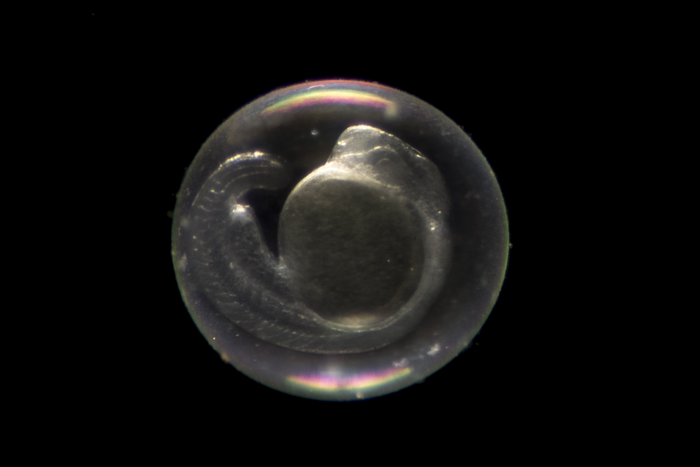
IMAGE CREDIT: UC Santa Barbara



Leave a Reply