HAVE YOUR SAY.
Join us in The Bullpen, where the members of the Scientific Inquirer community get to shape the site’s editorial decision making. We’ll be discussing people and companies to profile on the site. On Wednesday, December 14 at 5:30pm EST, join us on Discord and let’s build the best Scientific Inquirer possible.
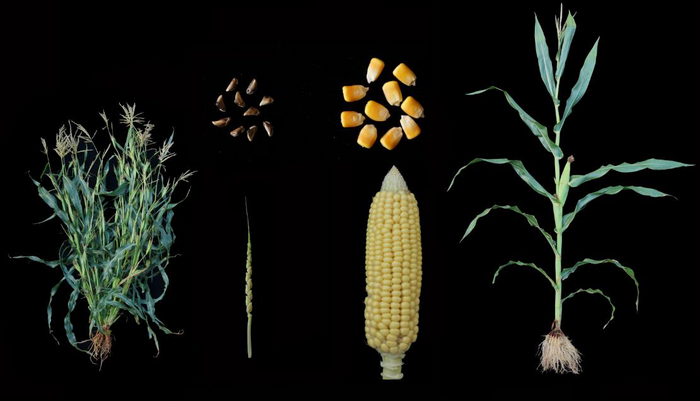
Teosinte, the wild ancestor of maize, has three times the seed protein content of most modern maize strains. Researchers at the Chinese Academy of Sciences Headquarters tracked down the mechanisms responsible for the declining seed protein content in maize hybrids and inbred lines. Their findings open up new avenues for maximizing seed protein content and quality for future maize breeding, with implications in nitrogen-use efficiency and food security.
The researcher’s findings were published on Nov. 17 in Nature.
“There is economic and environmental pressure to maintain high-yielding maize while reducing the level of nitrogen applied to the soil,” said study author WU Yongrui from the CAS Center for Excellence in Molecular Plant Sciences of the Chinese Academy of Sciences. “Therefore, it is crucial to identify genetic factors that increase nitrogen-use efficiency.”

Over millennia, plant breeders genetically altered plant species to create seeds with greater proportions of metabolites to improve nutritional value and utility. As corn became a major source of feed for livestock, plant breeders prioritized starch content and yield while protein content and flavor became secondary concerns. The use of nitrogen fertilizer further reduced the importance of seed nitrogen content. Consequently, modern maize hybrids contain only 5–10% protein; by contrast, teosinte has a protein content of 20–30%, according to the study.
Scientists can trace the decline of maize seed protein content, but the genetic mechanisms remained elusive. WU and a team from the Chinese Academy of Sciences Headquarters set out to identify the genes responsible for the protein content discrepancy between teosinte and maize by creating a complete teosinte genome sequence. By cross-breeding teosinte with maize and analyzing the progeny, the researchers were able to identify the quantitative trait locus (QTL), or the specific chromosomal regions that are linked to the traits in question.
“Because modern maize was domesticated from teosinte, we reasoned that characterizing the genes responsible for the high-protein trait in teosinte might reveal a more diverse set of QTLs than those found in recent inbred maize populations,” said WU. “The results might also help us to understand the reasons for the decrease in seed protein content during the domestication of maize.”
The researchers zeroed-in on a significant high-protein QTL on chromosome 9. The teosinte high protein 9 (THP9) QTL not only demonstrated the strongest effect during QTL mapping, but also encoded an enzyme called asparagine synthetase 4 (ASN4) which plays an important role in the metabolism of nitrogen. Previous studies on rice, wheat and barley showed that changes in the expression of these genes alter plant growth and nitrogen content.
While the THP9-teosinte (THP9-T) gene variant (allele) is highly expressed in teosinte roots and leaves, this is not the case the corresponding maize inbred, owing to mis-splicing of gene transcripts, said WU.
“This might be one of the factors that leads to differences in nitrogen assimilation,” said WU. “Amino acids are essential substrates for protein synthesis, and their levels in the plant are influenced by soil nitrogen availability and the nitrogen use efficiency of the plant.”
Through field trials, the team verified that THP9-T allele could increase the nitrogen-use efficiency in both normal- and low-nitrogen conditions. Further analysis suggested that THP9-T has the potential to improve the protein content of maize seeds and plants through plant breeding.
“Our research shows the possible value of hybrids that contain the THP9-T allele, although larger field trials in multiple geographical locations will be needed to fully establish its potential for improving seed protein content and nitrogen-use efficiency in maize breeding,” said WU.
IMAGE CREDIT: CEMPS.


Leave a Reply