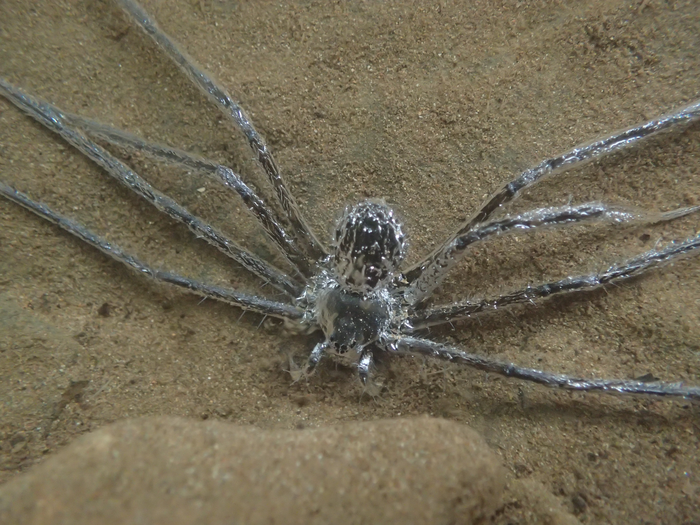
A tropical spider species uses a “film” of air to hide underwater from predators for as long as 30 minutes, according to faculty at Binghamton University, State University of New York.
Lindsey Swierk, assistant research professor of biological sciences at Binghamton University, State University of New York, observed a large tropical spider (Trechalea extensa) fleeing from humans and hiding underwater; this species was not previously known to use water to escape. Swierk had previously observed a Costa-Rican lizard species that was able to stay underwater for 16 minutes to hide from predators.
“For a lot of species, getting wet and cold is almost as risky to survival as dealing with their predators to begin with,” said Swierk. “Trechalea spiders weren’t previously known to hide underwater from threats — and certainly not for so long.”
The spider spent about 30 minutes underwater. While submerged, it kept a “film” of air over its entire body. Swierk and her colleagues suspect that the fuzzy hairs that cover its body help it to maintain this film of air, which helps to prevent thermal loss while underwater, or to prevent water from entering the spider’s respiratory organs.
The film of air surrounding the spider when it is underwater appears to be held in place by hydrophobic hairs covering the spider’s entire body surface,” said Swierk. “It’s so complete that the spider almost looks like it’s been dipped in silver. The film of air might serve to keep the respiratory openings away from water, since these spiders are air-breathing. The film of air might also help to minimize thermal loss to the cold stream water that the spider submerges itself in.”
According to Swierk, this observation provides new insight into how species can cope with the problem of finding refuge underwater.
These spiders, and any animal hiding from predators in general, have to do their best to manage risk,” said Swierk. “Risk of predation, yes, but also risk of the costs they’ll experience by fleeing. For some species that means leaving territory or mates unguarded, or maybe spending stored energy in a sprint. In this species, potential risks of underwater refuge use can include lack of respiration and a loss of body heat. There are many more questions to dig into starting from this first observation.”
IMAGE CREDIT: Lindsey Swierk


Leave a Reply