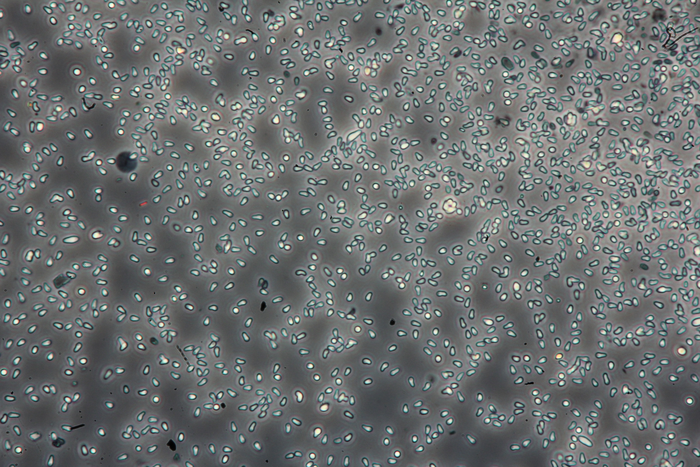
Temperature fluctuations such as heatwaves can have very different effects on infection rates and disease outcomes depending on the average background temperature, says a report published today in eLife.
The study suggests it will be increasingly difficult to predict the consequences of climate change on host-pathogen interactions as global temperatures rise and extreme weather events become more common.
Infectious diseases have profound ecological effects on human, agricultural and wildlife populations. It is well known that interactions between pathogens and their hosts are sensitive to changes in temperature. But what is less well understood is how sudden and extreme temperature variation affects this relationship and how this influences overall infection rates and disease outcomes.
“Climate change is predicted to increase not only average temperatures but also temperature fluctuations and the frequency and intensity of extreme weather events,” explains co-first author Pepijn Luijckx, William C. Campbell Lecturer in Parasite Biology, Trinity College Dublin, Ireland. “Yet although studies have quantified the effects of rising average temperatures on host and pathogen traits, the influence of variable temperature regimes such as heatwaves remains largely unknown.”
Luijckx and the team examined the effects of different temperatures on various traits in a host organism – a small crustacean called Daphnia magna – and its known gut parasite, Odospora colligata. Transmission of the parasite is representative of classic environmental transmission, similar to that seen with diseases such as SARS-CoV-2 and cholera.

The team looked at how the organisms responded to three distinct temperature regimes: a constant temperature, and two variable regimes, with daily fluctuations of +/- 3°C and three-day heatwaves of 6°C above ambient temperature. They then measured the crustacean’s lifespan, fertility, infection status and the number of parasite spores within their gut. Next, they processed the data into a statistical model to compare the impact of the three different temperature regimes.
The team found that daily fluctuations of temperature reduced the infectivity and spore burden of the parasite compared to those kept at the constant average temperature. However, by contrast, the infectivity of parasites after a heatwave was almost the same as the infectivity of those maintained at the constant temperature.
Moreover, the number of spores in the crustacean host increased following the three-day ‘heatwave’ when the background constant temperature was 16°C, but this burden was reduced at higher temperatures. This suggests that the effects of temperature variation differ depending on the average background temperature and whether this is close to the optimum temperature for the parasite.
Host fitness and reproductive success were generally reduced in the crustacean exposed to either the parasite spores or when experiencing variable temperatures. The difference between the host and pathogen responses suggest that under some circumstances the parasites were able to withstand the sudden change in heat better than their hosts.
“Our findings show that temperature variation alters the outcome of host-pathogen interactions in complex ways. Not only does temperature variation affect different host and pathogen traits in a distinct way, but the type of variation and the average temperature to which it is applied also matter,” concludes Luijckx. “This means that changing patterns of climate variation, superimposed on shifts in mean temperatures due to global warming, may have profound and unanticipated effects on disease dynamics.”
Alongside Pepijn Luijckx, the research team includes co-first author Charlotte Kunze (Carl von Ossietzky University of Oldenburg, Germany, and Trinity College Dublin), Andrew Jackson and Ian Donohue (both Trinity College Dublin).
IMAGE CREDIT: Dieter Ebert (CC BY 4.0)

.jpg)


Leave a Reply