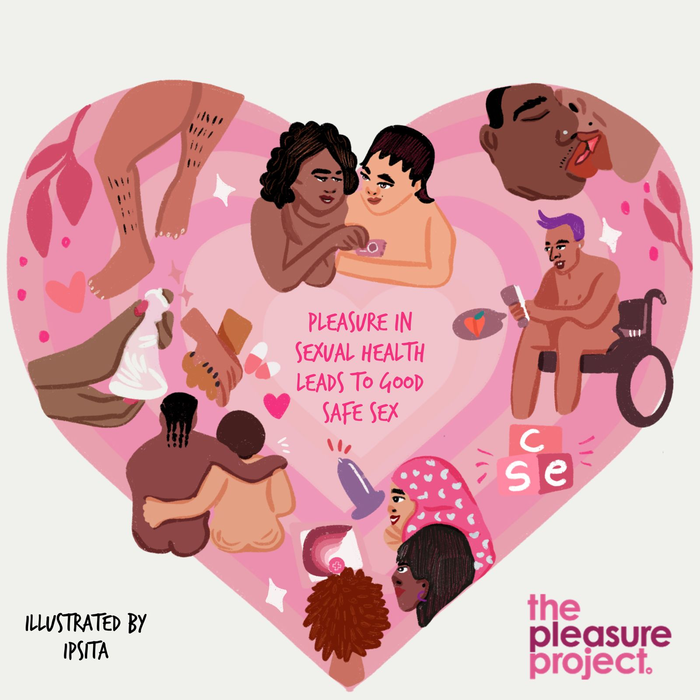
Sexual health programs that include sexual desire and sexual pleasure can improve knowledge and attitudes around sex, as well as condom use compared to those that do not, according to research published in the open access journal PLOS ONE. The meta-analysis of research literature from 2005-2020 finds that incorporating pleasure in such programs can have positive effects on attitudes and safer sex behavior and recommends revisiting sexual education and health intervention approaches that do not acknowledge that sexual experiences can be pleasurable.

Billions of dollars are spent around the world each year on sexual and reproductive health and rights services and programs. Yet with fewer than ten years to achieve the UN Sustainable Development Goals, which target sexual and reproductive health and reproductive rights, there is still a huge global burden of sexually transmitted diseases and HIV. Researchers from The Pleasure Project, WHO’s Department of Sexual and Reproductive Health and Research and colleagues review 33 unique interventions targeting STI/HIV risk reduction that incorporate pleasure, and meta-analyze eight. They find evidence that including pleasure can have significant positive effects across information- and knowledge-based attitudes, including participants’ self-belief in behavior change, and motivation to use condoms, as well as in behavior and condom use.
While the authors searched for interventions across a spectrum of sexual health interventions (including contraception and family planning interventions), the review ultimately included only STI/HIV-related programs targeting populations traditionally considered ‘vulnerable’. The authors note that future work is needed to incorporate and evaluate pleasure-inclusive interventions in the reproductive health space and for general populations.
The team argues that continuing to avoid pleasure in sexual health and education risks misdirecting or ineffectively using resources. The researchers call for a fundamental rethink of how programs are oriented.
The authors add: “Pleasure has been over-looked and stigmatized in health promotion and sex education, despite its obvious connection to sexual health and well-being. Our systematic review and meta-analysis, the first of its kind, shows that including sexual pleasure considerations in sexual and reproductive health services improves condom use and so may also improve sexual and reproductive health outcomes.
Policymakers and program managers should more readily acknowledge that pleasure is a key driver of sexual behavior, and that incorporating it in sexual and reproductive health services can reduce adverse outcomes. Eight years out from the Sustainable Development Goal deadline, innovative strategies that can accelerate progress towards SRHR targets, including for STI and HIV prevention, are urgently needed. Programs adopting a sex-positive and pleasure-inclusive approach is one such innovation that should be urgently considered.”
IMAGE CREDIT: Ipsita Divedi (The Pleasure Project), CC-BY 4.0 (https://creativecommons.org/licenses/by/4.0/)




Leave a Reply