
A new study of soil samples from 13 archaeological sites in Europe, Asia, Africa and North America paves the way for fresh analysis of ancient DNA from sediment (sedaDNA) preserved around the world in ‘plastic’ resin.

The research by an international team led by the Max Planck Institute for Evolutionary Anthropology and the Flinders University Microarchaeology Laboratory, with other experts from across Europe and Australia, explores how ancient human, animal and plant DNA can be preserved in blocks of resin-soaked sediment for tens of thousands of years.
The preservation that comes from fixing the sediment in resin allowed the team to pinpoint at the micro-scale the origins of the DNA within the chaotic mix of sediments and organic components, showing that there are ‘hot spot’ concentrations of genetic material in bone and fossil faeces (‘coprolites’), explains Flinders University geoarchaeologist Associate Professor Mike Morley.
This means that stockpiles of resin-impregnated archaeological sediment could become the next frontier of research in the quest for major discoveries about human and plant evolution, the researchers say in a new paper in Proceedings of the National Academy of Sciences of the United States of America (PNAS) out on 27 December 2021 (3pm US ET).
“This research not only sheds light on the little known complexities of how sediment forms in these sites over tens of thousands of years, but also opens up a new era of ‘scientific excavation’ of archaeological sediments stored in laboratories around the world,” says Associate Professor Morley.
“In an era of restricted travel, these blocks of fixed sediments could be used to curate sedaDNA that are preserved within microscopic fragments of bone and coprolite (fossil faeces) of the animals and humans of that time – including Neanderthal found in the Denisova Cave complex in Siberia.”
ARC Research Fellow Associate Professor Mike Morley previously took part in excavations at the world famous Denisova Cave site in the Altai Mountains in south-central Siberia where ancient DNA from Neandertals, Denisovans and modern humans has been retrieved from sediments that were studied at the microscopic level.
The world authorities in palaeogenomics at the Max Planck Institute in Leipzig, Germany, showed that sections of sediment blocks preserve DNA molecules that remain stable over many millennia. The team successfully extracted DNA from blocks prepared as long as 40 years ago and showed that the process of impregnating sediments with liquid plastic does not affect DNA survival.
“This study is a big step closer to understanding precisely where and under what conditions ancient DNA is preserved in sediments,” Associate Professor Morley says.
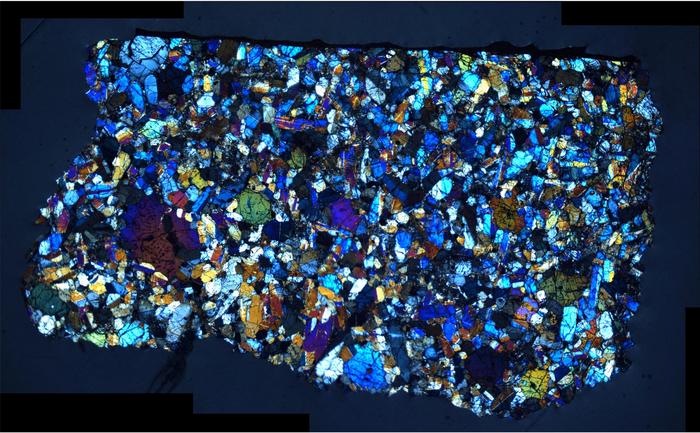
IMAGE CREDIT: Mike Morley (Flinders University)



Leave a Reply