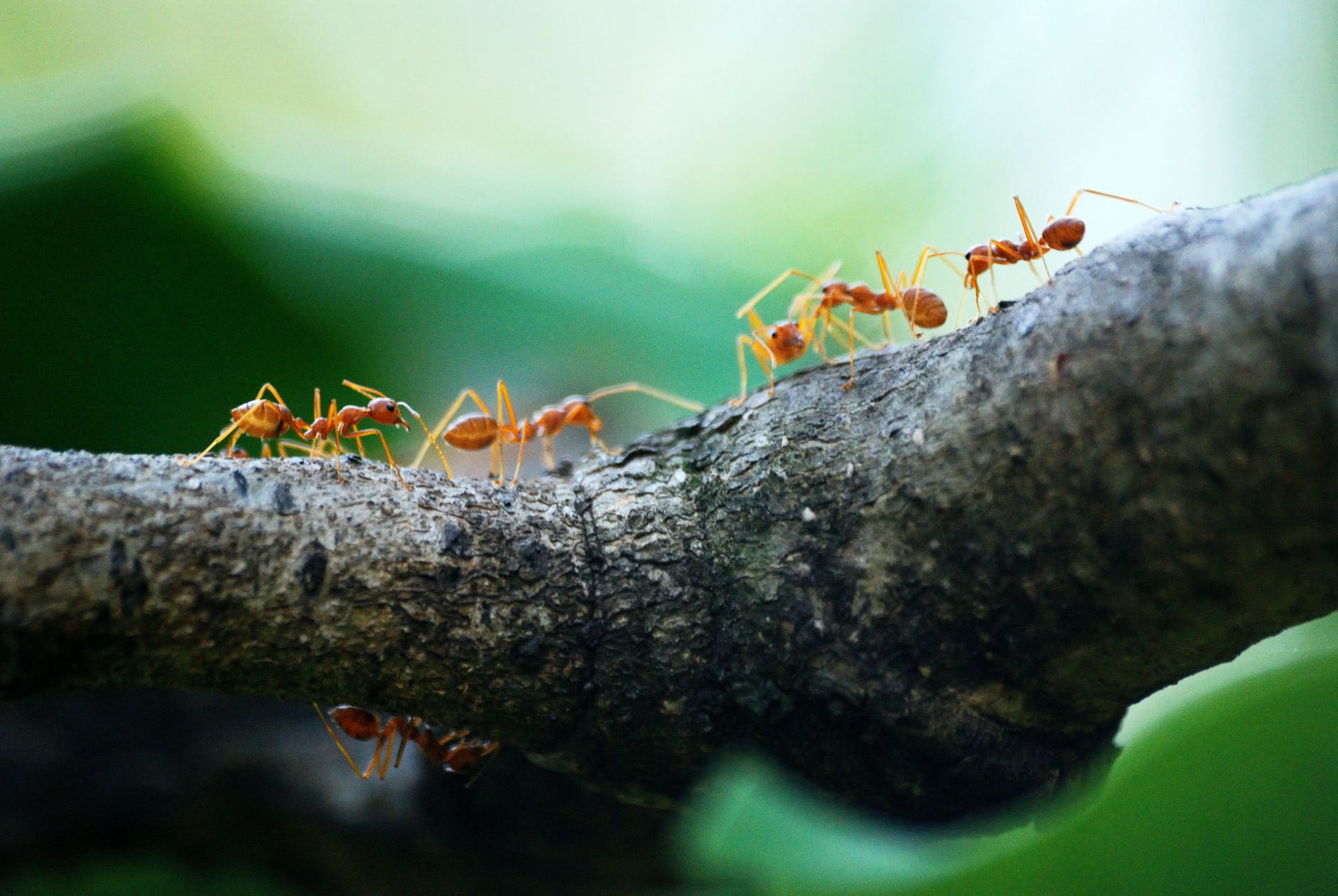
Ant colonies use fluids passed mouth-to-mouth to create a colony-wide metabolism, shows a study published in eLife.
The discovery is the latest to suggest that social insect colonies function in a similar way to a single organism made up of many individuals and provides new insights on how they accomplish this.
“Individual ants have two stomachs – one for digesting their own food and another one that comes first, a ‘social stomach’ for storing fluids that they share with other ants in their colony. These fluid exchanges allow ants to share food and other important proteins that the ants themselves produce,” says senior author Adria LeBoeuf, Assistant Professor and leader of the Laboratory of Social Fluids at the Department of Biology, University of Fribourg, Switzerland.
“To help us understand why ants share these fluids, we explored whether the proteins they exchange are linked to an individual’s role in the colony or the colony’s life-cycle,” adds lead author Sanja Hakala, a postdoctoral fellow at the University of Fribourg.
The team analysed all of the ant-produced proteins found in the social stomachs of individual ants. They then compared how the proteins varied depending on whether the ant was a forager or a nurse caring for the colony’s young. They also investigated if the proteins varied depending on whether the ants were part of a new colony or a more established one.

They identified proteins that could be used to determine both the individual’s role and the age of their colony. For example, they found that members of more mature ant colonies had more nutrient storage proteins necessary for the growth and metamorphosis of their young, in comparison to members of newly founded ant colonies.
Nurse ants that cared for the young in their colony also had more anti-aging proteins in their stomachs. This suggests that colony members may pool these life-extending proteins in their nurses to help ensure that they survive to look after the next generation. “These findings show that some colony members can do metabolic labour for the benefit of others,” Hakala says.
The authors say that more studies are needed to understand what each shared protein does for individual ants and the wider colony.
LeBoeuf concludes: “It is hard to measure how metabolic work is shared between cells. Here, the ants pass things around in a way that we can easily access what they are sharing. Having a better understanding of how ants share metabolic labour may help us learn more about the ways that other creatures, like humans, distribute metabolic tasks between different tissues or different cells in their bodies.”
IMAGE CREDIT: (ENTER NAMES)


Leave a Reply