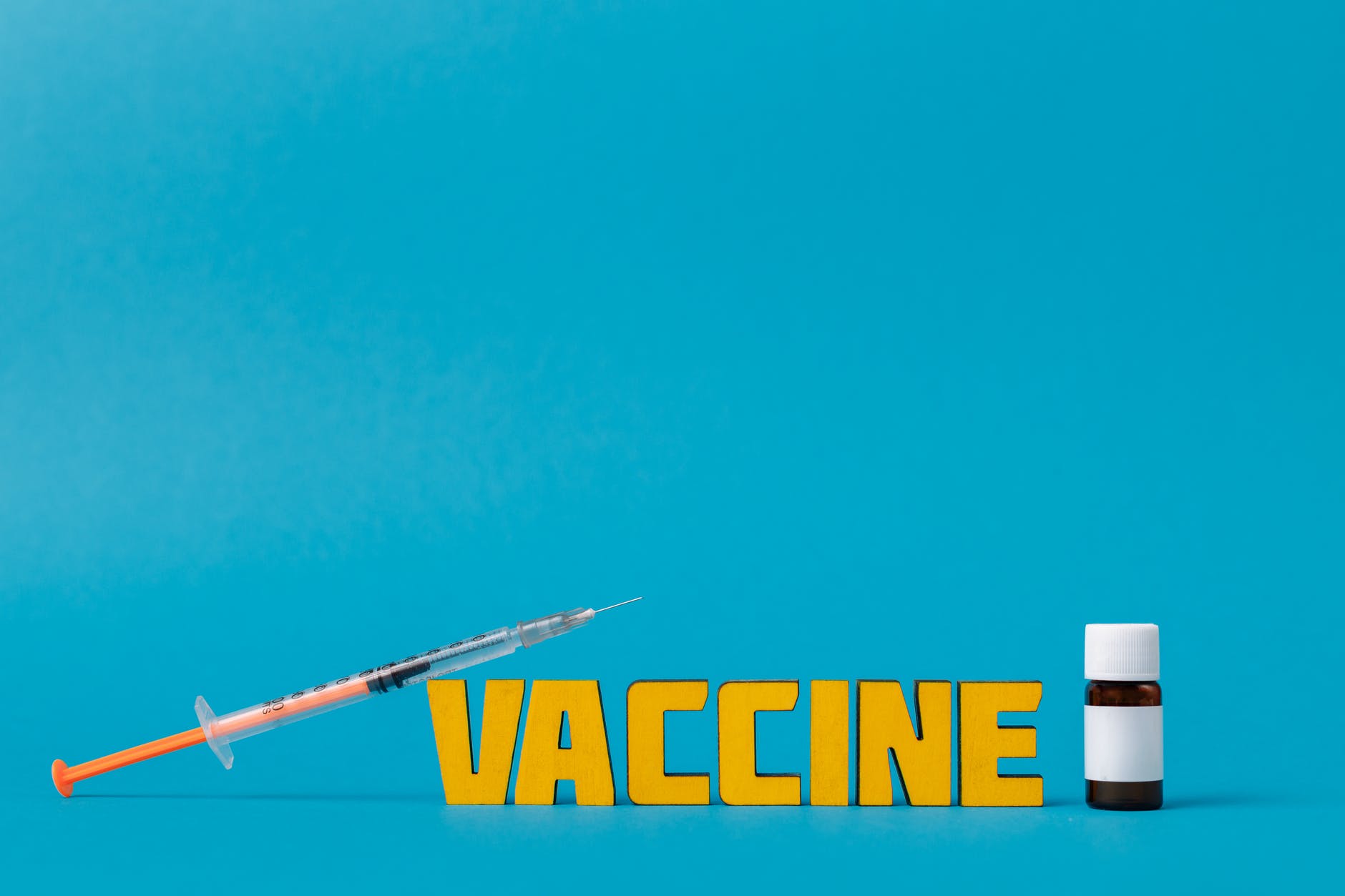
The vaccination train continues to make its way around the globe. The Associated Press reports on the Russian vaccine’s adoption. “Belarus and Argentina launched mass coronavirus vaccinations with the Russian-developed Sputnik V shot on Tuesday, becoming the first countries outside Russia to roll out the vaccine, which has faced criticism over the speed with which it was approved. The first batch of Sputnik V arrived in the former Soviet republic of Belarus on Tuesday, according to a joint statement by the Belarusian Health Ministry, the Russian Health Ministry and the Russian Direct Investment Fund that bankrolled development of the jab.” Larger questions regarding vaccinations linger. How many people will agree to be vaccinated? How long does immunity last? https://bit.ly/3n19z02
The Trump Administration’s September 22 Executive Order on Combating Race and Sex Stereotyping counterintuitively banned government employee and contractor trainings regarding racism and sexism. An article in the American Scientist reports on the immediate implications that have silenced the discussion of race in academic settings. It has also begun to impact scientific research. Per the American Scientist, “The order’s affect on scientific inquiry is especially important because two of the examples of training that the executive order admonishes took place at federal science facilities. The order specifically cites training materials that were used at Argonne National Laboratories in Illinois and Sandia National Laboratories in New Mexico as presenting “divisive” information about racism and sexism. Addressing the need for greater diversity in the science and engineering enterprise remains a stated priority of the U.S. government.“ The outgoing administration continues to highlight just how closely science and politics are intertwined. https://bit.ly/3rBXrX0
Researchers based in the United Kingdom can breathe a slight sigh of relief as it appears some of their worst fears regarding Brexit seem to have been addressed in a recent deal between the country and the European Union. Per Science, “The deal was reached after negotiators finally agreed on fishing rights, which had stalled negotiations, and most of its 1246 pages set out the principles of the U.K.-EU relationship from January 2021 onward. But the deal and its accompanying declarations contain key passages about research: in exchange for a contribution to the EU budget, the United Kingdom will join the forthcoming Horizon Europe research program, which will spend €85 billion over the next 7 years.” However, the United Kingdom has relinquished any say in how the Horizon Europe program functions. That’s perhaps a bigger loss down the line. https://bit.ly/3hptZ1A
David Dinkins was the first African-American mayor of New York City. When he passed away a few weeks ago, that appears to be one of the few elements of his time in office worth remembering. No doubt it was significant. But he also oversaw the city during two major public health crisis. HIV/AIDS was ravaging the city and Tuberculosis was threatening to explode in its shadow. A recent article in STAT, written by one of the mayor’s public health officials, takes a closer look at how Dinkins respected scientific findings as they emerged and used them to inform his decision making process. https://bit.ly/2Jt4csR
We’ve all experienced the eerie feeling of knowing (without seeing) when someone is watching us. Throughout history, intellectuals have essentially bestowed physical properties to the phenomenon. Unfortunately, none of their conclusions have been based on experimentally proven insights. A Scientific American article takes a look at how scientists have tried to collect empirical data from “the gaze.” According to the author, “Using a series of ingeniously simple experiments in one study, researchers found that subjects associate gaze with a physical force. Subjects viewed a computer display that had an image of a tube, roughly the size of the end of the paper towel roll, standing vertically on a table. At one end of the table was an image of a face gazing at the tube (researchers dubbed the face avatar Kevin). Subjects were instructed to tilt the tube towards Kevin’s image using specific keys on a keyboard until they felt the tube had reached the critical angle at which it would tip over. The critical angle reported by subjects depended upon whether Kevin was blindfolded. If Kevin was perceived as gazing at the tube, the critical angle was greater than when Kevin was blindfolded, suggesting that his gaze was impressing some force upon the tube that needed to be overcome for the tube to fall.” It’s all very MK Ultra, isn’t it? https://bit.ly/3aUEl8u
Thanks for reading. Let’s be careful out there.



Leave a Reply