When Chimp Society Breaks Into War: A 30-year study of chimpanzees in Uganda’s Kibale National Park shows how violence can escalate within a once-peaceful community. Researchers tracked the Ngogo chimps, a huge group that long contained two overlapping clusters, Central and Western, whose members mingled and mated across lines. But after a 2015 confrontation, the groups split, reproduction stopped, and tensions intensified. From 2018 to 2024, Western males killed seven Central adult males and 17 infants. The study suggests the conflict was not driven by food scarcity, but by social fragmentation, shifting reproductive access, and the loss of key male “connectors” after several deaths in 2014. Scientists say the findings illuminate how hostility can emerge without ideology, while also underscoring an important human difference: chimpanzees do not appear to organize revenge killings. (Science)
GLP-1 Weight Loss Drugs May Be Leaving Users Short on Protein: One of the clearest nutrition stories of the week comes from early real-world data on semaglutide and tirzepatide users. Researchers using an AI-based food tracking app found that people on GLP-1 receptor agonists were not just eating less overall; many were also falling short on protein intake, with 88% reportedly below national protein guidelines. That matters because rapid weight loss without adequate protein and resistance exercise can increase the risk of losing lean mass along with fat. The study adds an important caution to the GLP-1 boom: appetite suppression is not automatically nutritionally benign. As these drugs spread into broader routine use, clinicians may need to focus much more aggressively on protein, meal structure, and muscle preservation rather than weight loss alone. (EurekAlert!)
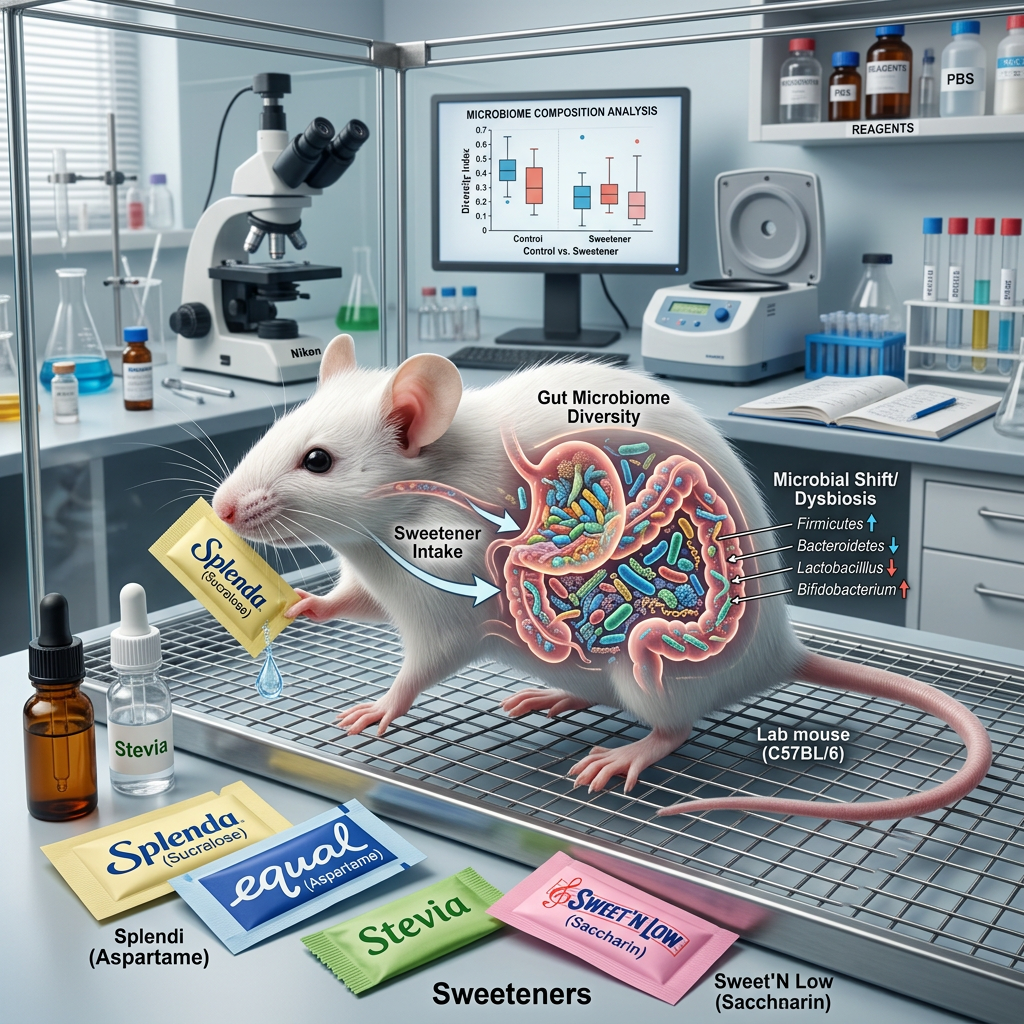
Artificial Sweeteners Show Multigenerational Effects in Mice: A striking new mouse study suggests that the metabolic story around artificial sweeteners may not end with the person consuming them. Reported this week, the work found that sucralose and stevia exposure altered gut microbial diversity and changed expression of genes tied to inflammation and metabolism in descendants that had never directly consumed the sweeteners themselves. This is early-stage work, and it comes with the usual caveat that mouse results do not automatically translate to humans. Still, it is provocative because it extends the sweetener debate beyond immediate glycemic or appetite effects and into inheritance, microbiome remodeling, and long-tail metabolic risk. At minimum, it reinforces that “zero calorie” is not the same as “biologically inert,” especially when gut ecosystems and developmental biology are involved. (The Scientist)
High-Fat Diets Rapidly Deplete Protective Gut Immune Cells: This week also brought a strong mechanistic warning about dietary fat and intestinal defense. Reporting on a new Immunity paper, researchers found that high-fat diets can rapidly drive the loss of intestinal group 3 innate lymphoid cells, which help maintain barrier integrity and coordinate protective immune responses in the gut. The study ties that loss to microbiota-driven inflammation and mitochondrial stress, suggesting that the earliest effects of diet may hit immune surveillance and tissue resilience before more obvious metabolic disease is visible. That makes the finding especially important: it reframes unhealthy diet not just as a slow weight-gain issue but as a fast-moving biological insult to the gut’s protective systems. It is another reminder that obesity-related pathology can begin far upstream of the bathroom scale. (Medical Xpress)
Microbiome Health May Depend More on Motion Than Stability: Another notable story this week challenges one of the field’s favorite assumptions: that a healthy microbiome is a stable one. A new Cell Host & Microbe perspective argues that gut health may be better understood through functional dynamics, meaning how the microbial ecosystem adapts, responds, and reorganizes over time, rather than whether it remains fixed. That is a meaningful conceptual shift for nutrition science because diet is one of the most powerful drivers of microbiome flux. If health depends on resilient adaptation rather than static composition, then researchers may need to rethink everything from dietary interventions to fecal transplant success metrics and biomarker design. It is not a simple consumer-facing finding, but it could reshape how diet-microbiome studies are interpreted in the years ahead. (Medical Xpress)
Pesticides Could Be Quietly Reshaping the Gut Microbiome: A Science news report highlighted an unsettling line of evidence linking pesticide exposure to microbiome disruption. The article points to research suggesting that chlorpyrifos can reshape gut microbial communities, including beneficial bacteria, in ways that may ripple into metabolic and inflammatory health. This matters for nutrition coverage because food health is not only about nutrients, calories, or processing; it is also about the chemical environment that reaches the gut alongside the food itself. The bigger significance is conceptual. If agricultural chemicals can alter intestinal ecosystems in ways relevant to diabetes and other chronic conditions, then diet quality has to be understood as partly ecological and toxicological, not merely dietary. It is an area where food systems science, environmental exposure research, and metabolic disease are increasingly colliding. (Science)
Diet and Gut Microbes Team Up to Turn White Fat Beige: One of the more intriguing metabolism stories this week came straight from Nature. Researchers showed that protein availability can reshape the gut microbiota in ways that promote remodeling of white adipose tissue into beige, more energy-burning fat. In the underlying mouse work, a low-protein diet only triggered this fat-browning effect when the right microbes were present, pointing to a tight diet-microbe-host axis rather than a diet-only effect. The broader value of the study is that it identifies a mechanistic chain linking food composition, microbial metabolism, bile acids, and systemic energy handling. It is still far from a clinical recommendation, and the authors are not suggesting people adopt low-protein diets casually. But as a research story, it is a major step toward more targeted metabolic interventions. (Nature)
Childhood Junk Food Exposure May Rewire Appetite Control: A preclinical study highlighted this week suggests that early-life exposure to high-fat, high-sugar diets can leave durable marks on the brain circuits that regulate feeding, even after diet and weight later improve. The work, from researchers at University College Cork, links early junk-food exposure to persistent changes in hypothalamic pathways involved in appetite and energy balance. Particularly interesting is the mitigation angle: microbiota-targeted interventions, including a specific Bifidobacterium strain and prebiotic fibers, appeared to partially restore healthier feeding patterns. That makes the story bigger than another warning about bad childhood diets. It suggests that diet is not only training taste and habit but potentially sculpting long-term neurobiological control systems. For nutrition science, the take-home is that early dietary environments may have hidden developmental consequences that extend far beyond childhood weight. (SciTechDaily)
Researchers Found a New Brain Relay That Helps Shut Down Hunger: A fresh appetite-regulation study published April 6 adds an elegant neural-glial twist to the biology of fullness. Scientists reported a metabolic relay in the hypothalamus in which tanycytes sense rising glucose, release lactate, and activate astrocytes, which then help switch on stop-eating signals while dampening hunger-promoting neurons. The importance of this result is not just that it identifies another player in appetite control. It expands the field beyond neuron-only explanations and strengthens the case that glial cells actively shape feeding behavior. That could eventually matter for obesity and eating-disorder treatment strategies, especially if future work finds druggable points in the pathway. It is a basic-science story for now, but a meaningful one: the brain’s satiety circuitry appears more cellularly complex than many models assumed. (EurekAlert!)
Genetics May Explain Why GLP-1 Drugs Work Better for Some People: Scientific American highlighted one of the week’s most clinically relevant obesity stories: not everyone responds equally to GLP-1 drugs, and common genetic variants may explain part of the difference. Drawing on a large analysis of nearly 28,000 people, researchers linked one GLP1R variant to somewhat greater weight loss and another gene variant to worse nausea and vomiting in some tirzepatide users. The effects are not large enough to explain everything, and the article is careful not to oversell precision medicine. But the implication is important. Weight-loss response may eventually be forecast using a combination of genetics, age, sex, comorbidities, and drug type, making obesity treatment less trial-and-error. For now, the study mostly serves as proof of concept that the era of one-size-fits-all GLP-1 prescribing may not last. (Scientific American)
A Prebiotic Shows Promise Against Fatty Liver in Mice: A newly published Scientific Reports paper adds another data point to the growing interest in prebiotics as metabolic tools. The study found that high-dose xylooligosaccharides improved markers of metabolic dysfunction-associated steatotic liver disease in mice fed a high-fat diet, reducing liver damage signals, improving tissue structure, and altering gut microbiota and metabolites. This is still animal work, so it is not grounds for consumer hype. But it fits a larger pattern in contemporary nutrition science: targeted fibers and microbial substrates are increasingly being studied not just for digestion but for liver disease, lipid handling, and systemic metabolic health. MASLD is a huge and growing public-health problem, and interventions that operate through microbiome pathways are especially attractive because they may be comparatively low-cost and diet-compatible if they translate. (Nature)
Ribosome Variants May Help Shape Human Traits: Ribosomes, the molecular machines that build proteins in every living cell, were long assumed to be largely uniform within a species. But a new study using UK Biobank data suggests that natural variation in ribosomal RNA genes may help shape human diversity. Researchers first identified shared rRNA gene mutations in identical twins, then examined roughly 300,000 additional participants for links between those variants and physical traits. They found associations between certain mutations and measures including height, weight, waist circumference, and cholesterol. The work adds to growing evidence that ribosomes may not be one-size-fits-all structures, but biologically meaningful sources of variation. Scientists still do not know exactly how these mutations alter ribosome function, but the findings open a potentially important new window into human biology and disease. (Science)

COPY II (2-3 PARAGRAPHS)
IMAGE CREDIT: NASA.




Leave a Reply