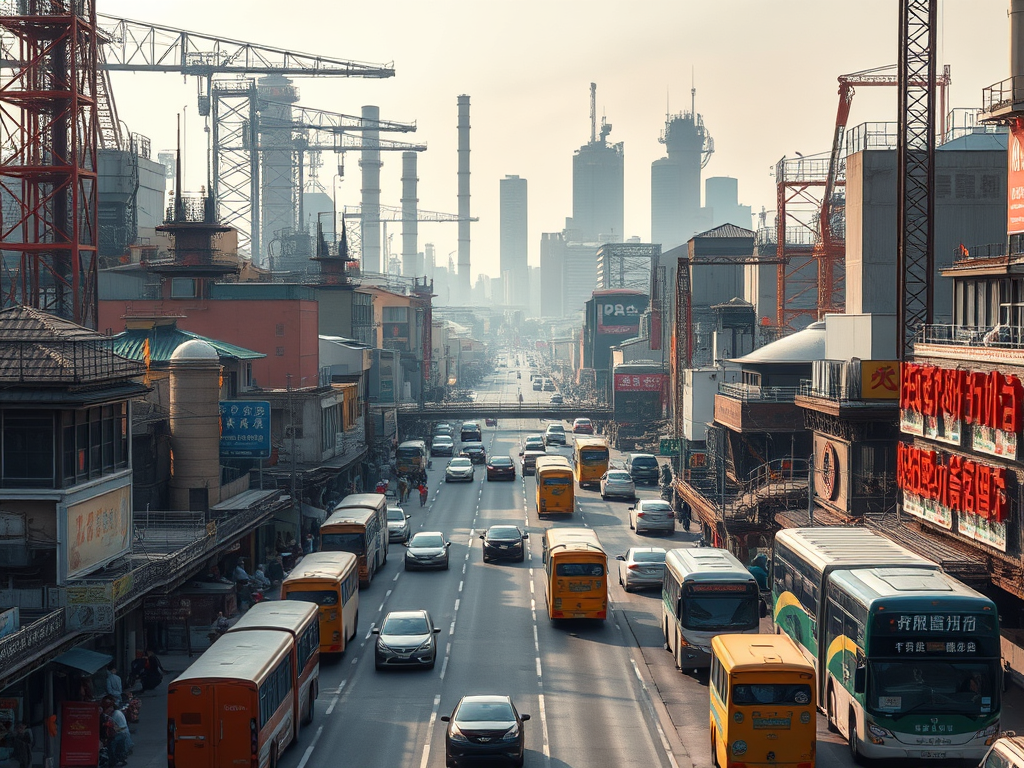
Air pollution alerts issued by authorities in China’s cities significantly reduce harmful pollution and save lives, a new study reveals.
Publishing their findings in PNAS Nexus, an international research group led by University of Birmingham scientists analysed five years of data from 57 cities in northern China to assess the impact of alerts.
Short‑term exposure to PM2.5 is well‑established as a cause of increased cardiovascular and respiratory mortality. The study reveals that the reduction in PM2.5 prevented nearly 54,000 premature deaths over the five-year period – about an 11% reduction in PM2.5-attributable premature deaths linked to pollution episodes.

Over 80% of avoided deaths occurred in regions such as Henan, Hebei, and Shandong which are characterised by heavy industries and high coal consumption. During periods when alerts were in effect, the acute mortality risk due to PM2.5 was reduced by an estimated 30–40%.
Professor Zongbo Shi, from the University of Birmingham, said: “Air pollution alerts work. The short-term interventions they trigger reduce harmful air pollution and save lives. They are a valuable emergency tool delivering the biggest benefits in heavily industrialised and densely populated regions.
“Service‑based cities like Beijing and Tianjin still benefited but avoided fewer deaths because their air quality was already improving and pollution reductions were smaller. However, it is important that alerts are not used in isolation but complement long-term pollution control strategies.
“Even though China’s air quality has improved overall, cities still experience spikes of air pollution, especially in winter, which can be dangerous to health. This is the first study showing consistent, multi-year evidence across a large sample of cities.”
The air pollution alerts trigger short-term actions such as temporary factory shutdowns, traffic limits, banning dusty construction work, and health warnings to the public. Across the 57 cities, researchers discovered that during alert periods:
- Fine particles (PM2.5) dropped by 20–40%
- Larger particles (PM10) dropped by 33%
- Nitrogen dioxide (NO2) dropped by 5–25%
Researchers used advanced machine‑learning methods to analyse air quality data, weather data, and official alert records from each city. They then estimated pollution levels had no alerts been issued, before comparing these figures with what happened.
Dr. Yuqing Dai, the lead author, said: “Sudden alerts can cause real economic disruptions, especially for heavy industry and small businesses. This can lead to lost production, shut-down costs, supply‑chain delays, and drops in revenue.
“We also note that even when alerts cut pollution, the air remains well above World Health Organization 24-hour guideline levels. This shows that alerts are useful for short-term emergencies, but long-term strategies are still needed to achieve sustained improvements in air quality and protect public health.”
The findings offer support for such emergency protocols not only within China but also in rapidly urbanising regions or countries that face similar air quality crises, such as parts of Africa, and Central and Southern Asia. However, the authors call for further long-term air pollution control measures through targeted policies such as cleaner energy, higher industrial standards and updated infrastructure.




Leave a Reply