Psychedelics Lose Some of Their Shine in Head-to-Head Depression Analysis: A new analysis in JAMA Psychiatry throws a bucket of cold water on one of the hottest areas in neuropharmacology. Researchers found that psychedelics such as psilocybin and LSD do not appear to outperform standard antidepressants once differences in trial design are accounted for. The key issue is blinding: in psychedelic trials, participants often know whether they received the active drug, which can inflate apparent benefits. When that expectancy effect is leveled out, the advantage over conventional antidepressants largely disappears. That does not mean psychedelics are useless, only that their effects may be less uniquely powerful than advocates have suggested. For anyone tracking nootropics, mood drugs, or cognitive enhancement culture, it is a reminder that hype often outruns rigorous comparison. (EurekAlert!)
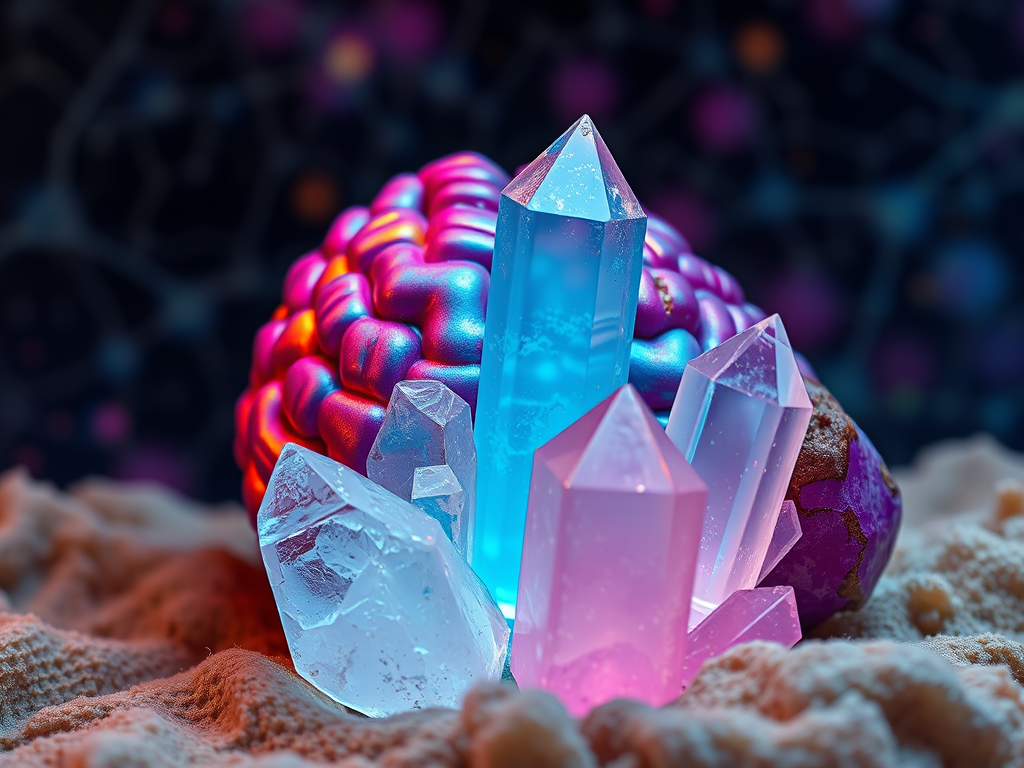
Why Crystals Captivated Our Ancestors: A new Frontiers in Psychology study suggests the human fascination with crystals may reach deep into our evolutionary past. Researchers in Spain found that enculturated chimpanzees, one of our closest living relatives, quickly distinguished crystals from ordinary stones and showed clear preference for them. The animals were especially drawn to crystals’ transparency, symmetry, and sharp geometric form, often inspecting them closely, rotating them in the light, and even carrying them away as if they held special value. That matters because archaeologists have found crystals collected by hominins as far back as 780,000 years ago, despite no evidence that they were used as tools, weapons, or jewelry. The findings suggest crystals may have appealed to early humans simply because they looked strikingly unlike the rest of the natural world. (Frontiers In)
Gut Microbe Implicated in Age-Related Memory Loss: One of the week’s most relevant brain stories comes from Science: a mouse study suggests a gut microbe can actively promote memory decline. The work points to Parabacteroides goldsteinii as a candidate driver of cognitive problems in aging, strengthening the case that the microbiome is not just correlated with brain health but may help cause some forms of decline. The study reportedly links the microbe to disrupted signaling along the gut-brain axis and adds to a growing literature suggesting cognition can be shaped by immune, metabolic, and vagal pathways outside the brain itself. For the nootropics world, the implication is huge: future “brain boosters” may not look like classic stimulants or supplements at all, but rather microbiome interventions designed to preserve signaling and reduce inflammatory damage upstream. (Science)
High-Fat Diet Sends Living Gut Bacteria Into the Brain in Mice: Another gut-brain paper made headlines for its sheer weirdness. In a new mouse study, researchers found that a high-fat diet can alter the microbiome and gut permeability enough for small numbers of bacteria to move from the gut to the brain, likely via the vagus nerve. Once the animals returned to a normal diet, the brain bacteria disappeared. The team also detected low levels of bacteria in mouse models of Alzheimer’s, Parkinson’s, and autism-spectrum-related conditions even without the diet manipulation. That does not mean these disorders are simply “caused by bacteria,” but it does suggest the gut-brain axis may be more physically direct than many scientists assumed. For readers interested in nootropics, it is another warning that brain performance may depend as much on metabolic ecology as on any pill. (EurekAlert!)

Noninvasive Deep-Brain Stimulation Gets a Serious Boost: A promising neurotechnology story from Science reports that “colliding currents” may be able to target deep brain regions without surgery. The approach, tested in humans, appears to focus electrical stimulation below the skull more precisely than standard noninvasive methods and is being explored for conditions including epilepsy and other brain disorders. If the method holds up, it could open a middle ground between crude external stimulation and fully implanted electrodes. That matters not just for medicine but for the long-running dream of cognitive modulation without invasive hardware. It is still early, and this is not a consumer brain-zapping device story, but it is one of the clearest examples this week of the brain-tech frontier moving from speculative promise toward practical therapeutic engineering. (Science)
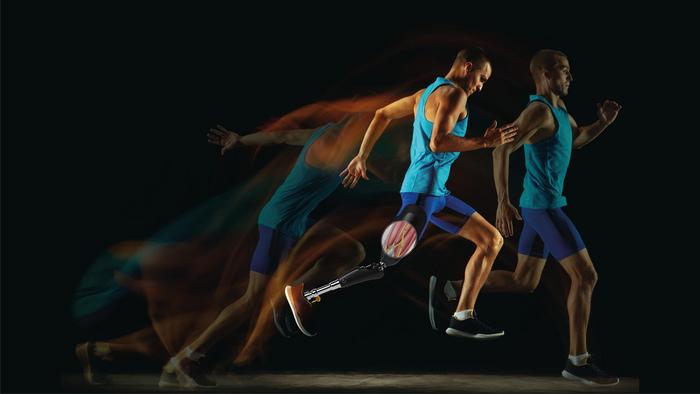
Brain Implant Lets Paralyzed Users Type at Near-Texting Speed: A brain-computer interface reported in Nature Neuroscience and covered by Scientific American helped two people with paralysis type at speeds up to 22 words per minute, close to everyday smartphone texting speed. The system uses implanted electrodes in the motor cortex plus AI decoding software trained to interpret intended hand and finger movements as QWERTY keystrokes. One participant reached about 110 characters per minute with a very low word error rate, marking a significant jump from earlier neural typing systems. This is not a nootropic in the supplement sense, but it absolutely belongs in the cognitive-enhancement conversation: it is a device that restores communication by converting intention directly into text. The headline here is practical usability. Brain-computer interfaces are edging closer to becoming real tools rather than laboratory demonstrations. (Scientific American)
China Approves the First Commercial Brain Implant: China has approved a brain-computer interface for commercial use in people with partial spinal cord injuries, a move Scientific American describes as a world first. The device, made by Neuracle Medical Technology, is a wireless implant that sits on the surface of the brain’s outer membrane and can be used to control a robotic glove. Brain implants have been tested for decades in clinical trials, but broad regulatory approval for real-world patient use is a different threshold entirely. The approval signals that neurotechnology is entering a new phase in which commercial deployment may advance country by country rather than through a single global leader. For the broader nootropics-and-enhancement beat, this is one more sign that the future of cognitive augmentation may be hardware as much as chemistry. (Scientific American)
“SuperAgers” Offer New Clues to Brain Resilience: A fascinating Science News report looks at the brains of so-called SuperAgers, people over 80 whose memory resembles that of someone decades younger. In postmortem hippocampal tissue, researchers found genetic signatures that some scientists interpret as evidence of continued neurogenesis, or the creation of new neurons, deep into old age. The study is small and controversial, and not everyone accepts that the cells identified are truly newborn neurons. Still, the work suggests these exceptional older adults may have a distinct molecular profile that helps them cope with aging better than their peers. For anyone following nootropics, longevity, or brain optimization, this is the kind of story that matters more than product marketing: it points to the biological traits that genuine cognitive resilience may rest on. (Science News)
Yaks May Hold a Clue to Repairing the Diseased Brain: One of the more inventive neuroscience stories this week came from Science News: researchers studying high-altitude animals such as yaks found that a mutation in a gene called Retsat may help protect and repair white matter in low-oxygen conditions. In mice, the mutation improved learning, memory, and social behavior under hypoxic stress and also improved myelin regeneration in an MS-like disease model. The proposed mechanism involves conversion of a vitamin A–related molecule into a form that promotes mature oligodendrocytes, the cells that make myelin. This is still far from a human therapy, and at least one similar drug path has run into side-effect problems before. But it is a strong example of comparative biology opening a door to future neurorepair strategies. (Science News)
Japan Clears the First Marketed Therapy Made From iPS Cells
Japan has granted conditional, time-limited marketing authorization to two regenerative medical products derived from induced pluripotent stem cells, or iPS cells, according to WIRED. The milestone arrives 20 years after the creation of mouse iPS cells and marks what the article calls the first practical commercialization of products made from this reprogrammed-cell technology. This is not a nootropics story directly, but it is a major biomedical-tech development because iPS cells have long represented one of the most tantalizing routes to personalized regenerative medicine without the ethical baggage of embryonic stem cells. Real-world approval means the field is moving from promise to platform. It also underscores how quickly “future medicine” can become regulated medicine once manufacturing and safety hurdles are crossed. (WIRED)
Scientists Create the First Half-Möbius Molecule, With Quantum Help: On the wider science-and-tech front, one of the coolest stories of the week was the creation of a “half-Möbius” molecule. Researchers built a 13-carbon ring with two chlorine atoms whose electron path twists by 90 degrees per loop, rather than the 180-degree twist of a classic Möbius strip. According to Science News, microscopy and quantum-computing-assisted calculations helped confirm the topology, and researchers could even switch the molecule from a half-twisted form to an untwisted one by adding energy. This is not immediately practical in the way a drug or implant is, but it is the kind of headline that shows where advanced computation and molecular design are heading: toward structures once thought mathematically interesting but chemically implausible. That is a real science-and-tech story, not just a curiosity. (Science News)


Leave a Reply