The Shingles Shot’s Surprise Dividend: Less Dementia, Slower Aging?: A growing wave of research suggests shingles vaccination may do more than prevent a painful varicella-zoster flare—it may also reduce dementia risk and even dampen biological aging signals. Observational studies long hinted vaccinated older adults develop dementia less often, but critics argued “healthy-user bias.” Newer “natural experiment” designs—using eligibility cutoffs during rollouts in Wales, Australia, and Canada—consistently report about a ~2 percentage-point drop in dementia diagnoses and roughly ~20% lower relative rates among eligible, vaccinated cohorts. Attention is now shifting to Shingrix, the newer, far more effective recombinant vaccine: US data comparing eras of Zostavax vs. Shingrix links Shingrix to longer dementia-free time, while a large matched study reports markedly lower dementia risk among Shingrix recipients. Mechanisms remain uncertain, with immune modulation and reduced neuroinflammation among leading hypotheses. (Ars Technica)
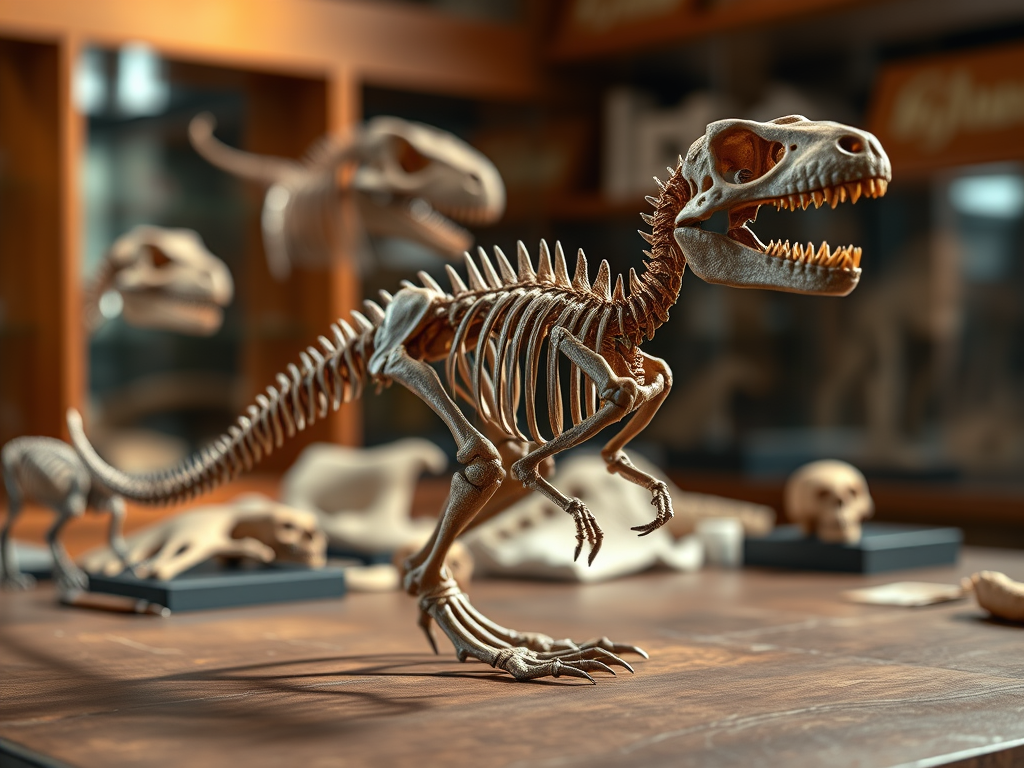
Tiny Dinosaur, Big Evolutionary Shake-Up in Patagonia: A newly described skeleton of Alnashetri cerropoliciensis—one of the smallest and most complete South American alvarezsauroids yet found—adds rare clarity to a famously puzzling dinosaur lineage. Alvarezsauroids are known for extreme miniaturization and later specialization (including unusual forelimbs), but South American members have often been represented by fragmentary remains, leaving their relationships debated. The Alnashetri specimen helps anchor comparisons across continents, and the authors also flag two Northern Hemisphere “historic” taxa as alvarezsauroids, reshaping how this group’s dispersal and anatomical oddities are interpreted. The work strengthens the case that miniaturization and specialization were stepwise, not sudden, and that the clade’s global record may be hiding in plain sight. (Nature)
A New Spinosaurus Rekindles the “Could It Swim?” War: A newly identified species, Spinosaurus mirabilis, is reviving one of paleontology’s loudest arguments: were spinosaurids true aquatic hunters or mostly shoreline predators? National Geographic reports that fossils from a rare inland Saharan site include multiple individuals of the new species, plus other dinosaurs and freshwater fauna—evidence that complicates a purely marine lifestyle. The animal’s scimitar-like head crest and the site’s riverine ecosystem push some researchers toward a “wader/ambush” picture, while others argue the broader spinosaur body plan still suggests strong aquatic adaptation. What’s most valuable here may be the site itself: multiple partial skeletons from this slice of African Cretaceous time are exceptionally uncommon, and they widen the data needed to test competing reconstructions. (National Geographic)
‘Hell Heron’ Dinosaur: A Semi-Aquatic Predator With a Showy Crest: Smithsonian’s report on Spinosaurus mirabilis frames the new species as a huge, fish-focused hunter adapted for shallow-water ambush—more heron than sea monster. The article notes the inland discovery location (hundreds of miles from ancient coasts) as a key strike against the “fully aquatic” interpretation for Spinosaurus. It also highlights anatomy aimed at grabbing slippery prey, plus the attention-grabbing 20-inch crest, which researchers suspect was keratin-covered and possibly brightly colored—more display than weapon. The piece is candid that the debate is not settled: critics point to the dinosaur’s size and limb proportions, and argue other spinosaur remains still support stronger swimming capacity. More fossils will decide whether the truth is wading, swimming, or both. (Smithsonian Magazine)
Bird Tracks Map a Miocene Wetland Community in Argentina: A new Acta Palaeontologica Polonica study analyzes bird footprints from the Miocene Vinchina Formation in La Rioja, Argentina, across multiple field sections that capture different fluvio-lacustrine settings. The authors report that one locality has low ichnodiversity (possibly due to limited sampling and preservation), while other sections preserve a richer suite of track types—interpreted as distinct bird communities tied to ecology and freshwater availability. The paper also tackles trackmaker identity and how the footprint record matches (or diverges from) the body-fossil record for Miocene birds. Beyond taxonomy, the study reads the track surfaces as behavioral and environmental snapshots—where birds walked, in what kinds of wetlands, and under what constraints—using ichnology to flesh out an avian picture that bones alone rarely provide. (Acta Paleontologica)
First Permian Fossil Insect From an Argentine Formation—A New Species: Acta Palaeontologica Polonica reports the first fossil insect from the Cisuralian (Lower Permian) Arroyo Totoral Formation of La Rioja Province, Argentina: a new phylloblattid dictyopteran based on an almost complete forewing, described as Anthracoblattina macucai sp. nov. The diagnostic case rests on detailed wing-venation features—fields, vein branching, and curvature patterns that place it among “cockroachoid” lineages. The authors situate the find in the broader problem of sparse quantitative data for South American Permian insect assemblages compared with Northern Hemisphere records, arguing that this new occurrence helps fill a geographic and stratigraphic gap. Just as importantly, they interpret the depositional setting to suggest the unit is promising for more insect discoveries, potentially upgrading regional paleoentomology from isolated finds to a real assemblage. (Acta Paleontologica)
Archaeopteryx Had “Bird-Like” Mouth Hardware for Efficient Feeding: A newly analyzed Archaeopteryx fossil reveals mouth features that look surprisingly modern in function: soft-tissue traces consistent with oral papillae (firm cones used in food handling), evidence for a more mobile tongue, and channels at the beak tip that may have housed nerves linked to a sensitive bill-tip organ. Science News frames the point succinctly: flight is energetically expensive, so feeding efficiency matters, and these traits could have helped the earliest known bird meet higher caloric demands. The reporting describes how researchers combined X-ray imaging with ultraviolet work to detect structures not obvious under normal light, extracting behavioral implications from anatomy without overclaiming. The result is a sharper picture of Archaeopteryx not just as a transitional icon, but as an animal already evolving a coordinated “feeding toolkit” alongside early flight capabilities. (Science News)
A Cretaceous Plesiosaur Shows Up in Algeria—Right Where the Record Was Thin: Phys.org reports that researchers have identified Algeria’s first plesiosaurian remains: a single vertebra (dorsal centrum) recovered from the Essen Formation at Djebel Essen in northeastern Algeria. The surrounding microfossil and invertebrate assemblage points to deposition in an isolated shelf-lagoon environment, and the strata are dated to the Late Coniacian—an interval with relatively few plesiosaurid occurrences globally. The study (in Historical Biology) positions the find as both a national first and a useful datapoint for Late Cretaceous paleobiogeography, tightening where and when these marine reptiles are documented around the Tethyan realm. Even with limited material, a well-contextualized vertebra can matter: it pins a lineage to a time slice, a place, and a habitat model, helping calibrate broader distribution maps. (Phys.org)
Australian ‘Sea-Salamanders’ Extend a Triassic Marine Amphibian Story: Newly reported amphibian fossils from Australia add weight to the idea that ancient, ocean-going temnospondyls (“sea-salamanders”) were not regional oddities but participants in a wider post-Permian world. Phys.org describes material from the Kimberley region and uses it to argue for a broader distribution of these marine amphibians around 250 million years ago, during the turbulent recovery period after Earth’s greatest mass extinction. The article emphasizes the landscape context—remote terrain shaped by extreme wet/dry cycles today—while the scientific takeaway is biogeographic: fossils in Australia help connect far-flung records into a more continuous map of where these animals lived and how they spread. The broader implication is that marine dispersal routes and coastal ecosystems may have been repopulated faster—and more globally—than some reconstructions assume for the Early Triassic. (Phys.org)
Andrewsarchus: The Hoofed Carnivore That Still Won’t Sit Still on the Family Tree: A century after its discovery, Andrewsarchus remains a phylogenetic troublemaker—known primarily from a single enormous skull and a handful of fragments, yet constantly reinterpreted as new mammal relationships are proposed. Smithsonian Magazine revisits the debate over whether this animal belongs near mesonychids, entelodonts (“hell pigs”), or other ungulate-adjacent lineages, and why that matters for reconstructing its size, diet, and ecology. The article highlights how early body-size estimates leaned on skull-to-body ratios that may not apply if the evolutionary placement shifts. It also underscores functional anatomy nuance: massive teeth and room for jaw muscles don’t automatically mean “super predator,” because tooth shape and muscle-attachment geometry can point to opportunistic feeding rather than dedicated hunting. The story is a clean reminder that in paleontology, one spectacular fossil can launch a legend—but also decades of revision. (Smithsonian Magazine)
Astronomers Confirm a Near-Invisible “Dark Galaxy” Made Mostly of Dark Matter: A study highlighted by WIRED argues that four seemingly separate globular clusters in the Perseus cluster are actually bound together as one extraordinarily faint galaxy—so dominated by dark matter that visible matter may account for only a sliver of its mass. The piece describes the candidate system (CDG-2) as effectively detected “by fragments”: the clusters contribute an unusually large share of the galaxy’s total brightness, helping astronomers infer a much larger, mostly unseen structure holding them together. If confirmed and expanded with follow-up observations, such extreme “dark galaxies” become powerful testbeds for galaxy-formation models: how do halos that massive end up with so few stars, and what does that imply about the behavior of dark matter on small scales? The result is a rare case where absence—almost no starlight—becomes the signal. (wired.com)




Leave a Reply