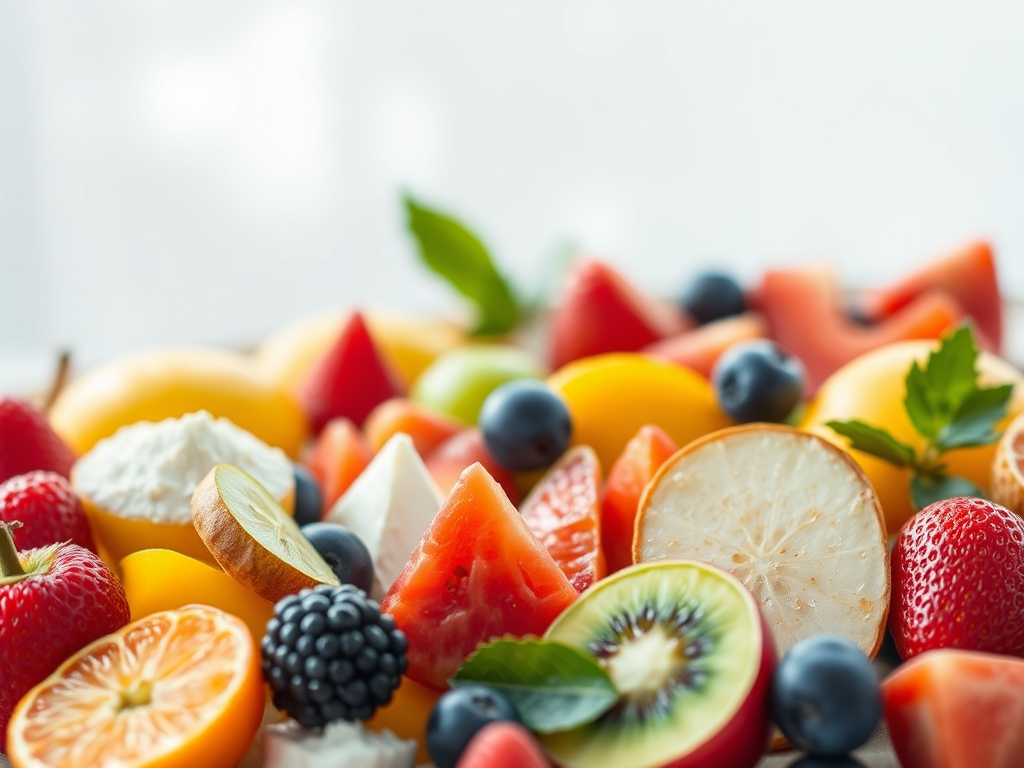
What One Fructose Drink Can Do to Immune Signaling
A report on new findings suggests fructose can “prime” immune cells to respond more aggressively to bacterial toxins, amplifying inflammatory signaling—even in healthy people and after short-term intake. The story emphasizes immune-cell sensitivity as the key shift: fructose consumption increased markers tied to toxin recognition and inflammatory activation, implying that subsequent exposures could trigger a stronger reaction than expected. While the work doesn’t claim that a single sweet drink directly causes disease, it frames a plausible pathway linking frequent fructose-sweetened beverages to higher inflammatory burden and potentially elevated long-run risks (including, in the article’s framing, tumor-related risk). The takeaway is mechanistic: fructose may act less like a passive calorie source and more like a signal that changes how immune cells “set their thresholds” for responding to microbial cues. (SciTechDaily)
NutriSighT: An AI Early-Warning System for ICU Underfeeding
A new study argues that “adequate enteral nutrition” is hardest to achieve precisely when it matters most: days 3–7 of mechanical ventilation. Researchers built an AI model called NutriSighT that ingests routine ICU data—vital signs, labs, medications, sedation, and feeding info—and updates risk predictions every four hours. The goal is practical triage: flag, hours ahead, which ventilated patients are likely to receive <70% of estimated caloric needs, so teams can adjust feeding plans sooner. The model was trained and validated on large de-identified ICU datasets spanning Europe and the United States, emphasizing dynamic, bedside-ready prediction rather than static scoring. The release positions interpretability as a feature, aiming to show clinicians what variables are driving risk. (EurekAlert!)
High-Fat Diets “Reprogram” Liver Cells Toward a Cancer-Prone State
MIT researchers report a mechanistic link between fatty diets and liver cancer risk: repeated high-fat stress can push mature hepatocytes to revert toward an immature, stem-cell-like state. In the short term, that shift appears adaptive—cells turn on survival and proliferation programs and become more resistant to apoptosis. But the tradeoff is troubling: the same survival rewiring may increase susceptibility to tumorigenesis over time. The team also highlights transcription factors that seem to control this reversion, framing them as potential drug targets to prevent tumors in high-risk patients. The report underscores a broader theme in metabolism research: chronic dietary stress doesn’t just “damage” tissue; it can reshape cell identity and gene-expression patterns in ways that alter future disease trajectories. (Medical Xpress)
A “Food Emissions Budget” Suggests Many Diets Overshoot 2°C Climate Goals
A University of British Columbia-led analysis proposes a simple but provocative idea: individuals can be compared against a “food emissions budget” consistent with limiting warming to below 2°C. Using this framing, the researchers conclude that many people—especially in wealthy countries—are eating in ways that overshoot climate targets, with beef singled out as a major driver (the story notes beef accounts for a large share of food-related emissions in Canada). The good news, they argue, is that meaningful reductions don’t require perfection: smaller portions, fewer high-impact meals, and cutting food waste can combine into substantial emissions savings. The piece situates diet as a climate lever that operates daily, at scale, and alongside other mitigation strategies—without requiring new technology to start. (ScienceDaily)
Q&A: Why Dietary Shifts Are a Climate Tool, Not Just a Personal Choice
In a wide-ranging Q&A, researchers frame diet change as a systems-level climate intervention: what people eat shapes land use, supply chains, agricultural emissions, and downstream health burdens. The discussion emphasizes that “climate-friendly nutrition” isn’t only about swapping foods; it’s about affordability, access, and making sustainable options easy defaults rather than niche choices. The interview also highlights an underappreciated point: nutrition and climate goals can align, but they don’t automatically align for everyone—cultural preferences, budgets, and local food environments matter. The result is a more pragmatic message than “go perfect”: focus on realistic substitutions, reduce waste, and support policies that make lower-emission diets feasible at population scale. It’s climate mitigation reframed as daily behavior plus structural change, not moral purity. (Phys.org)
Breastfed Infants and B. infantis: A Dose-Range Study Suggests Lasting Microbiome Effects
New results highlighted from the REMEDI study suggest it may not be “too late” to restore beneficial Bifidobacterium longum subsp. infantis in breastfed infants aged roughly 2–4 months. Researchers tested multiple probiotic doses (high, medium, low) versus placebo and tracked stool samples before, during, and after supplementation. The key claim is persistence: unlike many probiotics that fade once dosing stops, B. infantis appeared able to take hold and remain in the gut when paired with human milk—because milk provides the human milk oligosaccharides the microbe uses to grow. The article frames this as a practical, time-flexible intervention: even short-term supplementation, across doses that resemble commercial products, could yield durable shifts in microbiome development. (Technology Networks)
High-Fat Cheese and Cream Linked to Lower Dementia Risk in Long-Term Cohort Data
A long-term observational study summarized here reports an association between moderate high-fat dairy intake and lower dementia risk over decades of follow-up. Using Sweden’s Malmö Diet and Cancer cohort (tens of thousands of participants tracked for roughly 25 years), researchers compared dementia outcomes against detailed dietary assessments (including diaries and questionnaires). The headline finding: people consuming higher amounts of high-fat cheese and cream showed lower dementia risk, while low-fat dairy and several other dairy categories showed no clear association. The write-up stresses correlation, not causation, and notes the usual limitations—diet changes over time, unmeasured confounding, and differences in food patterns across countries. Still, it spotlights a nuance often lost in nutrition debates: “dairy” isn’t one exposure, and fat content may track with distinct foods, behaviors, and metabolic effects. (EatingWell)
FDA Clears the First Oral GLP-1 Weight-Loss Pill, Potentially Expanding Obesity Treatment
Novo Nordisk’s Wegovy becomes the first GLP-1 weight-loss treatment approved as a daily pill in the U.S., offering an alternative to injections for people with overweight or obesity. New Atlas reports the pill as a 25 mg oral semaglutide option, pitched as a convenience breakthrough that could broaden uptake—especially among patients reluctant to use injectables. The company frames it as uniquely competitive among oral GLP-1s, with weight-loss outcomes positioned as comparable to injectable approaches, though daily dosing logistics (notably, timing around food) remain part of the regimen. Beyond personal convenience, the approval is framed as a systems story: oral delivery could reshape prescribing patterns, manufacturing scale, and access—while also intensifying debates around cost, long-term adherence, and how health systems prioritize pharmacologic weight management alongside lifestyle and public-health strategies. (New Atlas)
Tea vs. Coffee: A 10-Year Look at Bone Density in Older Women
A new analysis asks a very specific question with very practical stakes: do long-term tea or coffee habits leave different “signatures” on bone mineral density in older women? Drawing on the Study of Osteoporotic Fractures, Flinders University researchers tracked nearly 10,000 women aged 65+ over about a decade, pairing repeated beverage-intake measures with BMD readings at fracture-relevant sites like the hip and femoral neck. The story frames osteoporosis risk as the clinical backdrop—common, disabling, and often discovered after a fracture. The reported finding is not simply “caffeine is bad” or “tea is good,” but that the two beverages may relate differently to BMD over time, suggesting distinct biological or behavioral correlates worth separating rather than lumping together. It’s a reminder that “daily rituals” can be epidemiological exposures. (New Atlas)
Quantum Spin Liquids in a Kagome Material: A Step Toward Future Quantum Tech
Outside nutrition, one of the week’s standout condensed-matter reports describes new experimental evidence for a quantum spin liquid (QSL) ground state in a kagome material—an elusive phase where spins remain highly entangled rather than freezing into a conventional magnetic order. The researchers report detailed measurements of spin correlations that align well with theoretical calculations for a specific QSL ground state, strengthening the case that the material hosts this exotic behavior. The work, supported by SLAC, is framed as foundational: QSLs are interesting not just as “weird physics,” but as possible building blocks for future quantum technologies because of the unusual excitations and robustness associated with strongly entangled states. The article emphasizes that the field is progressing by matching high-resolution experimental datasets to precise theoretical signatures—turning a long-hypothesized state into something increasingly measurable and engineerable. (Phys.org)
When Physics Becomes Muse: The Art of Black Holes
Conjuring the Void: The Art of Black Holes explores how one of physics’ most extreme phenomena has shaped artistic imagination across cultures and centuries. Written by Lynn Gamwell, a longtime scholar of art, mathematics, and science, the book traces black holes from early scientific speculation—John Mitchell’s “dark stars” and Einstein’s relativity—to modern breakthroughs like gravitational-wave detection and the first black hole image. This scientific arc frames an expansive survey of black-hole-inspired art, spanning illustration, painting, sculpture, photography, and immersive installations. Gamwell highlights particular resonance in Asian art, where black holes echo Buddhist and Taoist ideas of void, transformation, and inescapability. Artists deploy black holes both as symbols of violence and despair—linked to war or depression—and as sources of energy, mystery, and renewal, revealing why these cosmic objects remain such powerful metaphors for the modern world. (Ars Technica)


Leave a Reply