
“Embracing ‘Anti-Vax’:CHD’s Austin Gathering”
At a Children’s Health Defense “Moment of Truth” conference in Austin, Texas, attendees openly embraced the “anti-vax” label long rejected by Robert F. Kennedy Jr., now health secretary, who did not attend but loomed large via merchandise and tributes. Speakers including Del Bigtree and MAHA Institute president Mark Gorton urged a bolder anti-vaccine stance, while CHD scientist Brian Hooker voiced caution, saying he’d support immunization during a convincingly dire epidemic. The event mixed fervor and grievance, featuring senators Rand Paul and Ron Johnson (virtually), Florida surgeon general Joseph Ladapo, and Andrew Wakefield, lauded despite his retracted study. Panels showcased the contentious “spellers method” for nonverbal autism. Skeptical claims—such as Bill Gates pushing subdermal “electric tattoos”—surfaced alongside broader denunciations of surveillance, pandemic mandates, and perceived media and medical gaslighting. (New York Times)
High MDR Burden Documented in West Bank Hospitals
A cross-sectional study of 10,007 clinical isolates from 13 West Bank government hospitals (2023) found 36.7% were multidrug-resistant (MDR). Escherichia coli was most common (43% of isolates). MDR rates were highest in Acinetobacter baumannii (76.4%), ESBL-producing Klebsiella pneumoniae (69.2%), and ESBL-producing E coli (58.3); Staphylococcus aureus showed 29.5% MDR. Demographic modeling linked MDR to male sex (aOR 1.14) and increasing age, with the highest odds in adults ≥65 years (aOR 1.85). Children 2–9 and 9–16 years had lower odds (aORs 0.69 and 0.66 vs <2 years). Authors cite antibiotic misuse, over-the-counter access, and weak infection control within a fragmented health system, urging context-specific interventions and stronger antimicrobial stewardship spanning community and hospital settings. (CIDRAP)
AI speeds up radio-signal hunts by ~600×
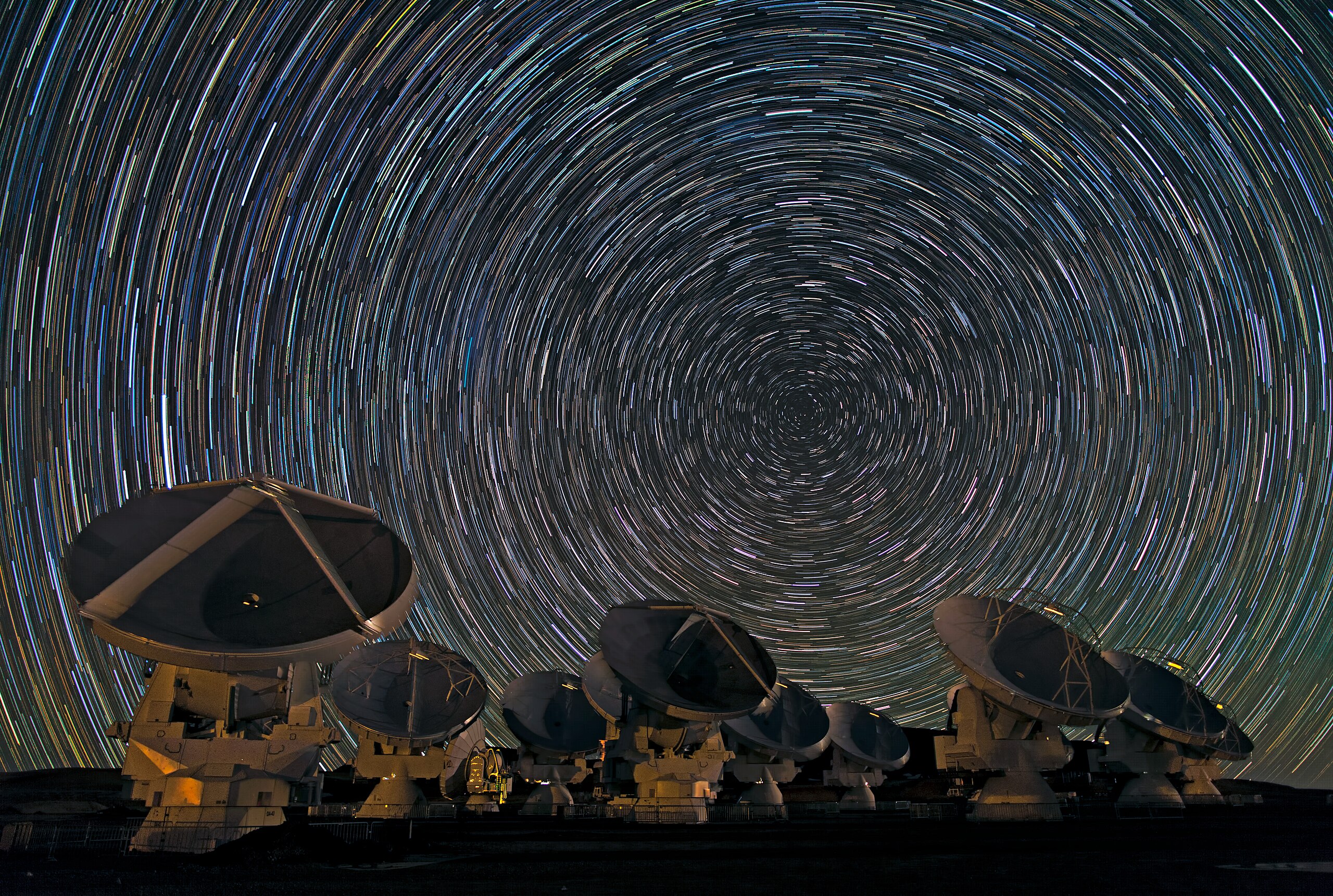
Astronomy & Astrophysics highlighted a machine-learning pipeline that accelerates detection of faint astrophysical signals—pulsars, fast radio bursts, technosignature candidates—by roughly six hundredfold versus standard workflows. The system triages petabyte-scale radio data streams in near–real time, suppressing radio-frequency interference and ranking candidates for human follow-up. Benchmarks on archival surveys show substantially higher recall at the same false-positive rate, and tests on live feeds demonstrated timely identification of sub-threshold bursts that conventional filters miss. The team argues this makes wide-field, multi-beam instruments far more efficient and could be pivotal as next-generation arrays (e.g., SKA) come online. They outline plans to open-source trained models and expand to cross-matching with optical transients. (A&A)
Dwarf galaxies narrow the dark matter vs. modified gravity debate
A new analysis of rotation curves and stellar dynamics in nearby dwarf galaxies finds their mass profiles better match cold dark matter predictions than modified gravity alone. Using high-resolution spectroscopy and updated distance estimates, researchers disentangled baryonic feedback (e.g., supernova-driven “cores”) from underlying halo structure. The work substantially reduces long-standing tensions by showing that observed inner-density slopes can emerge naturally from ΛCDM when realistic star-formation histories are included. It doesn’t fully rule out modified gravity, but limits parameter ranges needed to fit the same dwarfs. Follow-up with IFU spectroscopy and deep imaging is proposed to test residual degeneracies. (A&A)
Black hole shadows as stress tests for Einstein
A Nature Astronomy study proposes a rigorous framework for using black hole “shadow” images to test general relativity against alternative gravity theories. Teams simulated plasma, magnetic fields, and light propagation around black holes across multiple theories to predict subtle, theory-specific differences in shadow size and morphology. Current Event Horizon Telescope images of M87* and Sgr A* can’t separate models cleanly, but the authors show next-generation Earth/space-baseline interferometry with sub–microarcsecond resolution could. Some exotic options (e.g., wormholes, naked singularities) are already disfavored; improved angular resolution should tighten constraints on deviations from GR. The roadmap clarifies what instrumental upgrades matter most. (SciTechDaily)
Record-breaking black hole “superflare” 10 billion light-years away
Astronomers report the most luminous, most distant flare ever recorded from a supermassive black hole, likely a tidal disruption event inside an active galactic nucleus. First flagged by the Zwicky Transient Facility and tracked with Keck and other observatories, the outburst brightened by a factor of ~40 and radiated ~10 trillion solar luminosities at peak. Spectra and long-lived evolution argue a massive star (≥30 M☉) was torn apart, with cosmological time dilation stretching the event as observed on Earth. The find suggests TDEs can be extreme inside AGN disks and highlights the value of persistent time-domain surveys ahead of Rubin Observatory operations. (phys.org)

Euclid’s extra eight years could transform astrometry
An astronomer proposes a clever “second act” for ESA’s Euclid: repeat its sky-mapping campaign during an eight-year fuel surplus to derive exquisite proper motions for ultra-faint sources beyond Gaia’s reach. A “third epoch” could even attempt limited parallax on select fields. Because Euclid probes 5–6 magnitudes fainter than Gaia, pairing epochs would expand the Milky Way’s dynamical census to billions of dim stars and background galaxies, sharpen lensing calibrations, and refine dark matter substructure tests. Engineering challenges remain, but the concept leverages existing hardware and operations. It’s a nimble way to multiply Euclid’s cosmology return with minimal cost.(Universe Today)
China’s Mars orbiter snaps the interstellar comet 3I/ATLAS
China’s Tianwen-1 orbiter captured images of interstellar comet 3I/ATLAS from ~30 million km as it swept past Mars, stitching frames into an animation of the inbound trajectory. The observation—among the closest space-based views to date—complements Hubble/JWST and ground-based campaigns around perihelion. Mission teams overcame challenges posed by the object’s small size (~5.6 km) and extreme relative speeds. Images show a coma and tail consistent with volatile outgassing, reinforcing 3I/ATLAS’s cometary nature and setting the stage for future ISO intercept concepts (e.g., ESA’s Comet Interceptor). (Universe Today)
JWST finds complex organics in protostar ice—outside the Milky Way
Using JWST/MIRI, astronomers detected complex organic molecules frozen in dust-grain ices around a massive protostar (ST6) in the Large Magellanic Cloud—the first such detection beyond the Milky Way. Confirmed species include acetaldehyde, acetic acid, ethanol, methanol, and methyl formate; additional lines suggest even more COMs such as glycolaldehyde. Because the LMC has lower heavy-element abundance and stronger UV fields than the Milky Way, the chemistry offers a window into how prebiotic building blocks formed under “early-universe–like” conditions. The team notes COM ice abundances are generally lower than Galactic protostars, except acetic acid, likely boosted by UV processing. (space.com)
Long-sought twisting magnetic waves spotted in the solar corona
Using the Daniel K. Inouye Solar Telescope, solar physicists directly observed small-scale, torsional Alfvén waves twisting through the Sun’s corona. These ever-present magnetic waves are a prime candidate for transporting energy from the turbulent lower atmosphere upward, potentially explaining why the corona is hotter than the photosphere—a long-standing solar mystery. The measurements capture the waves’ magnetic and velocity signatures and distinguish them from flare-driven disturbances. If their ubiquity and energy flux hold across regions, they could substantially contribute to coronal heating and solar wind acceleration. The result motivates coordinated DKIST–SDO campaigns to map energy budgets across solar cycles. (Space)
Rubin Observatory spots a surprise “tail” on Messier 61
Early imaging from the Vera C. Rubin Observatory revealed a faint, extended “tail” feature associated with starburst galaxy M61 in Virgo, hinting at recent interactions or outflows shaping its evolution. The result showcases Rubin’s wide, deep, and rapid survey power—even in pre-survey testing—and previews how its Legacy Survey of Space and Time will uncover low-surface-brightness structures around galaxies, from stellar streams to tidal debris. Such features record assembly histories and dark-matter halo properties. Astronomers now plan follow-ups to pin down the tail’s origin and connect it to M61’s prolific supernova history and high star-formation rate. (Scientific American)



Leave a Reply