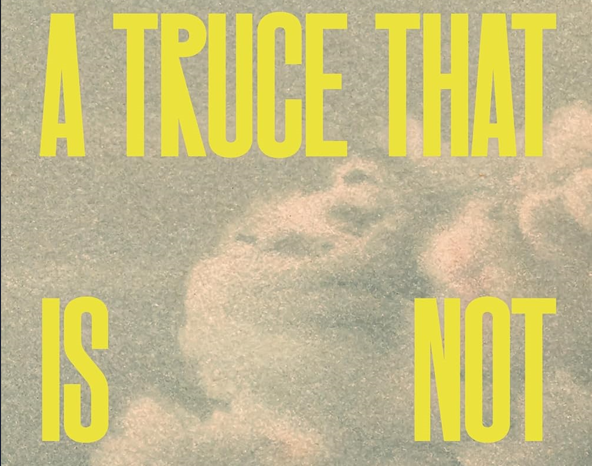
Miriam Toews possesses that rare literary gift—the ability to transform the most wrenching human experiences into prose that sparkles with wit and wisdom. In A Truce That Is Not Peace (Bloomsbury, $26.99 (192p) ISBN 978-1-63973-474-0), the acclaimed Canadian author delivers a memoir that reads like a love letter to the complicated art of staying alive, penned with the deft touch of someone who has learned to find laughter in the darkest corners of existence.
The book’s genesis springs from a delicious literary rejection. Invited to speak at a Mexico City conference on the eternal question “Why do I write?”, Toews offered her teenage letters to her depressed sister Marjorie as explanation, only to be curtly informed this wouldn’t suffice. The organizers wanted profundity; she gave them intimacy. Their loss became our gain, for this rejection bloomed into a meditation that proves far more illuminating than any academic treatise on the writer’s craft.
What emerges is a portrait of writing as both lifeline and act of love. Toews writes because her sister asked her to—a simple answer that contains multitudes. The deal they struck was elemental: “You live. And I’ll write.” It’s a pact that haunted both sisters until Marjorie’s suicide in 2010, twelve years after their father Melvin took his own life. Where lesser writers might succumb to maudlin self-pity, Toews transforms these tragedies into something luminous and life-affirming.

The memoir unfolds like a carefully arranged pile of shattered glass, each fragment catching light from different angles. There are the achingly funny letters from her 1982 European adventure with the insufferable Wolfie, a boyfriend whose penny-whistle busking in Covent Garden and literary pretensions provide comic relief even as eighteen-year-old Toews navigates poverty and disillusionment. Her voice rings clear across the decades: “Do you think I’ll soon be enjoying liquid lunches at the Algonquin Round Table, hahahaha.” That “hahahaha” becomes the book’s signature note—laughter as survival mechanism, comedy as courage.
Toews structures her examination of writing, memory, and psychology with the skill of a master craftsman. Therapeutic passages probe her own darkness—those moments when throwing her phone into the river substituted for throwing herself—while whimsical interludes about her imagined Wind Museum provide necessary breathing space. She moves effortlessly between registers, from the profound question of whether silence might say more than words to domestic observations about Christmas tree ornaments and drug-addled mothers.
The author’s Mennonite background adds layers of cultural texture, particularly her awareness of language as both barrier and bridge. Her parents spoke Plautdietsch, “a spoken language, not a written one,” and this tension between the oral and written traditions infuses her work with particular poignancy. Writing becomes not just communication but translation—an attempt to give voice to the voiceless, including her sister’s years of chosen silence.
What distinguishes this memoir from the crowded field of literary grief narratives is Toews’ refusal to present writing as inherently superior to other forms of expression. She acknowledges her sister’s silence as potentially more eloquent than words, questioning whether her own compulsive need to “write things down” represents healing or merely another form of obsession. This humility transforms what could have been literary navel-gazing into genuine philosophical inquiry.
The family emerges as a constellation of resilient spirits. Toews’ mother, a Scrabble genius who maintains indomitable cheer despite devastating losses, becomes the book’s unlikely heroine. Even tragedy carries traces of absurdity—the author notes she was conceived on her grandfather’s funeral night, “in a marital effort to ward off morbidity.”
Critics have noted occasional editorial lapses and Toews’ tendency toward repetition, but these seem minor quibbles with a work of such emotional intelligence. Her prose combines Joan Didion’s precise observation with Erma Bombeck’s domestic humor, creating something entirely her own. She writes with the passion of someone who has discovered that laughter and tears are not opposites but intimate companions.
A Truce That Is Not Peace succeeds because it refuses to offer false comfort or easy answers. Instead, it presents writing as what it truly is: an imperfect but necessary attempt to make meaning from chaos, to honor the dead while celebrating the stubborn persistence of the living.
WORDS: brice.




Leave a Reply