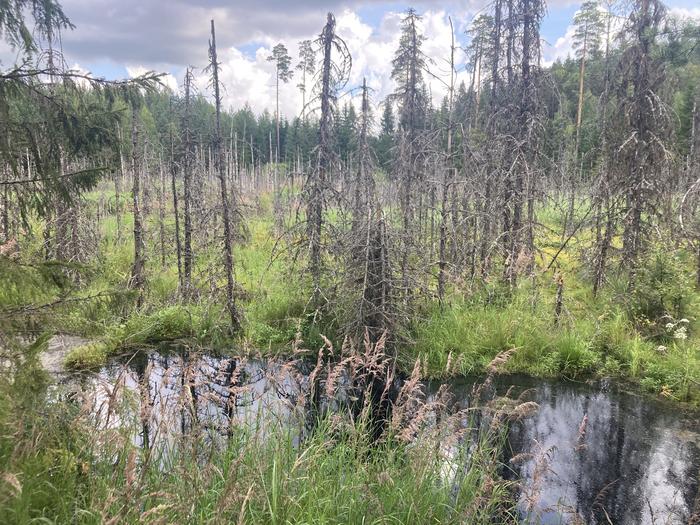
A long-term study spanning more than 50 years illustrates how the beavers that have returned to the Evo region in southern Finland have increased habitat biodiversity. This speaks to their significant role as ecosystem engineers, enabling a wider range of species in the area.
Landscapes shaped by beavers provide favourable conditions for a number of species, including moose, voles and diving beetles. Beaver patches, or areas modified by beavers in nature – such as new and old inundated sites as well as beaver meadows formed after flooding – create diverse habitats that are at different stages of ecological succession, or the process of how species compositions change in ecological communities over time. As a result, a habitat suitability index calculated for different species and groups of species grew almost tenfold over a 54-year period. Thanks to beaver activity, the landscape develops to support a wider range of species and improves habitat connectivity.
“While the positive effects of the changes brought about by beavers in the boreal region are significant, their long-term effects on biodiversity dynamics remain partly unknown. This is why long time series are needed to understand the far-reaching ecological effects of these changes,” says Senior University Lecturer Petri Nummi from the Department of Forest Sciences, University of Helsinki.
Sign up for the Daily Dose Newsletter and get every morning’s best science news from around the web delivered straight to your inbox? It’s easy like Sunday morning.
Evo, an area in Finland that also has been planned as a national science park, is suitable for beaver research, among other lines of study, offering a unique time series on the effects of the return of beavers. This study highlights the role of beavers as natural restorers that improve the habitats of many species and boost biodiversity.
“Beavers are returning to many areas of Europe where they were once hunted to extinction. Whereas in our prior studies we observed patches shaped by beavers, this new study helps to understand the differences between landscapes in areas where beavers occur and where they are absent,” says University Lecturer Sonja Kivinen from the University of Eastern Finland.
IMAGE CREDIT: Petri Nummi.


Leave a Reply