
ENGLAND TO ROLL OUT ROUTINE GONORRHOEA VACCINATION PROGRAMME
England is set to become the first country to offer a routine gonorrhoea vaccination programme, repurposing the existing 4CMenB meningitis jab. From 1 August, eligible individuals will be invited via local sexual health services and can also receive mpox, HPV, and hepatitis A and B vaccines at the same appointment. Gonorrhoea cases in England reached a record 85,000 in 2023, with rising antibiotic resistance—including 17 ceftriaxone-resistant and nine extensively drug-resistant infections between January 2024 and March 2025—threatening current treatment options. The 4CMenB vaccine, already given to infants, shares proteins with Neisseria gonorrhoeae and has demonstrated 32.7–42% effectiveness against gonorrhoea. While it will not completely prevent infection, experts believe it will significantly reduce transmission, especially as past infection confers little immunity. Health officials and campaigners have hailed the rollout as a “gamechanger” for sexual health and a vital step in combating antibiotic-resistant STIs. (The Guardian)
TIANGONG SPACE STATION DISCOVERS NEW RESILIENT BACTERIAL SPECIES
China’s Tiangong space station has yielded a never-before-seen bacterial species, Niallia tiangongensis, which was detected on cockpit controls after swab samples were returned to Earth in May 2023 as part of the CHAMP microbiome program. This microscopic, rod-shaped organism forms resilient endospores and may have survived hundreds of miles above Earth. Genomic sequencing places its closest known relative as terrestrial Niallia circulans, though N. tiangongensis exhibits distinct structural and functional adaptations for space. These include a unique gelatin-hydrolyzing capability that helps it thrive in nutrient-poor environments, biofilm formation for surface protection, oxidative stress responses, and enhanced radiation-damage repair mechanisms. While it remains unclear whether the species evolved aboard Tiangong or originated from an uncharted Earthly reservoir, its discovery underscores the need to understand microbial behavior in sealed, microgravity habitats. Insights into N. tiangongensis will inform sanitation protocols and biosafety measures for future long-duration crewed missions, even as questions linger about its potential pathogenicity given its relation to sepsis-causing N. circulans. (Wired)
NEBRASKA SECURES USDA WAIVER TO BAN SNAP SODA
Nebraska has won a historic waiver from the USDA allowing it to bar soda and energy drink purchases with SNAP benefits beginning January 2026, affecting roughly 150,000 recipients. This marks a sharp reversal after two decades of federal resistance—driven by a coalition of beverage interests, grocers, and anti-poverty groups—against restricting “unhealthy” food stamp purchases. Under the waiver, Nebraska will monitor participant spending and support retailers’ checkout systems. Agriculture Secretary Brooke Rollins praised the move as “Make America Healthy Again,” and Governor Jim Pillen argued taxpayers shouldn’t subsidize sugary drinks. Similar waiver requests from eight other largely Republican-led states are under review. Proponents, including the American Heart Association and some conservatives, view the bans as returning SNAP toward nutritious foods, while critics warn of enforcement challenges, paternalism, and potential cuts to benefits. Nutritionist Marion Nestle notes the debate reflects both public health ambitions and worries that poor people’s choices are being unfairly policed. (New York Times)
UNITEDHEALTH PAYS BONUSES CURB NURSING HOME HOSPITAL TRANSFERS
UnitedHealth quietly paid nursing homes “Premium Dividend” and “Shared Savings” bonuses to reduce hospital transfers for Medicare Advantage residents—an initiative that has saved the insurer millions but, according to whistleblowers, sometimes delayed critical care. Internal documents reveal facilities earned incentives by driving down “admits per thousand” (APK), with staff pressured to reroute emergency protocols through UnitedHealth’s on-site and remote medical teams rather than sending patients to hospital. Confidential records describe at least one resident left with permanent brain damage after suspected stroke symptoms were misdiagnosed as a transient ischemic attack. Former UnitedHealth clinicians report being pushed to encourage “do not resuscitate” orders and to meet admission quotas. The program spans nearly 2,000 nursing homes and leverages Medicare Advantage’s capitated payments. UnitedHealth insists its approach prevents unnecessary, dangerous hospitalizations and improves outcomes, but critics warn that cost-saving pressures may be harming vulnerable seniors and call for congressional oversight. (The Guardian)

KENNEDY GLYPHOSATE CAMPAIGN SPARKS FARMER AND SENATOR BACKLASH
Health Secretary Robert F. Kennedy Jr.’s campaign against agricultural chemicals—especially glyphosate, the active ingredient in Roundup—prompted public pushback from Senator Cindy Hyde-Smith and the agriculture industry. As President Trump’s “Make America Healthy Again” commission prepares to release a report on childhood chronic disease causes, Hyde-Smith warned Kennedy not to jeopardize farmers’ livelihoods, citing decades of EPA and global reviews affirming glyphosate’s safety. Kennedy countered that the commission’s findings would not harm U.S. agriculture. The American Farm Bureau Federation echoed calls for “sound science” over ideology, while organic farmers decry “herbicide drift” from neighboring conventional fields. Kennedy’s allies range from environmentalists to “MAHA Moms” who accuse chemical interests of “corporate capture.” Scientific consensus remains divided: the IARC labeled glyphosate “probably carcinogenic” in 2015, yet the EPA deemed it “not likely to be carcinogenic” in 2017. Established by executive order in February, the commission is tasked with issuing an initial assessment Thursday and a comprehensive strategy within 180 days. (New York Times)
MARKS SPENCER CYBERATTACK SLASHES THREE HUNDRED MILLION PROFIT
Marks & Spencer has revealed that last month’s sophisticated cyberattack will shave approximately £300 million (\$403 million) off its 2025/26 operating profit—about 30.5 percent of its prior-year earnings—after disruptions that left food shelves empty and halted online orders. The retailer expects the fallout to continue into July but plans to mitigate losses through cost controls, insurance recoveries, and separate reporting of related expenses. The breach has already erased over £1 billion of market value and prompted CEO Stuart Machin to fast-track a two-year technology overhaul into six months. While Machin declined to confirm any ransom payment and cited “human error” as the root cause, analysts warn ongoing uncertainty about the attack’s duration leaves the business exposed to further risks. Despite the setback, M\&S’s annual results showed a 17 percent rise in underlying profit before the adjustment, and its share price edged higher as investors digested the clearer picture of financial damage amid broader industry concerns over escalating cyber threats. (CNBC)
PFIZER PAYS $1.25BN FOR 3SBIO PD1VEGF CANCER DRUG
Pfizer has inked a landmark deal with China’s 3SBio, paying $1.25 billion up front and committing up to $4.8 billion in milestones for ex-China rights to SSGJ-707, a PD-1×VEGF bispecific entering phase 3 in China this year. The agreement—paired with a \$100 million equity investment—positions Pfizer as a U.S. challenger to BioNTech, Merck, and Summit in the booming immuno-oncology field after Summit and Akeso’s ivonescimab outperformed Merck’s Keytruda in a head-to-head trial. Phase 2 data reported by 3SBio showed a 70.8 percent response rate in first-line, PD-L1-positive non-small cell lung cancer and up to 81.3 percent when combined with chemotherapy, plus promising activity in third-line colorectal cancer. Pfizer will pay tiered double-digit royalties on future sales and already signaled its PD-1×VEGF interest by collaborating on antibody-drug conjugates with Summit and Akeso earlier this year. As competitors advance—Summit’s phase 3 readout due mid-2025 and BioNTech’s phase 2/3 underway—Pfizer’s deal underscores strong confidence in bispecific approaches despite recent setbacks in the class. (Fierce Biotech)
HUMMINGBIRD FEEDERS DRIVE RAPID EVOLUTION AND RANGE EXPANSION
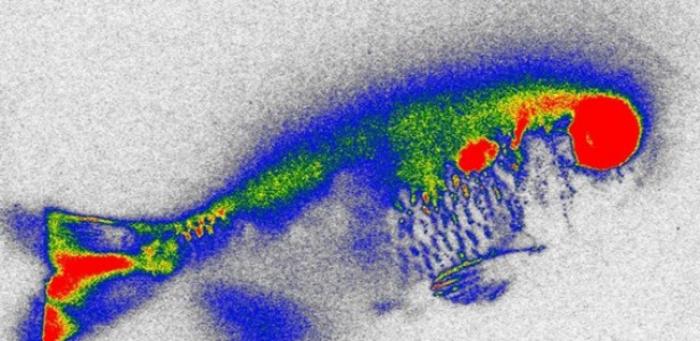
Artificial hummingbird feeders have driven rapid evolutionary and geographic changes in Anna’s hummingbirds over just ten generations. A new Global Change Biology study found that after feeder patents surged post-1947, these birds expanded their range from southern California northward, facilitated initially by introduced eucalyptus trees but ultimately by widespread feeders. Analysis of Audubon Christmas Bird Count data, human population density, and historical newspaper ads revealed that feeder density most strongly predicted range expansion. Morphological measurements of museum specimens showed that in high-feeder areas, beaks grew longer, larger, and more pointed—adaptations for efficient nectar “slurping” and aggressive feeder defense. Conversely, populations in colder northern habitats evolved shorter, smaller beaks to conserve body heat, as infrared imaging confirmed beaks function in thermoregulation. Co–lead author Nicolas Alexandre likens Anna’s hummingbirds to human commensals, while peers praise the study as “evolution in action.” These findings underscore how everyday human activities, from backyard feeders to urban planting, can swiftly and subtly reshape wildlife. (Science)
HOMININ FINGER BONES SHOW CLIMBING AND TOOL USE
Scientists have used 3D scanning to analyze finger bone thickness in two early human ancestors—Australopithecus sediba (∼2 million years ago) and Homo naledi (∼300,000 years ago)—to infer how they used their hands. Repeated mechanical stresses, such as climbing or tool manipulation, cause bone reinforcement in specific regions. Both species exhibited strengthening patterns indicative of dual functions: arboreal behaviors like climbing and suspension, alongside precise grips necessary for handling tools. This combination suggests that while these hominins were habitual bipeds, they retained significant climbing abilities and dexterous manipulation simultaneously. The findings challenge linear models of hand evolution from “ape-like” to “human-like,” revealing instead a mosaic of capabilities that supported diverse ecological niches. Paleoanthropologists note that complete fossil hands are rare, making these specimens invaluable for reconstructing the relative forces exerted on each digit. By illuminating how ancient hominins balanced locomotor and manipulative demands, the study advances our understanding of the evolutionary pathways that shaped the modern human hand. (AP)
INDIAN GREY WOLF SPOTTED IN DELHI AFTER DECADES
A lone Indian grey wolf was photographed for the first time in decades along Delhi’s Yamuna floodplains near Palla, sparking excitement among conservationists. Businessman and wildlife enthusiast Hemant Garg spotted the animal on a Thursday morning, noting its sleek dark-grey coat, distinctive gait, and wolf-like jawline—features unlike those of stray dogs. Experts who reviewed his images largely concur that it resembles Canis lupus pallipes, though some caution that hybridization with feral dogs cannot be ruled out without genetic tests. The wolf may have traversed river corridors from Uttar Pradesh or Rajasthan, underscoring the importance of riparian green spaces. No confirmed wolf sightings in Delhi have been recorded since the 1940s, according to a 2014 report by forester G.N. Sinha. Native to grasslands and scrub forests, Indian grey wolves occasionally venture into agro-pastoral areas and prey on livestock. Whether purebred or hybrid, this rare urban sighting highlights the resilience of wildlife amid rapid urbanization and reinforces calls to protect and reconnect Delhi’s remaining green corridors. (NDTV)
Thanks for reading. Let’s be careful out there.
WORDS: The Biology Guy.


Leave a Reply