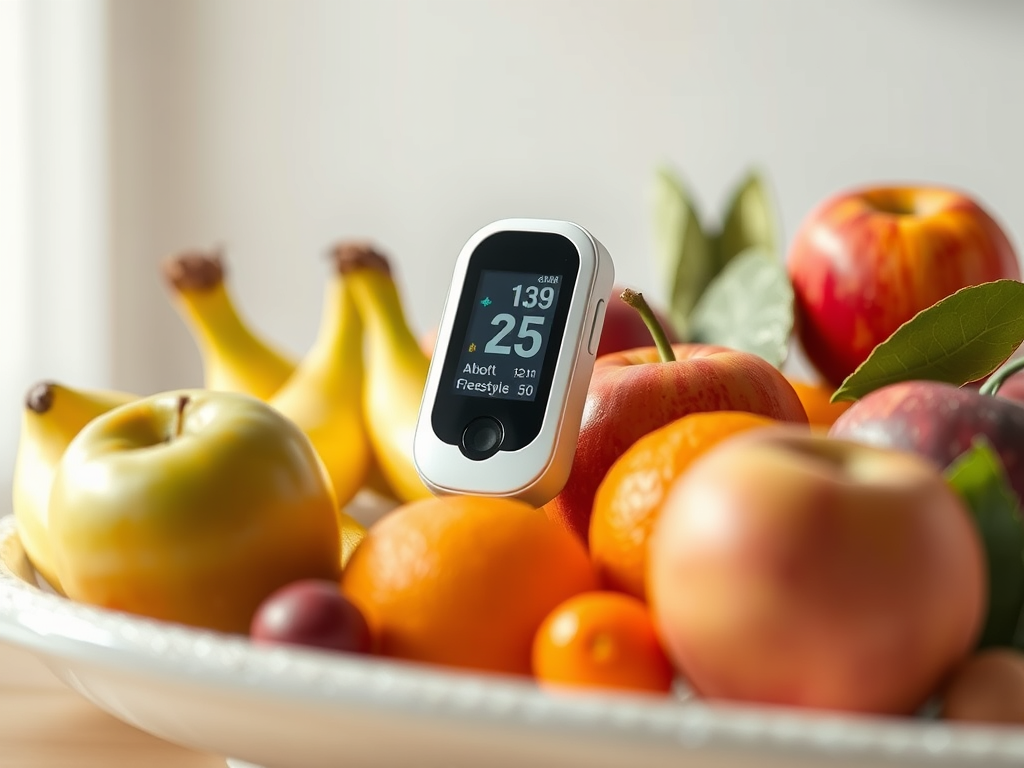
Continuous Glucose Monitors (CGMs) are growing in popularity but new peer-reviewed research, published in The American Journal of Clinical Nutrition, from the University of Bath, suggests they may not be as accurate as many believe. Originally designed to help people living with diabetes manage their blood sugar, these devices are now being used by the health-conscious to track how different foods affect their glucose levels.
The study, from the University’s Centre for Nutrition, Exercise and Metabolism and funded by innocent drinks, warns that CGMs could be overestimating blood sugar levels in healthy adults, leading to unnecessary dietary changes.
The research measured blood sugar responses in healthy volunteers (non-diabetic, within a healthy BMI range) using two methods: a CGM (the Abbot Freestyle Libre 2, a commercially available device, also provided on the NHS) and the gold standard finger-prick test.
The research aimed to assess the accuracy of CGMs in measuring responses to various fruit-based products, ranging from whole fruit to smoothies.
The findings were striking. The CGM consistently reported higher blood sugar levels compared to finger-prick tests.
Key Findings
When participants consumed a smoothie, the Abbott Freestyle Libre 2 CGM overestimated the GI by 30%, reporting a GI of 69 (medium) compared to the traditional test result of 53 (low).
Sign up for the Daily Dose Newsletter and get every morning’s best science news from around the web delivered straight to your inbox? It’s easy like Sunday morning.
Whole fruit was misclassified as medium or high-GI foods by CGMs, while the finger-prick test showed they were low-GI. This could lead users to mistakenly believe that fruit could cause harmful spikes in blood sugar.
CGMs overestimated the time spent above the blood sugar level threshold recommended by Diabetes UK, by nearly 400%, potentially causing unnecessary worry for people whose blood sugar is actually well-controlled.
The research also debunked the common myth that blending fruits into a smoothie raises their GI. Whether eaten whole or blended, fruits like apples, bananas, mangoes, and oranges remained low on the glycaemic index.
The research concludes that CGMs are unlikely to be a valid method to determine whether a food is high or low-GI.
Professor Javier Gonzalez from the Department for Health said: “CGMs are fantastic tools for people with diabetes because even if a measurement isn’t perfectly accurate, it’s still better than not having a measurement at all. However, for someone with good glucose control they can be misleading based on their current performance. For healthy individuals, relying on CGMs could lead to unnecessary food restrictions or poor dietary choices. If you want to assess your blood sugar accurately, traditional methods are still the way to go. We want to better identify the sources of the error in CGMs so that we can improve their performance in the future and have active research on this topic.”
According to Professor Javier Gonzalez from the University of Bath, the inaccuracy of CGMs can be attributed to several factors:
“CGMs may be inaccurate because they measure glucose in the fluid surrounding your cells, not directly in your blood. This can lead to discrepancies due to factors like time delays, blood flow, and how glucose moves between different parts of the body.”
Helen Whitby, Company Nutritionist at innocent drinks, said: “Smoothies and whole fruits are packed full of natural goodness and provide steady energy without sharp blood sugar spikes. We’re on a mission to make it easier to live well through the delicious goodness of fruit and veg and this research confirms that blending fruit doesn’t affect its health benefits, contrary to some myths.”
innocent drinks had no involvement in the study’s design, data collection, analysis, or interpretation, nor in the writing or publication of this research.




Leave a Reply