
HARVARD STUDENTS SHOW DANGERS OF FACIAL RECOGNITION TECHNOLOGY
Two Harvard students, AnhPhu Nguyen and Caine Ardayfio, demonstrated how combining Meta’s smart glasses with face image search technology could potentially expose personal details about individuals merely by looking at them. Their project, named I-XRAY, utilizes the Meta Ray Bans 2 and an invasive face search engine called PimEyes, enabling rapid identification by cross-referencing images with various databases. They developed the technology to highlight significant privacy concerns arising from advancements in facial recognition and large language models (LLMs). The students tested their device on unsuspecting subway passengers, revealing how quickly someone could be doxxed or scammed. Although they chose not to release the code to prevent misuse, they provided guidance on opting out of invasive search engines. While both Meta and PimEyes downplayed the associated risks, the students expressed concern about potential negative uses of their technology, stressing the importance of public awareness regarding online privacy protection. (Ars Technica)
MICROBIOME-SUPPLEMENTS SHOW PROMISE IN COMBATING CHILD MALNUTRITION
To combat malnutrition in children, nurturing gut microbiomes may be as crucial as providing essential calories and vitamins. Recent research in Bangladesh, published in Science Translational Medicine, highlights the efficacy of “microbiome-directed” supplements in aiding recovery for both moderately and severely malnourished children. This study builds on prior findings showing that improving gut microbial ecosystems can lead to better health outcomes. Standard treatments, like ready-to-use therapeutic foods (RUFs), help children gain weight but may not fully address long-term health risks. In the new study, children who received microbiome-directed supplements showed more significant weight gain and higher concentrations of growth-stimulating proteins than those given RUFs. Researchers are investigating the mechanisms behind this success, identifying beneficial microbial species like *Prevotella copri*, which enhance nutrient processing. A large-scale trial led by the WHO aims to test this approach across diverse regions, potentially transforming malnutrition treatment, although challenges in acceptance and distribution remain. (Science)
STENTRODE BRAIN-COMPUTER INTERFACE SHOWCASES PROMISING SAFETY RESULTS
Synchron’s COMMAND trial has successfully demonstrated the safety of its Stentrode brain-computer interface (BCI) implant, which is inserted through blood vessels to monitor motor cortex activity. In the year-long study, six participants with arm paralysis experienced no serious adverse events linked to the device. The Stentrode, a wireless implant, effectively captured motor signals, enabling users to perform digital tasks like cursor movement and clicking, translating their thoughts into actions. Founder Tom Oxley emphasized the potential for these Digital Motor Outputs (DMOs) to enhance patients’ independence and autonomy. The implant’s catheter-based deployment is minimally invasive, taking about 20 minutes, and could greatly benefit the millions with mobility challenges. The results were presented at the Congress of Neurological Surgeons in Houston. Earlier, Synchron’s technology was shown to interface with consumer electronics, including the Apple Vision Pro headset and Amazon Alexa, expanding its application possibilities. (Fierce Biotech)
LAWMAKERS PUSH FOR EASIER ACCESS TO BUPRENORPHINE TREATMENT
Two Democratic lawmakers, Sen. Martin Heinrich (D-N.M.) and Rep. Paul Tonko (D-N.Y.), are advocating for a more lenient regulatory approach toward buprenorphine, a medication used to treat opioid addiction. Despite its effectiveness in reducing opioid-related deaths by 38%, buprenorphine, known as Suboxone, faces stigma and stringent scrutiny from the DEA because it is an opioid. The newly introduced Broadening Utilization of Proven and Effective Treatment for Recovery Act (the “BUPE Act”) aims to exempt buprenorphine from the DEA’s Suspicious Order Reporting System (SORS), which has made access to this lifesaving medication more challenging. The lawmakers argue that the DEA’s oversight, initially intended to combat the oversupply of painkillers, is now hindering access to treatments for opioid use disorder amid a rising overdose crisis. With support from major medical organizations, the legislation seeks to eliminate barriers to buprenorphine access, especially as many patients still struggle to obtain it. (STAT)

GILEAD LICENSING DEAL EXPANDS ACCESS TO HIV PREVENTION DRUG
Gilead Sciences has announced a licensing agreement with six generic pharmaceutical companies in Asia and North Africa, allowing them to produce and sell lenacapavir, an innovative HIV prevention drug, at lower prices in 120 countries, primarily in sub-Saharan Africa. This decision follows positive clinical trial results indicating the drug’s potential to significantly curb the HIV epidemic. However, the deal excludes most middle- and high-income countries, including Brazil and Mexico, which account for a substantial portion of new HIV infections. Gilead’s lenacapavir is priced at $42,250 per year in the U.S., while generics could be produced for as little as $40 annually. Critics argue that the exclusion of key countries exacerbates health inequities, particularly among marginalized populations most affected by HIV. Gilead plans to offer the drug at a no-profit price until generics are available, with regulatory approval expected by the end of the year, aiming to facilitate access for millions at risk. (New York Times)
WILDFIRES THREATEN GLOBAL CARBON BUDGET AND CLIMATE TARGETS
A recent study reveals that wildfires are consuming the carbon budget set to limit global warming, potentially breaching a critical temperature threshold of 1.34°C. Led by the UK Met Office, the research highlights the alarming trend of increasing wildfires across Brazil, the U.S., Greece, Portugal, and even the Arctic, during the Earth’s hottest recorded years. Each wildfire contributes to climate change by releasing carbon from burned trees and diminishing forests’ ability to absorb carbon dioxide. Currently, global temperatures are 1.3°C higher than preindustrial levels, exacerbating droughts and making forests more fire-prone. In South America, land clearance for agriculture further intensifies this issue. The Amazon rainforest is showing signs of “critical slowing down,” with over a third struggling to recover from recent droughts. These positive feedback loops are transforming forests from carbon sinks to sources, making it increasingly difficult to manage global heating and meet the 1.5°C target outlined in the Paris Agreement. Scientists stress that immediate action to stop fossil fuel burning is essential to mitigate this crisis. (The Guardian)
STARBUCKS INVESTS IN COFFEE FARMS TO COMBAT CLIMATE CHANGE
Starbucks has expanded its agricultural portfolio by investing in two new coffee farms—one in Costa Rica and its first in Guatemala—aiming to protect its coffee supply from climate change. This move comes in response to rising temperatures, frosts in Brazil, and extreme weather patterns that have negatively impacted coffee production and led to increased prices for consumers. The company, which sources 3% of the world’s coffee, has seen coffee prices rise by 18% over the past five years. At the new farms, Starbucks plans to study hybrid coffee varieties to improve productivity and resistance to coffee leaf rust, a fungus exacerbated by climate change. Additionally, the Guatemalan farm, characterized by depleted soil and low productivity, will serve as a model for regenerative farming practices. The second Costa Rican farm will incorporate technology like drones to combat labor shortages. Starbucks also intends to acquire two more farms in Africa and Asia to further diversify its coffee supply chain. (CNBC)
SPACEX CREW-9 LAUNCHES FIRST HUMAN FLIGHT FROM CAPE CANAVERAL
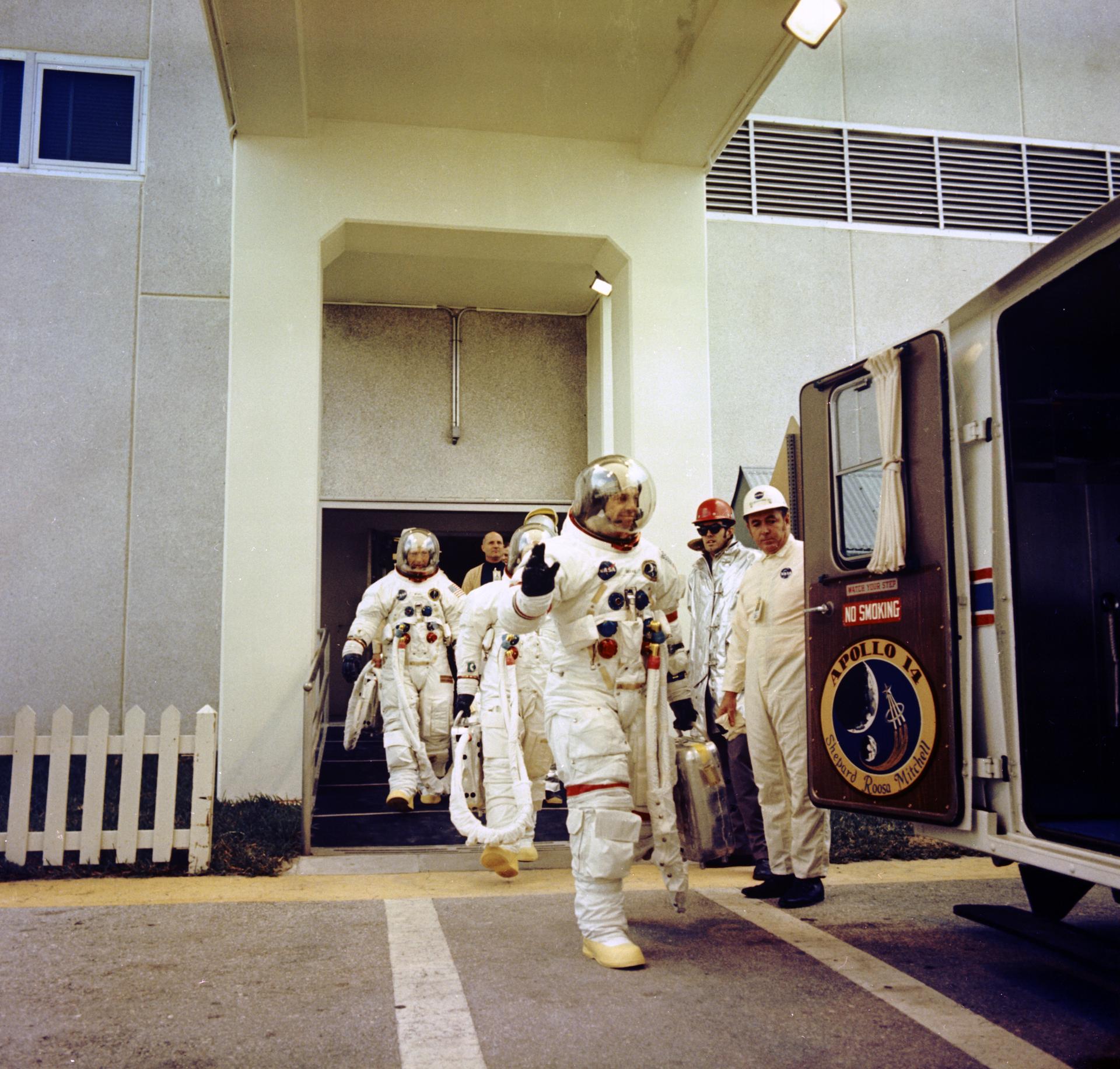
On Saturday, SpaceX’s Dragon spacecraft launched from Cape Canaveral on a Falcon 9 rocket, marking the first human spaceflight from the company’s Space Launch Complex-40. This mission, known as Crew-9, became significant for its role in resolving a lengthy situation involving NASA astronauts Suni Williams and Butch Wilmore, who extended their stay at the International Space Station (ISS) from eight days to eight months due to issues with Boeing’s Starliner capsule. NASA Administrator Bill Nelson praised the team for their adaptability amid changing circumstances. Initially, astronauts Nick Hague and Aleksandr Gorbunov were supposed to be joined by Zena Cardman and Stephanie Wilson, but they were removed to accommodate Williams and Wilmore’s return. The Crew-9 capsule, Freedom, docked at the ISS on Sunday, allowing the extended crew to conduct various scientific experiments. However, SpaceX announced a problem with the Falcon 9’s second stage after the launch, leading to a temporary suspension of future missions for investigation. (Smithsonian)
NASA DEACTIVATES VOYAGER 2 INSTRUMENT TO CONSERVE POWER
NASA engineers have deactivated one of Voyager 2’s science instruments to conserve power as the spacecraft explores interstellar space. Launched on August 20, 1977, Voyager 2 left the solar system on November 5, 2018, and is currently 12.8 billion miles (20.5 billion kilometers) from Earth. It operates with four instruments to study the space beyond the heliosphere, the sun’s influence zone. Although Voyager 2 has enough power to operate one science instrument into the 2030s, it has had to shut down six of its initial ten instruments to maintain functionality. The plasma science instrument, which was crucial in detecting Voyager 2’s crossing into interstellar space, was turned off on September 26. This instrument had been limited in usefulness due to its orientation and the spacecraft’s position beyond the heliosphere. Both Voyager probes are powered by decaying plutonium, losing about 4 watts of power annually. NASA continues to monitor Voyager 2’s resources to maximize its scientific output. (space.com)
Thanks for reading. Let’s be careful out there.
WORDS: The Biology Guy.


Leave a Reply