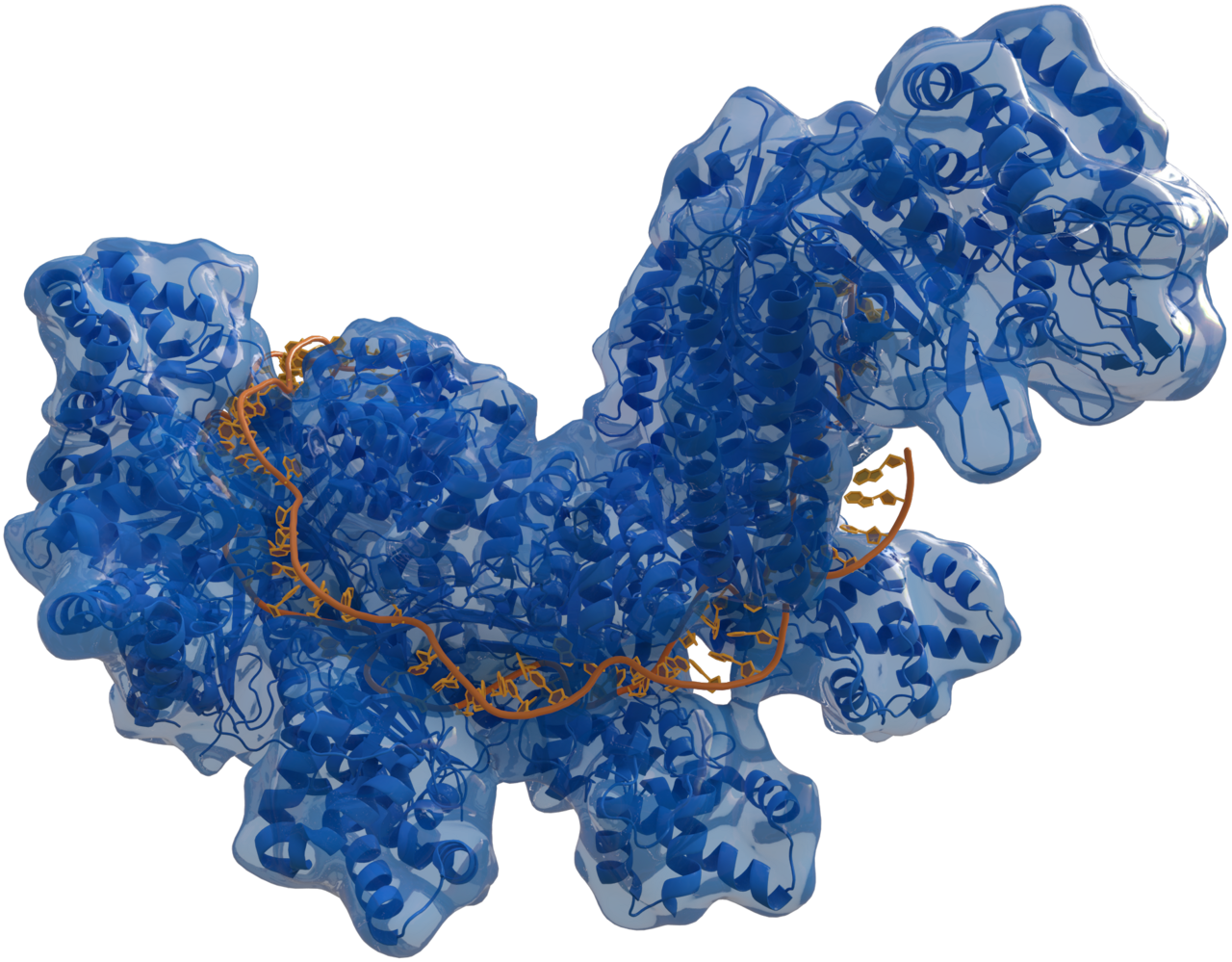

The CRISPR-Cas system, a remarkable bacterial immune mechanism, has revolutionized our understanding of cellular defense strategies. At the heart of this system in Escherichia coli lies the Cascade complex, an intricate assembly with a critical role in antiviral defense. This complex, whose full name is CRISPR-associated complex for antiviral defense, comprises a large ensemble of proteins and RNA, specifically tailored to detect and neutralize foreign genetic material.
The Cascade complex is a substantial structure, with a molecular weight of approximately 405 kDa. It consists of eleven subunits that include five distinct CRISPR-associated (Cas) proteins: Cse1, Cse2, Cas7, Cas5, and Cas6e. Each of these proteins has a unique role, contributing to the complex’s overall function.
The Cse1 and Cse2 proteins function primarily as scaffolds within the Cascade complex. They are crucial for maintaining the stability and organization of the complex, providing a structural framework that supports the arrangement of the other Cas proteins and the guide RNA (crRNA). Their role is vital in ensuring that the Cascade complex is properly assembled and functional.
Cas7, another key protein, is essential for the recognition and binding of target DNA. It possesses helicase activity, which is critical for unwinding the DNA and facilitating the complex’s ability to engage with its target. This unwinding is a crucial step in the process of DNA recognition and cleavage.
Cas5 and Cas6e, on the other hand, are involved in the processing and binding of the crRNA, which is a 61-nucleotide RNA molecule. This guide RNA is derived from the CRISPR locus within the bacterial genome, where it is transcribed as a long precursor and then processed into its functional form. The crRNA serves as a guide, directing the Cascade complex to specific DNA sequences of invading viruses or plasmids through base-pairing interactions.
The integration of these components—Cas proteins and crRNA—forms a sophisticated surveillance system. The Cascade complex exemplifies a highly effective immune response, enabling bacteria like Escherichia coli to detect and neutralize foreign genetic material. This system represents a form of acquired immunity that is both precise and adaptable, offering insight into the complexity and efficiency of microbial defense mechanisms. Through its detailed structure and function, the Cascade complex highlights the intricate interplay between proteins and RNA in the realm of cellular immunity.




Leave a Reply