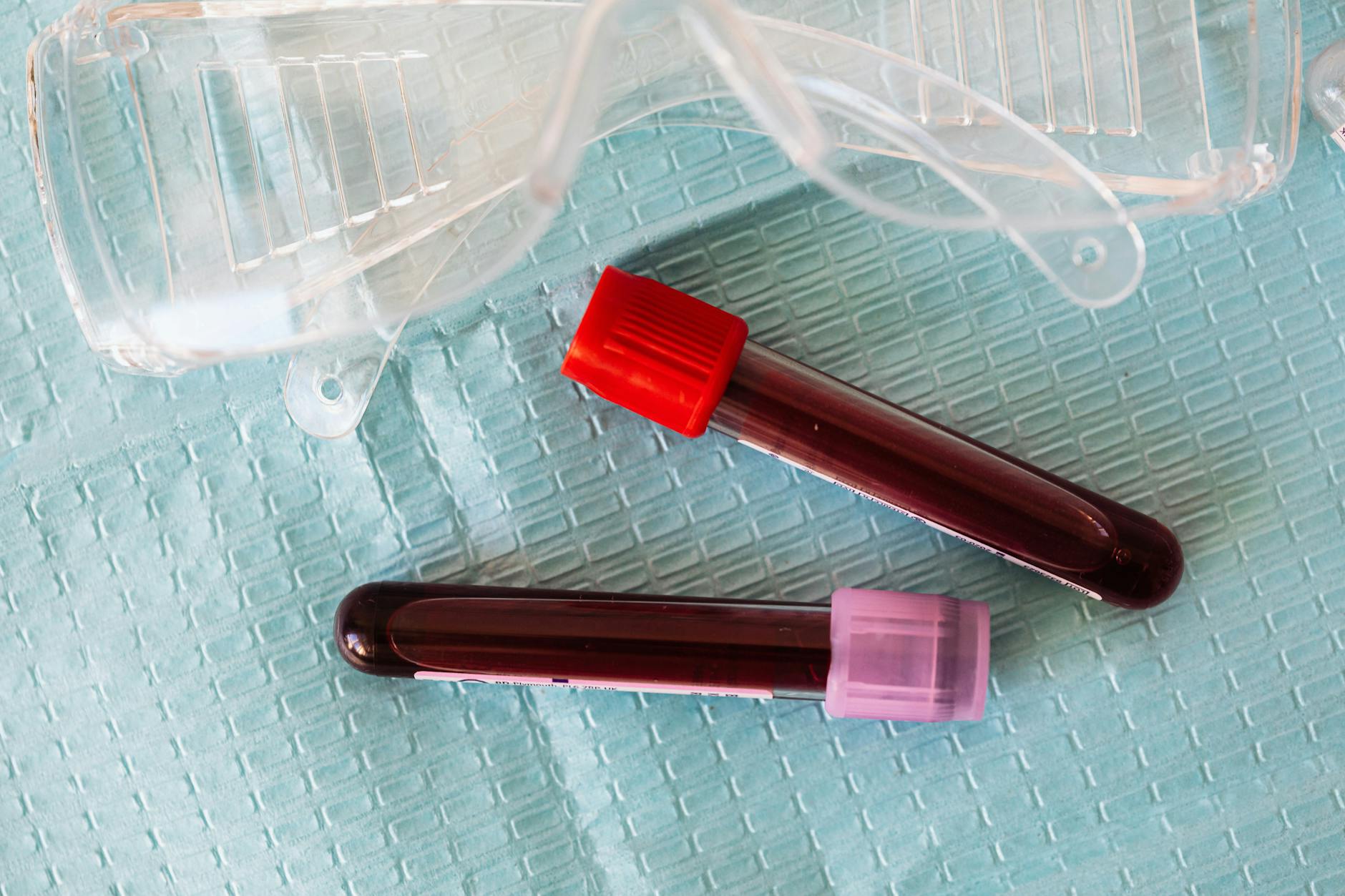
Research on thousands of proteins measured from a drop of blood demonstrates the ability of proteins to predict the onset of many diverse diseases.
The research, published today (22 July 2024) in Nature Medicine, was carried out as part of an international research partnership between GSK, Queen Mary University of London, University College London, Cambridge University and the Berlin Institute of Health at Charité Universitätsmedizin, Germany.
The researchers used data from the UK Biobank Pharma Proteomics Project (UKB-PPP), the largest proteomics study to date with measurements for approximately 3,000 plasma proteins from a randomly selected set of over 40,000 UK Biobank participants. The protein data is linked to the participants’ electronic health records. The authors used advanced analytical techniques to pinpoint, for each disease, a ‘signature’ of between the 5 and 20 proteins most important for prediction.

The researchers report the ability of protein ‘signatures’ to predict the onset of 67 diseases including multiple myeloma, non-Hodgkin lymphoma, motor neurone disease, pulmonary fibrosis, and dilated cardiomyopathy.
The protein prediction models out-performed models based on standard, clinically recorded information. Prediction based on blood cell counts, cholesterol, kidney function and diabetes tests (glycated haemoglobin) performed less well than the protein prediction models for most examples.
The patient benefits of measuring and discussing the risk of future heart attack and stroke (‘cardiovascular risk scores’) are well established. This research opens up new prediction possibilities for a wide range of diseases, including rarer conditions. Many of these can currently take months and years to diagnose, and this research offers wholly new opportunities for timely diagnoses.
These findings require validation in different populations including people with and without symptoms and signs of diseases and in different ethnic groups.
Lead author Professor Claudia Langenberg, Director of the Precision Healthcare University Research Institute (PHURI) at Queen Mary University of London and Professor of Computational Medicine at the Berlin Institute of Health at Charité Universitätsmedizin, said:
“Measuring one protein for a specific reason, such as troponin to diagnose a heart attack, is standard clinical practice. We are extremely excited about the opportunity to identify new markers for screening and diagnosis from the thousands of proteins circulating and now measurable in human blood. What we urgently need are proteomic studies of different populations to validate our findings, and effective tests that can measure disease relevant proteins according to clinical standards with affordable methods.”
First author Dr Julia Carrasco Zanini Sanchez, research student at GSK and the University of Cambridge at the time and now postdoctoral researcher at PHURI, said:
“Several of our protein signatures performed similar or even better than proteins already trialled for their potential as screening tests, such a prostate specific antigen for prostate cancer. We are therefore extremely excited about the opportunities that our protein signatures may have for earlier detection and ultimately improved prognosis for many diseases, including severe conditions such as multiple myeloma and idiopathic pulmonary fibrosis. We identified so many promising examples, the next step is to select high priority diseases and evaluate their proteomic prediction in a clinical setting.“
Co-lead author Dr Robert Scott, Vice President and Head of Human Genetics and Genomics, at GSK, said:
“A key challenge in drug development is the identification of patients most likely to benefit from new medicines. This work demonstrates the promise in the use of large-scale proteomic technologies to identify individuals at high risk across a wide range of diseases, and aligns with our approach to use tech to deepen our understanding of human biology and disease. Further work will extend these insights and improve our understanding of how they are best applied to support improved success rates and increased efficiency in drug discovery and development.”
IMAGE CREDIT: Karolina Kaboompics



Leave a Reply