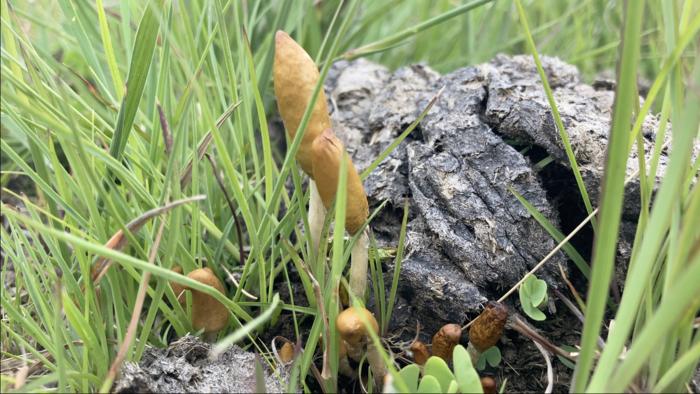
Two new species of psychoactive mushrooms in the genus Psilocybe have been described from southern Africa, bringing the list to six known species indigenous to Africa.
This is even though Psilocybe species are amongst the most well-known and well-studied species of psychoactive mushrooms in the world, with around 140 described species.
In a paper published in the journal Mycologia this week, researchers from Stellenbosch University (SU) and citizen mycologists describe the two new species as Psilocybe ingeli and Psilocybe maluti.

Psilocybe ingeli was first found in 2023 growing in pastureland in KwaZulu-Natal by Talan Moult, a self-taught citizen mycologist. Psilocybe maluti was first found on a Free State small holding in 2021 by Daniella Mulder, who sent photos of the mushrooms for identification to Andrew Killian, one of South Africa’s leading citizen mycologists based in Somerset West.
In both instances, the unusual looking specimens were sent to Breyten van der Merwe for DNA sequencing and analysis in the lab of Prof. Karin Jacobs in SU’s Department of Microbiology. Van der Merwe, now a postgraduate student in chemical engineering at SU, is a trained mycologist and first author of the paper.
The paper also contains information on the traditional use of P. maluti by Basotho traditional healers from the mountain kingdom of Lesotho. According to the researchers, this appears to be the only recorded first-hand report of hallucinogenic mushrooms being used traditionally in Africa.
Sign up for the Daily Dose Newsletter and get every morning’s best science news from around the web delivered straight to your inbox? It’s easy like Sunday morning.
Cullen Taylor Clark, a citizen mycologist and co-author, worked with Mamosebetsi Sethathi, a Mosotho traditional healer, to document the use of P. maluti (locally known as koae-ea-lekhoaba) in traditional healing practices. This forms part of a larger effort, led by Clark, to document the use of mushrooms by indigenous groups in southern Africa.
Van der Merwe says there are very likely more southern African species in this genus, and that more citizen scientists need to become involved: “These two species were sent to me by citizen scientists. It would be impossible for a single researcher to cover a fraction of an area these mushroom enthusiasts have access to. This is the only way we will be able to further studies in African mycology.”
Prof. Jacobs echoes this sentiment: “There are only a handful of mycologists in Africa documenting local biodiversity. Considering the vast mycological diversity on the continent, it is a daunting task. Collaborating with citizen mycologists is therefore hugely beneficial. In addition to more material, collaboration also opens avenues for conversation and exploration, which can lead to documenting mycophilia (the love of mushrooms) on the African continent.”
IMAGE CREDIT: Cullen Taylor Clark
If you enjoy the content we create and would like to support us, please consider becoming a patron on Patreon! By joining our community, you’ll gain access to exclusive perks such as early access to our latest content, behind-the-scenes updates, and the ability to submit questions and suggest topics for us to cover. Your support will enable us to continue creating high-quality content and reach a wider audience.
Join us on Patreon today and let’s work together to create more amazing content! https://www.patreon.com/ScientificInquirer


Leave a Reply