Researchers at the University of Gothenburg have developed an AI model that increases the potential for detecting cancer through sugar analyses. The AI model is faster and better at finding abnormalities than the current semi-manual method.
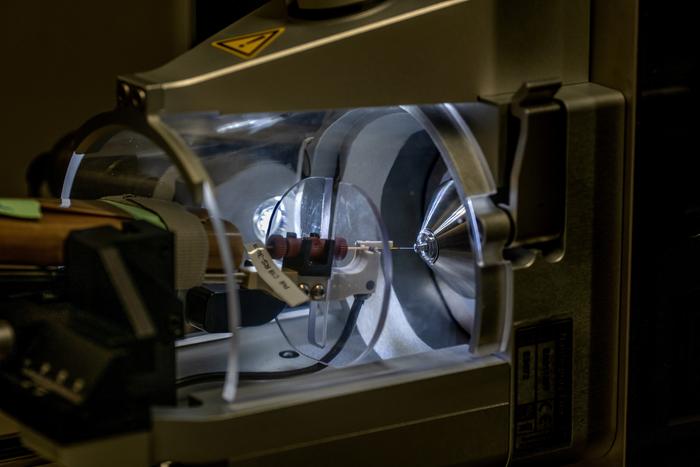
Glycans, or structures of sugar molecules in our cells, can be measured by mass spectrometry. One important use is that the structures can indicate different forms of cancer in the cells.
However, the data from the mass spectrometer measurement must be carefully analysed by humans to work out the structure from the glycan fragmentation. This process can take anywhere from hours to days for each sample and can only be carried out with high confidence by a small number of experts in the world, as it is essentially detective work learnt over many years.

Automating the detective work
The process is thus a bottleneck in the use of glycan analyses, for example for cancer detection, when there are many samples to be analysed.
Researchers at the University of Gothenburg have developed an AI model to automate this detective work. The AI model, named Candycrunch, solves the task in just a few seconds per test. The results are reported in a scientific article in the journal Nature Methods.
The AI model was trained using a database of over 500 000 examples of different fragmentations and associated structures of sugar molecules.
Sign up for the Daily Dose Newsletter and get every morning’s best science news from around the web delivered straight to your inbox? It’s easy like Sunday morning.
“The training has enabled Candycrunch to calculate the exact sugar structure in a sample in 90 per cent of cases,” says Daniel Bojar, Associate Senior Lecturer in Bioinformatics at the University of Gothenburg.
Can find new biomarkers
This means that the AI model could soon reach the same levels of accuracy as the sequencing of other biological sequences, such as DNA, RNA or proteins.
Because the AI model is so fast and accurate in its answers, it can accelerate the discovery of glycan-based biomarkers for both diagnosis and prognosis of the cancer.
“We believe that glycan analyses will become a bigger part of biological and clinical research now that we have automated the biggest bottleneck,” says Daniel Bojar.
The AI model Candycrunch is also able to identify structures that are often missed by human analyses due to their low concentrations. The model can therefore help researchers to find new glycan-based biomarkers.
IMAGE CREDIT: Lundberg Research Foundation/Magnus Gotander
If you enjoy the content we create and would like to support us, please consider becoming a patron on Patreon! By joining our community, you’ll gain access to exclusive perks such as early access to our latest content, behind-the-scenes updates, and the ability to submit questions and suggest topics for us to cover. Your support will enable us to continue creating high-quality content and reach a wider audience.
Join us on Patreon today and let’s work together to create more amazing content! https://www.patreon.com/ScientificInquirer


Leave a Reply