A quarter of parents report that caffeine is basically part of their teen’s daily life, according to a national poll.

Two in three parents think they know whether their teen’s caffeine intake is appropriate and which products have too much caffeine. Yet a third aren’t able to identify recommended caffeine limits, according to the University of Michigan Health C.S. Mott Children’s Hospital National Poll on Children’s Health.
“Our report suggests parents may not always be aware of how much they should be limiting caffeine consumption for teens,” said poll co-director and Mott pediatrician Susan Woolford, M.D.
Sign up for the Daily Dose Newsletter and get every morning’s best science news from around the web delivered straight to your inbox? It’s easy like Sunday morning.
“Even for parents who know the recommendations, estimating their teen’s caffeine intake can be challenging.”
Soda is teens’ top caffeinated product of choice, according to the nationally representative report that’s based on responses from 1,095 parents of teens polled in February.
Tea and coffee came in as the second most popular caffeine source while less than a fourth of parents said their teen consumed energy drinks.
“Caffeine is a drug that stimulates the brain and nervous system, and too much of it can contribute to a variety of health problems in young people,” Woolford said.
“Teens’ brains are still developing, and excessive caffeine consumption can affect their mood, sleep, and school performance, along with other side effects. They can also become dependent over time, as is true for other drugs.”
What drives caffeine consumption among teens
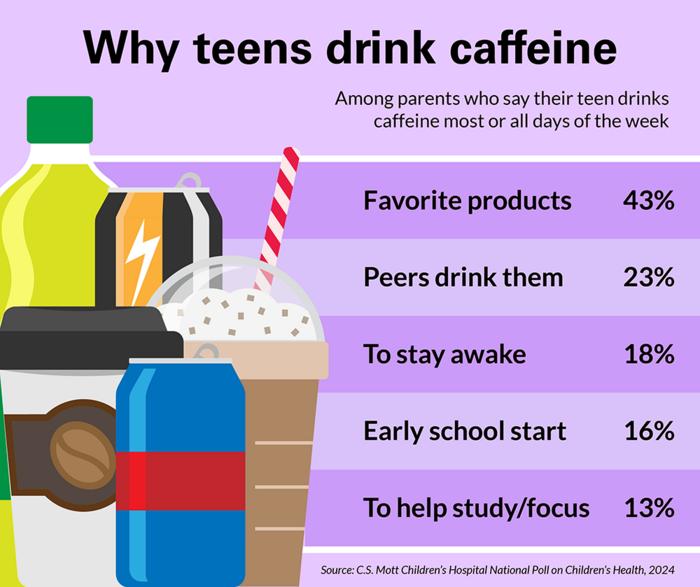
Two in five parents whose teens consume caffeine most or all days of the week say their teen has it because it’s in their favorite product while less than a fourth say it’s because their peers drink it.
Fewer parents believe their teen drinks caffeine to stay awake during the school day, manage an early school start time or help with studying or focus.
“As parents appear to suggest that teens consume caffeine more for the taste than for the stimulant effect, it may be possible for parents to encourage the use of similar tasing options that are caffeine free,” Woolford said. “But parents may not even be aware that kids are drinking several caffeinated drinks a day and how it’s adding up.”
The good news, Woolford notes, is that the most common place teens consume caffeine is at home followed by dining out, making it easier for parents to intervene and help their teens reduce their caffeine intake. Just a third of teens consume caffeine with friends and a quarter consume it while in school, according to the report.
Woolford shares more findings from the poll and her top tips for monitoring caffeine in teens:
Know recommended caffeine limits
For healthy adults, 400 milligrams of caffeine per day is not generally associated with dangerous effects, according to the U.S. Food and Drug Administration. But the FDA has not given guidance for teens due to insufficient evidence, Woolford says.
The American Academy of Pediatrics also discourages caffeine intake by children and adolescents, and other experts suggest a limit of 100 milligrams per day for teens.
However, one in three parents polled thought the recommended daily limit was higher, Woolford says.
Monitor caffeine levels in your teen’s favorite foods and beverages
Sixty percent of parents polled say they’ve heard about the risks of highly caffeinated products but roughly half say they rarely look at caffeine amounts when buying beverages for their teen.
An 8-ounce cup of coffee has about 100 milligrams of caffeine, but the range of sizes and types of coffee drinks include many with excessive caffeine amounts, Woolford notes. Sodas, sports drinks and even certain brands of water can contain substantial amounts of caffeine.
Energy drinks are also consumed by teens, but a single one may contain up to 500 mg of caffeine along with added sugars.
Caffeine is also found in products that parents might not suspect, Woolford points out, such as gum, snack bars, and over-the-counter pain relievers.
“Parents can reduce their child’s risk of becoming caffeine dependent by checking product labels before purchasing any of these items for their family,” Woolford said.
Watch for signs your teen is overconsuming caffeine
People’s reactions to caffeine often depends on weight, gender, and caffeine sensitivity.
Common side effects from overconsumption may include insomnia, headaches, irritability and nervousness. Unfortunately, reducing or eliminating caffeine consumption may induce the same types of symptoms during withdrawal.
The effect of caffeine also wanes over time, Woolford notes, requiring higher amounts to get the same impact and increasing the risk of negative side effects.
“If your teenager regularly consumes caffeine and is having a hard time sleeping or if they appear jittery, you should take a closer look at whether their caffeine intake is too high,” Woolford said.
Model healthy caffeine consumption
Two-thirds of parents polled say they themselves consume caffeine most or all days of the week. A third have tried to cut back on their caffeine intake while 16% say their teen has tried to reduce caffeine consumption.
Many parents who report their teen consumes caffeine 0-3 days per week say that the family does not usually have caffeinated drinks at home or that the teen is trying to be healthy.
“Parents who have reduced their own caffeine consumption can draw on their experiences to help their teen establish a plan to cut back slowly to avoid withdrawal effects,” Woolford said.
Talk to your teen about caffeine
More parents of teens 16-18 years than 13-15 years report their teen has daily caffeine consumption.
The majority of parents think their teen has heard about the risks of too much caffeine from parents or other family members while others think they’ve learned about unhealthy caffeine levels from teachers, coaches, other school staff or a healthcare provider.
But it’s important that parents also have conversations with teens who may select caffeinated beverages from their school vending machines or spend their own money on caffeinated products.
“Parents should consider talking with their teen about the negative impact of excessive caffeine, and then explore non-caffeinated options they can try together at home, at school or when out with friends,” Woolford said. “Parents may also enlist the teen’s healthcare provider in explaining the risks of caffeine and suggesting strategies to cut back.”
IMAGE CREDIT: Sara Schultz, University of Michigan Health C.S. Mott Children’s Hospital National Poll on Children’s Health
If you enjoy the content we create and would like to support us, please consider becoming a patron on Patreon! By joining our community, you’ll gain access to exclusive perks such as early access to our latest content, behind-the-scenes updates, and the ability to submit questions and suggest topics for us to cover. Your support will enable us to continue creating high-quality content and reach a wider audience.
Join us on Patreon today and let’s work together to create more amazing content! https://www.patreon.com/ScientificInquirer




Leave a Reply