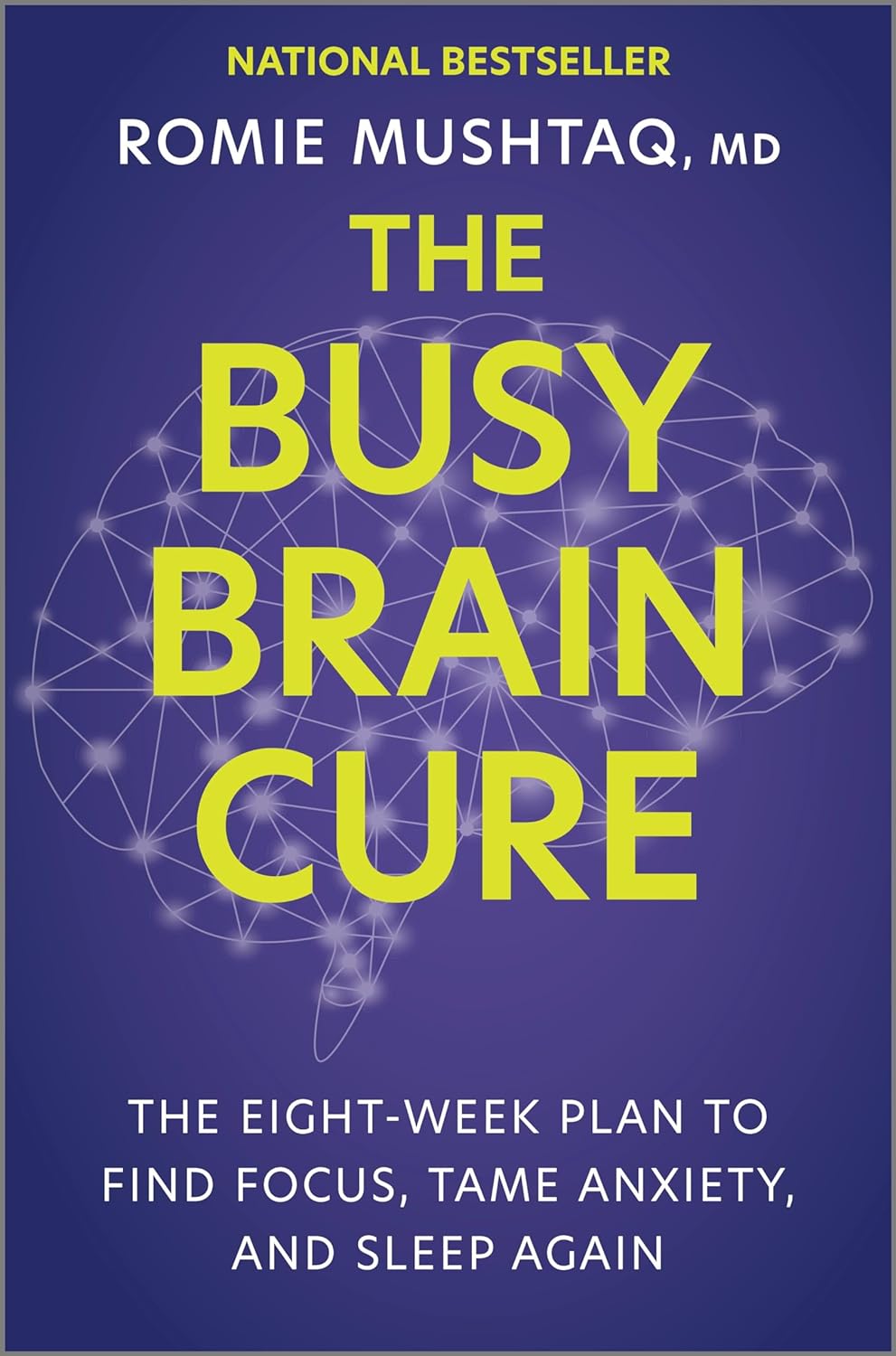
Dr. Romie Mushtaq is a board-certified physician, award-winning wellness speaker, and the founder of brainSHIFT, with over 20 years of expertise in neurology, integrative medicine, and mindfulness. She has become an internationally sought-after authority on stress management, workplace wellness, and burnout, inspiring more than 1.1 million people through her high-energy, interactive talks and work as a corporate wellness consultant. Dr. Mushtaq serves as the Chief Wellness Officer for Evolution Hospitality, where she scaled a mindfulness and wellness program to over 7,000 employees, and consults for Fortune 500 companies, professional athletes, and global associations.
Dr. Mushtaq has coined the term “Busy Brain” to describe a condition characterized by symptoms such as the inability to focus, lack of sustained energy, feelings of anxiety, and difficulty in falling and staying asleep. This condition stems from chronic stress and burnout, leading to neuroinflammation in the brain. Dr. Mushtaq emphasizes that traditional medicine often treats symptoms such as anxiety, adult-onset ADHD, and insomnia as isolated issues, whereas they are interconnected manifestations of the Busy Brain syndrome.
To address this, Dr. Mushtaq has developed the “Brain Shift Protocol,” a comprehensive approach that combines her extensive knowledge in neurology, integrative medicine, and mindfulness. This protocol aims to treat the underlying causes of Busy Brain, thereby alleviating symptoms of poor sleep, anxiety, and diminished focus and energy. Her approach is based on extensive research, clinical work, and insights from over 17,000 people who have taken the Busy Brain test. Her book, The Busy Brain Cure (Hanover Square Press), offers an in-depth look at the science behind Busy Brain and practical, evidence-based strategies to find focus, tame anxiety, and sleep again in just eight weeks.
For more information on Dr. Romie Mushtaq and her work on managing Busy Brain, you can visit her website at drromie.com or check out her YouTube Channel. To get to the heart of the solving the Burnout Blues, the best thing you can do is pick up a copy of her book, The Busy Brain Cure.

What inspired you to coin the term Busy Brain and how does it differ from other common understandings of stress?
One thing I’d like to clarify before we begin this interview is the common misuse of the terms “stress” and “burnout,” and how they are often incorrectly used interchangeably. Most stress management techniques available today are designed for acute stress—stressors present for seconds, minutes, or at most, hours, after which we have a chance to recover. For instance, if you’re driving in New York and encounter a patch of black ice, the acute stress you experience can actually help you focus on maneuvering your car to avoid an accident, rather than being distracted by a stylish winter coat someone on the sidewalk is wearing.
Acute stressors can also arise from receiving bad news, and stress management techniques can help you process emotions and calm down over a few hours or days.
However, as a doctor and Chief Wellness Officer who has worked with corporate clients, I’ve observed that these techniques do little to address chronic stress. Chronic stress persists for months, weeks, or even years, leaving one feeling as though their brain never returns to baseline. This distinction is crucial.
Looking at scientific data from the pandemic, we see a significant psychological toll. Mentally, people are becoming angry and aggressive more quickly, with a shorter fuse, over seemingly minor issues that shouldn’t provoke such intense responses.
Therefore, the stress management techniques often discussed are either outdated or fail to address the root cause of the problem. This is an important distinction to understand in the progression from acute stress to chronic stress and ultimately to burnout.
This led me to coin the term Busy Brain, a concept I found crucial. I’ve seen too many high-achieving professionals succumb to chronic stress and head towards burnout, blaming external circumstances and feeling out of control. This includes the relentless 24-hour news cycle and the inability to disconnect from work and family issues, without acknowledging the internal symptoms unfolding. “What can I do about my Busy Brain?” became a key question. I introduced Busy Brain as a layperson’s term to signify that chronic, unchecked stress can lead to physical and anatomical changes in the brain. We’ll discuss how this results in a unique pattern of mental and brain health symptoms, leading individuals to mistakenly attribute these issues to simply being busy, not recognizing the detrimental effects of chronic stress on the brain.
Before we move on, how did the pandemic force you to adjust your model?
Certainly, even before the pandemic, many healthcare professionals, including myself, recognized we were facing a mental health crisis. However, this issue was largely overshadowed by the news cycle, including toxic election periods and natural disasters, and thus did not capture public or media attention to the extent it warranted. This wasn’t a sudden revelation in medical literature or epidemiology; rather, there was a noticeable escalation in the number of people reporting difficulties with focusing, anxiety, and chronic stress during the pandemic, exacerbated by social isolation, global news, and economic concerns.
Before the pandemic, my approach to stress management primarily involved teaching mindfulness and meditation within corporate settings. Even then, I recognized that these methods were insufficient; there was a deeper issue that wasn’t being addressed. Although I hadn’t yet formalized what would become the 8-week protocol outlined in my book, I was aware of its necessity. I frequently encountered executives and athletes exhibiting similar symptoms, indicating a cyclical pattern without true resolution.
The pandemic accelerated the evolution of my model. Transitioning from in-person sessions to online platforms, like many entrepreneurs, necessitated a shift in how we operated. This shift, however, allowed us to leverage technology to conduct research and assessments on a larger scale. It enabled a more thorough investigation into the root causes of the symptoms people were experiencing. No longer was it sufficient to acknowledge a difficulty in focusing or a persistent sense of anxiety despite meditation efforts. The move to a virtual environment provided the means to delve deeper into these complaints, offering insights that were previously less accessible. This transition not only adapted our approach to the changing world but also enriched our understanding and capacity to address the underlying issues of mental health struggles more effectively.
Can you elaborate on the neuro inflammation patterns you see in individuals with Busy Brain, and how these patterns are identified in clinical settings?
Neuroinflammation is not a novel concept; the patterns of neuroinflammation have been recognized for decades. When I began my neurology studies in the 1990s, fresh from medical school and entering my neurology residency, we were already aware that inflammation within the brain is a precursor to various brain diseases. This includes a range of conditions rooted in neuroinflammation, such as different forms of dementia, Parkinson’s disease, and multiple sclerosis. These conditions can be triggered by viruses or bacteria that cause neuroinflammation within the brain.
What has been particularly captivating in recent medical literature is the advancement in our ability to observe the brain in real-time through SPECT and functional MRI scans. Alongside this, there’s a growing understanding of how chronic stress impacts not just the brain, but also the body and mind. This literature has begun to reveal that chronic stress, even in the absence of viruses, genetic predispositions, or other triggers for diseases like Parkinson’s or dementia, can itself initiate patterns of neuroinflammation. In my book, I delve into these findings in detail. It’s interesting to note that discussions about acute stress and its effects on the brain often don’t go beyond the theories proposed by Walter Cannon or the Cannon-Bard theory, yet the implications of chronic stress extend far beyond these initial understandings, influencing neuroinflammation in significant ways.
Can you elaborate on the patterns you see in an individual and how you identify those?
Neuroinflammation is not a term I’ve introduced recently; it’s been a fundamental concept for decades, identifying the core pathological changes occurring in the brain alongside other diseases. For example, infections from viruses or bacteria, as well as conditions like dementia or Parkinson’s, are known to cause neuroinflammation.
What has emerged in the last decade is the recognition that chronic stress alone can induce similar patterns of neuroinflammation. This includes an increase in free radicals and interleukin-1 in the brain, patterns previously associated exclusively with disease, now understood to also result from chronic stress. This goes beyond the simpler models of acute stress, which are often discussed, sometimes inaccurately, on social media platforms, focusing on the limbic system, the autonomic nervous system, and cortisol increases. While these responses to acute stress are accurate, chronic stress reveals a more complex and profound impact on the brain.
Chronic stress induces a specific pattern of neuroinflammation, elevating interleukins and free radicals that affect additional brain areas, notably the hypothalamus and the SCN (suprachiasmatic nucleus), impacting circadian rhythms. This disruption can lead to a wide range of problems, both within the brain and throughout the body, affecting various systems. These interactions and their implications are explored in depth in my book, especially the effect on the hypothalamus and circadian rhythms.
Measuring neuroinflammation in living humans poses challenges; brain biopsies are rare and primarily reserved for diagnosing cancer or significant lesions not identifiable by MRI. Instead, we rely on patient histories, physical examinations, and specific blood tests to infer neuroinflammation. Understanding a patient’s life, including work, personal relationships, and stressors, is crucial, as is recognizing physical signs of chronic stress like posture changes, muscle aches, elevated blood pressure, and heart rate. Heart rate variability tests can also indicate chronic stress and neuroinflammation.
Furthermore, blood tests play a vital role in identifying markers of neuroinflammation. My book discusses high-sensitivity C-reactive protein, a marker that elevates with inflammation in the body or brain. Coupling this data with neurological and psychiatric symptoms allows us to infer brain inflammation. Additional markers, such as fasting insulin, blood sugar levels, and hemoglobin A1C, are also indicative. These might surprise many, as they are traditionally associated with diabetes, but they can signal early changes before the onset of type 2 diabetes mellitus, emphasizing the broad and interconnected impact of chronic stress and neuroinflammation on overall health.

Your approach in your book takes a very holistic approach. You mentioned Circadian rhythms and in terms of symptoms, you talk about anxiety, sleep, disturbances, attention challenges. Can you explain your holistic approach and how it helps you design treatment and therapy.
Let’s clarify the concept of the Busy Brain.” It’s a specific pattern of neuroinflammation related to chronic stress or burnout, characterized by a triad of symptoms commonly observed in high-achieving professionals. These include difficulties with focus, ranging up to adult-onset Attention Deficit Disorder (ADD), coupled with ruminating anxiety, and insomnia. Insomnia can manifest as trouble falling asleep due to incessant worrying thoughts or waking up in the middle of the night and being unable to return to sleep because of these preoccupations.
While people might experience insomnia or anxiety in isolation due to various causes, the combination of these three symptoms—impaired focus, anxiety, and insomnia—distinctively identifies the Busy Brain Syndrome. This syndrome is indicative of the particular pattern of neuroinflammation we’re discussing.
Addressing your question about the 8-step program, I explored the psycho-neuro-immuno-endocrinology literature to find ways to address the root cause of these symptoms. Current treatments often provide a superficial, one-size-fits-all approach, which, as we know from experience with clothing, is rarely effective. This is where the principles of integrative and functional medicine come into play, aiming to identify and treat the underlying cause of an ailment.
Typically, people attempt to manage these symptoms with high doses of caffeine throughout the day and sedatives, like alcohol, at night. If these methods prove ineffective, a physician might prescribe stimulants for ADD/ADHD—which are often overprescribed, according to medical literature—or benzodiazepines for anxiety and sleep disorders, such as Xanax or Ambien. These solutions can lead to dependency, creating a cycle of stimulants by day and sedatives by night. Many recognize this pattern and seek a deeper understanding and resolution of their issues.
The 8-week protocol aims to address these deeper issues by resetting the circadian rhythms of the brain and body, and identifying the root cause through comprehensive lab testing. This protocol, which I’m particularly proud of, includes a list of traditional lab tests that patients can request from their doctors. These tests are usually covered by most insurance plans in the United States, making them accessible to a wider population. This approach contrasts with some of the more expensive testing options available through integrative and functional medicine, which may not be as accessible to everyone. The goal is to provide a practical, evidence-based solution to address the root causes of the Busy Brain Syndrome and its associated symptoms.
What is the Busy Brain Test? It seems like a very valuable tool for self-assessment. Can you share some of the insights that you’ve noticed from that?
We titled it the Busy Brain Test” as a more approachable term for corporate environments, rather than introducing it as a validated neuropsychology stress test, which might sound intimidating. This test, which I didn’t invent but merely repurposed for our use, consists of 20 concise questions designed to reflect on the last two weeks. It assesses how stress may be impacting key areas: cognition (including memory and sleep), mental health (mood), and physical symptoms.
The scoring of this traditional neuropsychological battery provides insightful benchmarks. A score below 30 suggests that an individual is effectively processing emotions and stress, maintaining performance despite external stressors. Scores above 30 indicate potential patterns of neuroinflammation and chronic stress, with increasing scores correlating with escalating burnout risk. Our analysis identified a critical threshold between 55 to 60, beyond which individuals likely experience physical symptoms associated with burnout.
This testing aligns with data from the American Psychological Association and the World Health Organization. Notably, during the crucial period from December 2020 to December 2022—a time that spanned global lockdowns, transitions, and eventual emergence from the pandemic—82% of participants, primarily from North America (with the United States being the largest demographic), Canada, and some from the European Union and UK, scored above 30. This indicated widespread neuroinflammation and chronic stress, leading to mental and physical health symptoms. Remarkably, less than 6% scored below 30, suggesting a well-managed stress response.
Contrary to popular narratives around pandemic-induced weight gain and increased alcohol consumption, our findings among high-performing professionals highlighted different primary concerns: difficulties with falling asleep, staying asleep, and maintaining focus and energy throughout the day. These insights are crucial for understanding the pervasive impact of chronic stress and neuroinflammation on individuals, especially in demanding professional environments.
Can you discuss some lifestyle changes that can help mitigate a busy brand?
Addressing neuroinflammation and restoring circadian rhythms transcends simple lifestyle adjustments, a notion often oversimplified in the rapid-consumption culture of platforms like TikTok, where the aim is to distill complex issues into bite-sized, actionable advice. Recognizing the complexity of these challenges, our approach delves into the concept of micro habits or tiny habits, terms popularized by authors of best-selling books on the subject. These habits are small, specific actions designed to yield significant shifts in mitigating neuroinflammation, enhancing circadian rhythms, and improving overall well-being by helping individuals focus better, reduce anxiety, and sleep more soundly.
The transformative power of these micro habits lies in their cumulative effect and the minimal disruption they cause to one’s lifestyle. This approach is particularly tailored for busy professionals who may also be caregivers, balancing full lives without the luxury of making sweeping lifestyle overhauls, such as dedicating two hours daily to exercise.
Our methodology differs from the broad “lifestyle change” advice commonly dispensed in healthcare, which often goes unheeded. Instead of vague recommendations to “eat better, exercise more, and sleep well,” we provide concrete, actionable steps specifically targeting the Busy Brain. This led to the development of the 8-week Brain Shift protocol.
The first step involves obtaining a “brain score” to quantify stress levels and identify personal symptoms, rather than relying on generalized assumptions of stress or burnout. This score is reassessed at the protocol’s end to measure improvement.
Week 2 introduces the foundation of our protocol: the 7-day sleep challenge, focusing on restoring the sleep-wake cycle. This challenge incorporates Cognitive Behavioral Therapy for Insomnia (CBTi) techniques, complemented by appropriate supplements, to normalize sleep patterns and circadian rhythms within 7 to 10 days. Unlike generic lifestyle adjustments, this targeted intervention offers specific, manageable steps that align with the demands of a busy life, setting the stage for a comprehensive and sustainable shift towards better mental and physical health.
What is the ultimate goal of the protocol?
The primary objective for individuals undergoing the brain shift protocol is to clinically reduce or heal the detrimental effects of chronic stress on the brain, specifically targeting neuroinflammation and addressing burnout. Despite widespread discussions on burnout prevention in workplaces, recent data, such as the 2023 Gallup poll on the state of the workplace, reveal a continuing rise in employees experiencing burnout, now reaching 44%. This underscores the need not only for prevention strategies but also for effective interventions to heal those already affected.
Participants who complete the brain shift protocol can expect significant improvements in their quality of life and mental well-being. Key outcomes include the ability to fall asleep and remain asleep, leading to waking up feeling energized and prepared to tackle the day’s tasks. This change is profound, shifting the perception from being overwhelmed and controlled by their schedules to having command over their daily activities.
A notable transformation is the achievement of laser-sharp focus and cognition. Initially, with a Busy Brain, every task feels urgent, like a “code red” situation. However, post-protocol, individuals learn to effectively prioritize tasks, addressing them with efficiency and precision. This heightened state of mental clarity allows for a more productive and less stressful approach to personal and professional responsibilities.
Furthermore, an essential benefit of the protocol is breaking the harmful cycle of reliance on stimulants during the day and sedatives at night. This cycle is often a coping mechanism for managing stress and sleep issues but ultimately exacerbates the problem. By addressing the root causes of stress and improving sleep and focus, the protocol helps individuals establish healthier habits and reduces their dependence on these substances.
In summary, the brain shift protocol offers a comprehensive approach to healing burnout and the Busy Brain syndrome, leading to improved sleep, enhanced focus, better control over one’s schedule, and a break from the stimulant-sedative cycle. These changes contribute to a significant improvement in overall mental health and well-being, enabling individuals to navigate their lives more effectively and with less stress.
Would nootropics fit into your protocol?
You’ve highlighted an important aspect of the Brain Shift Protocol: the deliberate omission of nootropics. Nootropics, widely recognized for their brain-enhancing and peak performance attributes, contain a variety of ingredients, with caffeine being the most common among them. This broad category of supplements promises cognitive improvements, yet the diversity in formulations and the inclusion of caffeine raise concerns about their indiscriminate use.
In week 5 of the protocol, instead of recommending nootropics, the approach simplifies the concept by focusing on caffeine consumption. The guidance is clear: moderate caffeine intake is acceptable, but it should not be combined with high glycemic sugars and refined carbohydrates like white flour, potatoes, bread, rice, and sugar. This advice stems from the desire to avoid exacerbating focus and anxiety issues through the destabilizing effects of fluctuating insulin and blood sugar levels.
The protocol’s cautious stance on nootropics reflects a responsible integrative and functional medicine perspective. Rather than universally endorsing nootropics, it emphasizes the importance of individualized assessment. This includes checking hormone levels for both men and women, as well as morning and evening cortisol levels through blood tests—recognized for their accuracy over saliva tests—to tailor recommendations based on medical history and specific needs.
This careful approach underscores the complexity of cognitive enhancement and the necessity of personalized medical guidance. It acknowledges the trendiness of nootropics while advocating for a more grounded and researched approach to cognitive support. The protocol opts for clarity and simplicity, focusing on well-understood interventions like controlled caffeine use and specific, non-nootropic supplements for sleep and daytime functioning, thereby ensuring a more targeted and safer path to cognitive improvement and stress management.

Can you discuss the supplement?
Addressing sleep issues is crucial, especially when stress levels are indicated to be high, with scores above 30. Individuals often struggle with either falling asleep or staying asleep. To aid in restoring healthy sleep patterns, two specific supplements are highlighted:
Magnesium Glycinate is recognized for its ability to cross the blood-brain barrier, enhancing the upregulation of GABA receptors and promoting a sense of calm. Its role extends beyond neurological benefits, as magnesium is vital for regulating the sleep-wake cycle, focus, emotional stability, and various hormonal processes integral to the body’s 24-hour rhythm. The effectiveness of magnesium glycinate in these aspects is well-documented in medical literature.
5-Hydroxytryptophan (5-HTP) serves as a natural precursor to serotonin and melatonin, key neurotransmitters involved in mood regulation and sleep. Unlike direct melatonin supplementation, which can disrupt the body’s natural melatonin production and interfere with hormones like human growth hormone (HGH) and estrogen, 5-HTP supports the body’s intrinsic production pathways. This contributes to respiratory health, calmness, emotional processing, and sleep quality, assisting in the normalization of circadian rhythms for most individuals within 7 to 14 days.
In addition to these, Vitamin D3 supplementation is advocated for, yet with a cautionary approach towards dosing. The protocol recommends personalized supplementation based on lab tests conducted in week 7 to determine the necessary dosage. Vitamin D3 is essential for a range of bodily functions, including bone health, immune system support, and mood regulation. Tailoring the dosage to individual needs through lab results ensures optimal benefits without the risks associated with over-supplementation.
These targeted interventions aim to not only alleviate symptoms of disrupted sleep but also address the root causes associated with stress and neuroinflammation, facilitating significant improvements in sleep quality and overall health.
Your protocol is geared towards people that have Busy Brains. If someone doesn’t have a Busy Brain, let’s say that they’re actually okay, right? Can your protocol be used as a form of optimization to improve on who they are at that time, even if they don’t have a Busy Brain.
The inquiry raises an important consideration: while the protocol is primarily designed for individuals experiencing chronic stress leading to burnout and the Busy Brain Syndrome, certain elements of it can indeed be applied to enhance peak performance in executives and athletes. However, the definition of peak performance varies significantly across individuals, encompassing cognitive, mental, and physical aspects.
Individuals scoring above 30 typically exhibit symptoms of a Busy Brain, reflecting significant stress levels. Yet, certain core components of the protocol, such as maintaining optimal Vitamin D3 levels and optimizing nutrition, hold universal value. It’s noteworthy that people scoring under 30 are less likely to encounter the specific issues our protocol aims to address, such as stress-induced eating habits characterized by consuming excessive carbohydrates, salty, high glycemic, and fatty foods as a form of self-medication.
In essence, while the protocol is tailored for those grappling with chronic stress and on the path to burnout, elements of it—like certain lab tests, Vitamin D3 optimization, and nutritional adjustments—can be beneficial for individuals seeking to achieve or maintain peak performance, whether in executive roles or in athletic pursuits. These components, when adapted and applied judiciously, can contribute to enhancing overall well-being and performance capabilities.
IMAGE CREDIT: Dr. Romie Mushtaq.
Sign up for the Daily Dose Newsletter and get the morning’s best science news from around the web delivered straight to your inbox? It’s easy like Sunday morning.



Leave a Reply